Editor’s note: This is an edited extract from Mark Curtis’ book Web of Deceit: Britain’s Real Role in the World.
British declassified files show how Harold Wilson’s Labour government, together with the US administration under Lyndon Johnson, were complicit in one of the worst slaughters of the postwar period.
The killings in Indonesia began when a group of army officers loyal to President Sukarno assassinated several generals on 30 September 1965. They believed the generals were about to stage a coup to overthrow Sukarno.
The ensuing instability provided other anti-Sukarno generals, led by General Suharto, with a pretext for the army to move against a powerful and popular political faction with mass support, the Indonesian Communist Party (PKI).
The army acted with brutal efficiency: within months, hundreds of thousands of PKI members and ordinary people were killed, and the PKI was destroyed. Suharto emerged as the new leader and instituted a harsh regime that lasted until 1998.
The files reveal British opposition to Sukarno and the PKI and a desire for the army to act. “I have never concealed from you my belief that a little shooting in Indonesia would be an essential preliminary to effective change,” the ambassador in Jakarta, Sir Andrew Gilchrist, informed the Foreign Office on 5 October 1965.
The following day, the Foreign Office stated that “the crucial question still remains whether the Generals will pluck up enough courage to take decisive action against the PKI”. Later it noted that “we must surely prefer an Army to a Communist regime” and declared: “It seems pretty clear that the Generals are going to need all the help they can get and accept without being tagged as hopelessly pro-Western, if they are going to be able to gain ascendancy over the Communists.”
It added: “In the short run, and while the present confusion continues, we can hardly go wrong by tacitly backing the Generals.” British policy, one intelligence official later explained, was “to encourage the emergence of a General’s regime.”
US officials similarly stated: “We are, as always, sympathetic to the army’s desire to eliminate communist influence… it is important to assure the army of our full support of its efforts to crush the PKI.”
Both US and British officials had clear knowledge of the killings. US ambassador Marshall Green noted three weeks after the attempted coup, with the killings underway, that: “Army has… been working hard at destroying PKI and I, for one, have increasing respect for its determination and organisation in carrying out this crucial assignment.”
On 1 November, Green informed the State Department that the army was “moving relentlessly to exterminate the PKI as far as that is possible to do.” Three days later, he observed that the embassy and the US government were “generally sympathetic with and admiring of what the army [is] doing.”
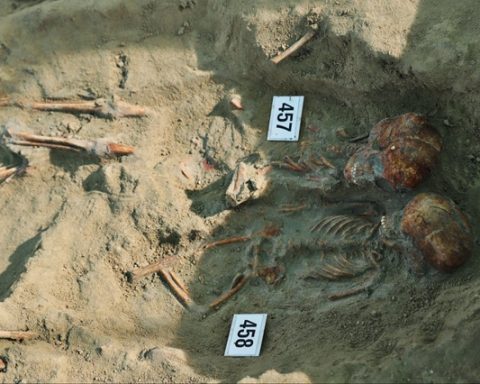
A British official reported on 25 November that “PKI men and women are being executed in very large numbers.” Some victims “are given a knife and invited to kill themselves. Most refuse and are told to turn around and are shot in the back.”
On 16 December, a British official wrote to the ambassador: “You – like me – may have been somewhat surprised to see estimates by the American embassy that well over 100,000 people have been killed in the troubles since 1 October. I am, however, readier to accept such figures after [receiving] some horrifying details of the purges that have been taking place.”
He added: “The local army commander… has a list of PKI members in five categories. He has been given orders to kill those in the first three categories… A woman of 78… was taken away one night by a village execution squad… Half a dozen heads were neatly arranged on the parapet of a small bridge.”
The US Consulate in Medan reported that “much indiscriminate killing is taking place”: “Something like a reign of terror against PKI is taking place. This terror is not discriminating very carefully between PKI leaders and ordinary PKI members with no ideological bond to the party.”
By mid-December, the State Department noted approvingly that “Indonesian military leaders’ campaign to destroy PKI is moving fairly swiftly and smoothly.”
On 14 February 1966, Ambassador Green noted that “the PKI has been destroyed as an effective political force for some time to come” and that “the Communists… have been decimated by wholesale massacre.”
British files show that by February 1966 the British ambassador estimated 400,000 dead, although the Swedish ambassador described this as a “gross under-estimate.” A month later, one British official wondered “how much of it [the PKI] is left, after six months of killing,” believing that over 200,000 had been killed in Sumatra alone. By April, the US embassy stated: “We frankly do not know whether the real figure is closer to 100,000 or 1,000,000 but believe it wiser to err on the side of the lower estimates, especially when questioned by the press.”
Another British memo referred to “an operation carried out on a very large scale and often with appalling savagery,” while another simply described it as a “bloodbath.”
British and US officials actively supported these massacres. The files contain no references to concern over the extent of the killings; instead, they consistently encouraged the army to continue. One British official noted, referring to 10,005 people arrested by the army: “I hope they do not throw the 10,005 into the sea… otherwise it will cause quite a shipping hazard.”
It was not only PKI activists who were targeted. Many victims were the “merest rank and file” of the PKI, “often no more than bewildered peasants who give the wrong answer on a dark night to bloodthirsty hooligans bent on violence,” acting with the army’s connivance.
Britain worked closely with those conducting the slaughter. By 1965, it had deployed tens of thousands of troops in Borneo to defend its former colony of Malaya against Indonesian encroachments following territorial claims by Jakarta. British planners secretly noted that they “did not want to distract the Indonesian army by getting them engaged in fighting in Borneo and so discourage them from the attempts which they now seem to be making to deal with the PKI.”
The US worried that Britain might take advantage of Indonesian instability to launch an offensive from Singapore “to stab the good generals in the back,” as Ambassador Gilchrist described it. The British ambassador proposed reassuring the Indonesians responsible for mass slaughter that “we should get word to the Generals that we shall not attack them whilst they are chasing the PKI.” The British intelligence chief in Singapore agreed, believing this “might ensure that the army is not detracted from what we consider to be a necessary task.”
In October, the British passed a message to the Generals, via a US contact, stating that they would not intervene militarily. The US files confirm that the message, conveyed on 14 October, read: “First, we wish to assure you that we have no intention of interfering in Indonesian internal affairs directly or indirectly. Second, we have good reason to believe that none of our allies intend to initiate any offensive action against Indonesia.” The Indonesian army welcomed this assurance.
Former BBC correspondent Roland Challis noted that James Murray, the counsellor at the British embassy, was authorised to tell Suharto that British forces would not take military advantage if Indonesian troops were transferred from the confrontation area to Java. A 1980 Indonesian newspaper report stated that Britain even helped an Indonesian colonel transport an infantry brigade back to Jakarta, flying the Panamanian flag and escorted by two British warships.
Another form of support was propaganda, including the distribution of false anti-Sukarno messages through the media. This was organised from Britain’s MI6 Phoenix Park intelligence base in Singapore. Norman Reddaway, head of these operations, told the BBC’s Southeast Asia correspondent to “do anything you can think of to get rid of Sukarno.”
On 5 October, Reddaway reported to the Foreign Office that they should “have no hesitation in doing what we can surreptitiously to blacken the PKI in the eyes of the army and the people of Indonesia.” The Foreign Office agreed, suggesting propaganda themes such as Chinese interference in arms shipments and PKI subversion of Indonesia. Distribution was coordinated to newspapers, radio, and news agencies, and one file notes: “The impact has been considerable.”
British officials noted that the struggle between the army and the PKI was “a struggle basically for the commanding heights of the Indonesian economy,” with Western commercial interests at stake. London wanted a regime change in Jakarta to end the confrontation with Malaya and to secure access to commodities such as rubber, copra, and chromium ore. Foreign Secretary Michael Stewart remarked during the slaughter: “It is only the economic chaos of Indonesia which prevents that country from offering great potential opportunities to British exporters. If there is going to be a deal in Indonesia… I think we ought to take an active part and try to secure a slice of the cake ourselves.”
Under Suharto, British-owned estates were returned to their original owners, and the US noted that Indonesia’s previous policy aimed to push Britain and the US out of Southeast Asia. Britain was eager to establish good relations with Suharto, which endured for 30 years, aiming to restore “normal trade” and express confidence in the new regime. The Foreign Office told the Cabinet that Britain “shall do all we can to restore good relations with Indonesia and help her resume her rightful place in the world community.”
The files contain no discussion of the morality of engagement with the new regime; the massacre was treated as irrelevant. Most studies estimate that between 500,000 and 800,000 people were killed.
Western advice, aid, and investment helped transform Indonesia’s economy, providing substantial opportunities for foreign investors. Land ownership became more concentrated, peasants were intimidated, and prospects for fundamental economic reforms favouring the poor were suppressed. By the mid-1970s, a British CBI report noted that Indonesia presented “enormous potential for the foreign investor,” with a “favourable political climate” and encouragement from the authorities for foreign investment. Companies such as BP, British Gas, and Britoil benefited.