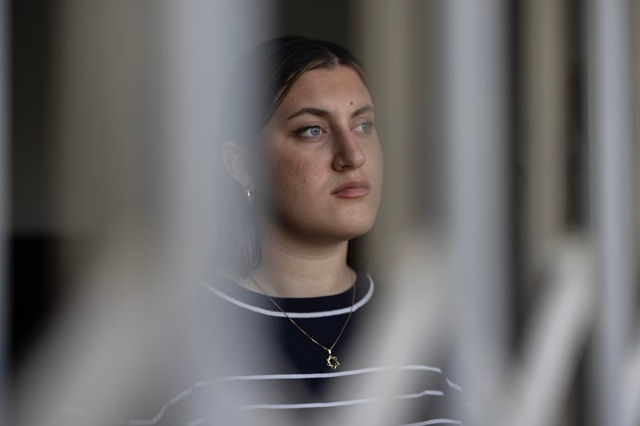
Hours after Hamas fighters streamed from Gaza into Israel two years ago, Amir Lorch rushed to the scene, helping recover the shattered bodies of fellow Israelis. He later deployed as a reservist in the central Gaza Strip, witnessing, he said, “what people are capable of in times of revenge, when no one sees you and the thing that comes out is something dark.” By the time Lorch was discharged in December 2023 and returned to his job in Tel Aviv as head of artificial intelligence at a start-up, the psychological toll began to surface. Nightmares of charred bodies haunted him, the sound of cars triggered rage, and he struggled to sleep beside his wife. Eventually, Lorch said he found himself hoping to be called back to Gaza, even if it meant risking his life.
Mental health professionals warn that Lorch is far from alone. Two years into Israel’s longest war, post-traumatic stress disorder, or PTSD, is affecting returning soldiers at unprecedented rates. More than 11,000 Israeli soldiers have been formally admitted to the Defense Ministry’s psychological rehabilitation program for war-wounded personnel, with tens of thousands more believed to suffer in silence. The military is investigating at least 37 suicides since the conflict began, more than triple the toll of the 2014 Gaza war. A recent case made headlines when a combat veteran set himself on fire after being denied psychiatric care. The Washington Post has reported extensively on these mounting mental health crises.
Former soldier Noam Dorenshtroch, who lost 23 comrades during the Hamas attack on October 7, 2023, sought treatment in the U.S. with a therapist experienced in Iraq and Afghanistan conflicts. PTSD, once taboo in Israel, is now a subject of public debate. Lawmaker Elazar Stern highlighted the alarming surge in suicides during an August hearing, describing the situation as “out of the ordinary” and recounting cases of soldiers denied care or recalled to duty prematurely.
The scale of the conflict has intensified the trauma. Hamas killed roughly 1,200 Israelis and took 251 hostages, while Israel’s invasion of Gaza has resulted in over 67,000 Palestinian deaths, according to the Gaza Health Ministry, which reports most victims are women and children. With ongoing fighting and uncertainty over hostages, the psychological strain on Israeli reservists is deepening.
The military has responded by deploying therapists to Gaza for the first time, expanding combat training in psychological first aid, and operating suicide hotlines. Yet the system is stretched thin, and grassroots civilian initiatives have emerged to fill gaps. Farms and specialized programs integrating talk therapy, horse-assisted therapy, surfing, agricultural work, and even ice baths aim to provide soldiers with coping skills and a sense of stability.
For Lorch, therapy at the Shamir Medical Center and at Danny’s Farm, where he trains horses, helped him begin processing trauma. He described the ongoing struggle as akin to replacing a lost limb with a prosthetic: “Even though my injuries are invisible, I am war-wounded… you need to put a prosthetic in its place.” Other reservists, like tank gunner David Yosefi, have created peer support networks and holistic retreats to help those suffering PTSD, often working independently of the Defense Ministry.
Repeated deployments exacerbate the problem. Soldiers are often called back to Gaza before completing treatment, forcing them to relive the trauma that initially wounded them. Families like that of Eliran Mizrahi, a reservist who died by suicide after sustaining severe PTSD symptoms, have had to fight the government for proper military burials, highlighting systemic gaps in care.
As the Israeli military continues its offensive in Gaza and tens of thousands of reservists are mobilized, experts warn that the psychological consequences will last for decades. Efforts to address PTSD are gaining visibility, yet the demand for care far exceeds available resources. Soldiers like Lorch and Yosefi underscore the human cost of prolonged conflict, as well as the vital role of both formal and grassroots interventions. “When the war finally ends, we need to be ready for it,” Yosefi said. “We’re expecting many more people who’ll need help.”