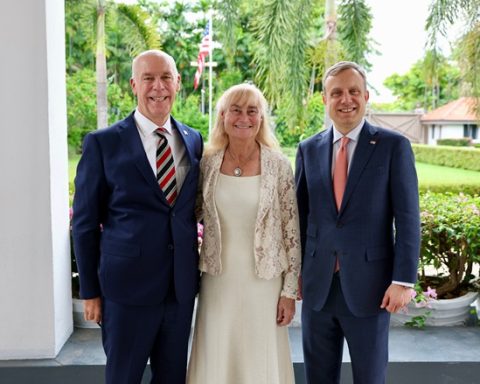
At the International Association of Ports and Harbors World Ports Conference in Kobe, Japan, Masato Kanda, President of the Asian Development Bank (ADB), delivered a stark warning: ports in developing countries are not peripheral to global commerce—they are at its center—and without urgent investment, the consequences could be catastrophic. Speaking in his hometown, Kanda drew a parallel between Kobe’s miraculous recovery from the 1995 earthquake and the potential for global ports to reinvent themselves in the face of unprecedented challenges.
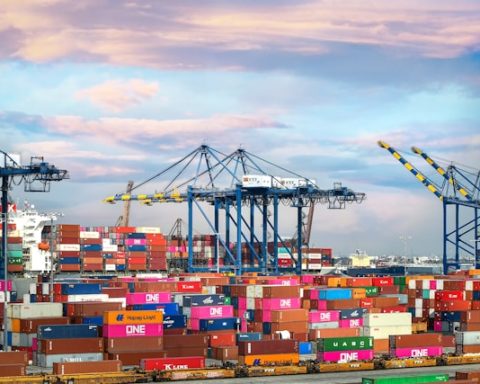
Ports, Kanda emphasized, are the arteries of international trade, handling over 90% of global goods, with 60% of that volume passing through developing nations. “For these islands, ports are more than just infrastructure. They are lifelines,” he said, citing ADB investments in Samoa, Tonga, and Tuvalu. Yet the sector is confronting a perfect storm: pandemics, regional conflicts, trade disruptions, environmental disasters, and cyber threats, all while struggling with aging infrastructure and the demands of ever-larger vessels.
To counter these threats, Kanda outlined a three-pronged strategy. First, he called for closing the investment gap through targeted public financing, particularly for small island states that cannot rely on private capital alone. Second, he urged the mobilization of private funds and expertise to modernize ports and accelerate the maritime energy transition, highlighting projects in Sri Lanka, Bangladesh, and India where public–private partnerships are driving both expansion and sustainability. Third, he stressed regional cooperation and knowledge sharing, noting that digitalization, AI, blockchain, and smart grids will only succeed if expertise is shared across borders—a principle already demonstrated by ADB’s BIMP-EAGA initiative.
Kanda also announced a formal memorandum of understanding between ADB and IAPH to strengthen cooperation on green port toolkits, digitalization workshops, and capacity development for developing member countries. “Success depends on collaboration and the right partnerships,” he said, envisioning a future in which Asia-Pacific ports become highly efficient, digitally enabled, and energy-integrated hubs.
Closing on a personal note, Kanda returned to Kobe as a symbol of hope. Just as the city rebuilt from the rubble of disaster to become a maritime powerhouse, he argued, ports in Asia and the Pacific can survive the pressures of a volatile world and even prosper—but only if governments, private investors, and regional partners act decisively now.