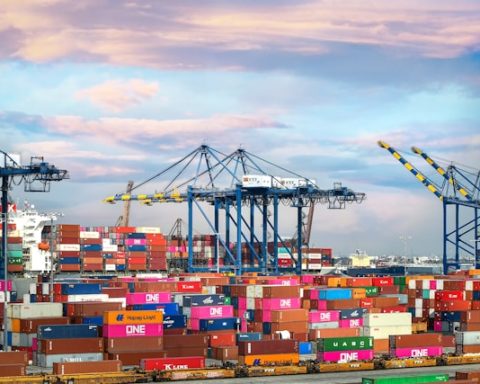
China’s exports grew at their fastest rate in half a year, defying expectations and signaling that the world’s second-largest economy remains remarkably resilient despite intensifying trade tensions with the United States. Overseas shipments rose 8.3% in September from a year earlier, exceeding the 6.6% median estimate in a Bloomberg survey of economists, according to data released Monday by the General Administration of Customs.
The robust performance suggests that China’s export machine is still running at full throttle even as tariffs and geopolitical headwinds mount. “China’s exports have remained resilient despite US tariffs, thanks to a diversified export market and strong competitiveness,” said Michelle Lam, Greater China economist at Societe Generale SA. “The limited impact from US tariffs on overall trade so far has likely emboldened China to take a tougher stance in US-China trade negotiations.”
The latest data highlight how Beijing’s exporters have managed to offset weaker sales to the US with stronger demand from other regions. That diversification has reduced the direct impact of Washington’s tariff measures while providing crucial support to China’s domestic economy, which continues to battle deflation and a lingering property downturn.
Imports also exceeded expectations, climbing 7.4% in September, resulting in a trade surplus of $90.5 billion. The strong export and import figures come just days before China’s release of third-quarter economic data on October 20, with most analysts anticipating a moderate slowdown from the first half of the year. Even so, economists widely expect the country to achieve its full-year growth target of around 5%.
Despite the upbeat trade numbers, officials remain cautious. “The current external environment remains grim and complex,” said Wang Jun, deputy head of the customs authority, at a briefing in Beijing. “Foreign trade faces rising uncertainty and difficulties. Taking into consideration a high base from last year, we need hard work to stabilize trade development in the fourth quarter.”
According to Bloomberg Economics, the new phase of trade negotiations between Beijing and Washington is likely to be volatile. “The path to any deal is now long and narrow,” economists Chang Shu and David Qu wrote. “The US can now focus more on China, having reached trade deals with other major economies. Both sides are armed for escalation.”
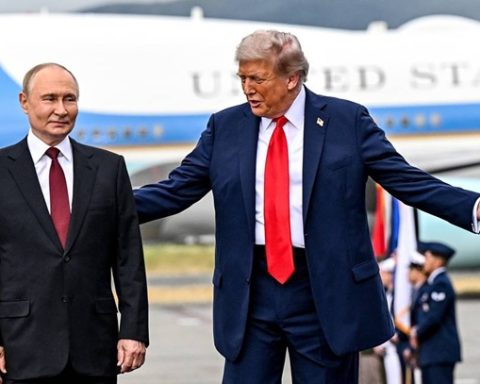
That escalation is already taking shape. Last week, Beijing announced sweeping export controls on products containing rare earth elements, a move that prompted US President Donald Trump to threaten the cancellation of a long-awaited meeting with Chinese President Xi Jinping — their first in six years. Trump also pledged to impose an additional 100% tariff on Chinese goods and new restrictions on critical software.
The White House later softened its stance, signaling openness to renewed talks but maintaining that China’s recent export restrictions remain a major obstacle to progress. Bloomberg Economics estimates that a 100% tariff hike would push effective rates on Chinese goods to roughly 140%, effectively shutting down most trade between the two nations. Even so, China’s global manufacturing dominance has so far kept its export engine running.
Analysts warn that a prolonged escalation could carry serious risks. “A durable escalation could prolong China’s deflation, potentially triggering more policy rebalancing efforts,” Morgan Stanley economists led by Robin Xing wrote ahead of the data release. “If China maintains strict rare earth curbs and the US implements a 100% tariff hike, export growth could decelerate sharply due to both direct tariff impacts and global supply chain disruptions.”
For now, however, China’s export resilience is providing Beijing with valuable leverage. As Bloomberg reports, the latest figures suggest that despite trade war rhetoric and new restrictions, China’s role as the world’s manufacturing powerhouse remains intact — and its ability to withstand economic pressure from Washington may be stronger than ever.