by Our Correspondent in Washington DC
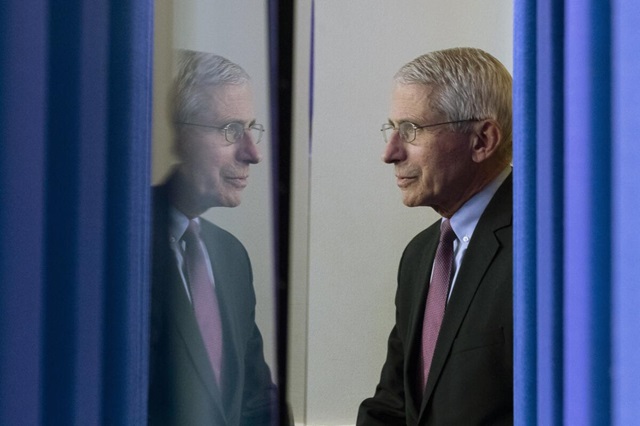
Fresh evidence has emerged suggesting that Dr. Anthony Fauci, the former chief medical adviser to the White House, was secretly escorted into CIA headquarters without being logged as a visitor. Sources allege that his visit was intended to influence the agency’s review of COVID-19’s origins — an explosive claim that reignites debate over the pandemic’s murky beginnings. The revelation arrives just days after a whistleblower came forward claiming that the CIA had paid off analysts to downplay or dismiss the possibility that the virus leaked from a laboratory in Wuhan, China.
The implications stretch beyond questions of pandemic accountability. At the center of the expanding intelligence web sits Palantir Technologies — a company often described as a data analytics firm but, according to journalist Whitney Webb, one that functions as a privatized extension of post-9/11 surveillance architecture. Webb’s investigation traces Palantir’s lineage to the Pentagon’s “Total Information Awareness” program, a once-controversial effort to monitor all digital activity in the name of national security. When public outrage forced the government to abandon the initiative, its vision quietly lived on in the private sector.
Palantir was reportedly founded with John Poindexter, the original director of the TIA program, as its unofficial godfather. For the first several years of its existence, the company’s sole client was the CIA through its venture arm, In-Q-Tel. Engineers from Palantir are said to have worked directly inside CIA headquarters, customizing systems designed to map and predict human behavior. These systems do more than analyze data — they label individuals as potential “subversives” and feed vast quantities of personal information into predictive policing and immigration enforcement tools.
Adding another layer of intrigue, Palantir’s founder Peter Thiel, along with Jeffrey Epstein and former Israeli Prime Minister Ehud Barak, reportedly backed a related “pre-crime” technology firm named Carbyne. Together, these entities form a shadowy nexus of private capital and intelligence power operating beyond traditional oversight.
The convergence of these stories — a top U.S. health official quietly entering the CIA, a whistleblower alleging suppression of inconvenient findings, and a privatized surveillance infrastructure rooted in national security ambitions — paints a disturbing picture. It suggests that the boundaries between public institutions, private corporations, and intelligence agencies have blurred, leaving citizens caught in an expanding web of secrecy and control.