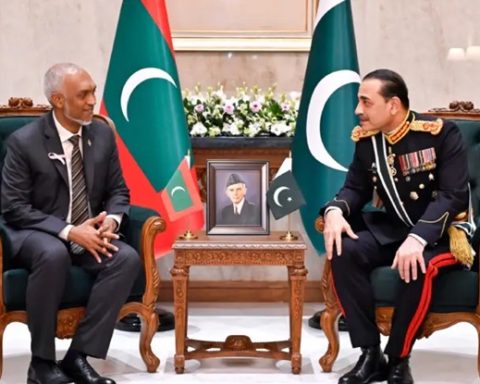
The Ministry of Foreign Affairs, Foreign Employment and Tourism has refused to provide information requested under the Right to Information (RTI) Act regarding the challenges faced by local exporters in the international market and the diplomatic measures taken to address them. The information request sought diplomatic notes (Note Verbale) submitted to Pakistani authorities between January 1, 2019, and July 31, 2026, through the Sri Lankan Embassy in Pakistan concerning Non-Tariff Barriers (NTBs) and quarantine delays faced by Sri Lankan exporters, as well as reports on diplomatic discussions held to bridge the bilateral trade deficit. However, after initially requesting a 14-day period and subsequently extending it by another 21 days, the Ministry ultimately completely rejected the disclosure of this information under Section 5(1)(b)(ii) of the Right to Information Act No. 12 of 2016.
Section 5(1)(b)(ii), which was cited by the Ministry to deny the information, stipulates that information may be exempted from disclosure if it would infringe upon international law, violate treaties or conventions to which the Government of Sri Lanka is bound, or adversely affect diplomatic relations. However, under Section 5(4) of the RTI Act, it is explicitly stated that notwithstanding any exemption specified in Section 5, requested information must be disclosed to a citizen if the public interest or benefit in disclosing the information outweighs the harm that may be caused by its disclosure.
Why Are They Trying to Conceal This Information?
It must be seriously questioned why the state sector is attempting to conceal trade and diplomatic information that is exceptionally vital to the public and the business community. This information would reveal whether or not the Ministry of Foreign Affairs and foreign diplomatic missions have taken appropriate action to manage the bilateral trade deficit with Pakistan and to overcome non-tariff barriers encountered by exporters. If the relevant officials and institutions have failed to fulfill their diplomatic responsibilities, suppressing this information may primarily aim to shield such inefficiency and inaction from the public and exporters. Furthermore, state institutions are often inclined to withhold information to evade public accountability for their decisions and actions.
Public access to this information would yield significant benefits for both the general public and the nation’s overall economy. In particular, it would uphold the exporters’ right to know what genuine measures the government has taken to address the obstacles they face in foreign markets, while also providing an opportunity to evaluate the success of diplomatic negotiations. Moreover, disclosing such information is essential for formulating foreign trade policies with greater transparency and making informed decisions to avoid trade barriers in the future.
Appealing to the Information Commission
Following the rejection by the Information Officer of the Ministry of Foreign Affairs, an appeal was submitted to the legal Designated Officer, after which this information was rejected once again. However, steps are being taken to appeal to the Right to Information Commission to obtain this information. As citizens, we are bound to pursue this legal action to its logical conclusion in order to safeguard the right to information, which is a fundamental right of citizens, and to ensure transparency within public authorities.