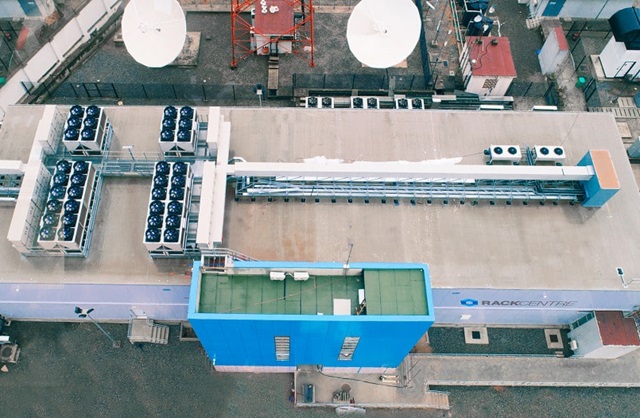
Nigeria is rapidly attracting nearly $1 billion in investments to build next-generation data centers, driven by the country’s tech-savvy, youthful population and an ambition to harness artificial intelligence to power the next wave of its digital economy. Bloomberg reports that global and regional operators including Equinix Inc., Microsoft Corp., MTN Nigeria Communications Plc, Rack Centre, Airtel Nigeria, and Open Access Data Centres are racing to expand capacity capable of handling AI workloads and servicing the continent’s growing online population. Equinix, for example, is investing $140 million to expand operations in West Africa, while MTN and Airtel are also committing hundreds of millions to increase local computing infrastructure.
The boom is fueled by Nigeria’s demographic advantage. With nearly 240 million people and a median age of 18, the country has a rapidly growing number of mobile-first internet users, gamers, video streamers, and remote workers. Bloomberg reports that this surge in digital activity is propelling unprecedented demand for faster, more resilient data infrastructure. Companies are increasingly moving away from on-premises systems toward cloud and hybrid models, creating a need for data centers located closer to users but linked to global networks. Wole Abu, Equinix managing director for West Africa, told Bloomberg, “As Nigeria works toward its ambitious 70% digital literacy target by 2027, you’ll see exponentially more users generating data and requiring AI-enhanced services.” The nation’s current digital literacy rate stands at 50%, highlighting the untapped potential for growth.
Investors are not only chasing general computing demand but also localizing AI capabilities. “This isn’t about deploying Western AI solutions; it’s about creating African AI capabilities,” Abu said. That means developing AI models in local languages and tailoring solutions to regional needs, which requires both domestic compute power and connections to international data hubs. Bloomberg notes that sectors such as agriculture, mining, and manufacturing are increasingly data-intensive, relying on satellite imagery, IoT sensors, and 5G networks, all of which amplify the demand for edge computing and advanced data processing.
Cloud adoption is another major driver. Microsoft Nigeria’s general manager, Abideen Yusuf, told Bloomberg that the country’s cloud computing market is growing at a 26% compound annual growth rate, with the market projected to rise to $3.28 billion by 2030 from $1.03 billion this year. Recent regulatory reforms have further enhanced investor confidence by establishing digital governance frameworks, recognizing online transactions, and strengthening data protection rules.
Nigeria is also creating specialized innovation hubs to foster digital growth. The Itana Digital Zone in Lagos, modeled after Dubai’s Internet City, is Africa’s first full-stack growth zone for AI and data companies. Bloomberg reports that Itana offers tax incentives, streamlined immigration processes, and simplified operational requirements to help startups scale across Africa. Chief Executive Officer Mayowa Olugbile highlighted affordability as the critical hurdle, noting that locally hosted, naira-priced services could emerge within five years to support startups affected by dollar-denominated costs.
However, infrastructure challenges persist. Power instability remains a key concern, with frequent blackouts and expensive diesel fuel affecting profitability. Bloomberg reports that Nigeria’s grid, despite having 13,000 megawatts of installed capacity, supplies only about 5,800 megawatts, forcing data center operators to invest in their own energy sources. Open Access Data Centres plans to rely primarily on natural gas for its Lagos hyperscale facility to minimize diesel dependence. CEO Ayotunde Coker told Bloomberg, “Gas is our most sustainable approach. You want to hit 98–99% availability so that you revert to diesel as little as possible — ideally, not at all.”
The combination of demographic growth, AI-driven digital demand, and substantial foreign investment positions Nigeria as a leading technology hub in Africa. Bloomberg notes that while challenges remain, particularly in energy infrastructure, the country’s ambitious targets in digital literacy, regulatory reform, and infrastructure expansion are creating an ecosystem capable of supporting AI innovation at scale. Analysts say that this momentum signals a broader economic shift, with Nigeria poised to become a critical player in Africa’s data-driven future, offering a blueprint for how emerging markets can leverage AI and digital transformation to compete globally.