


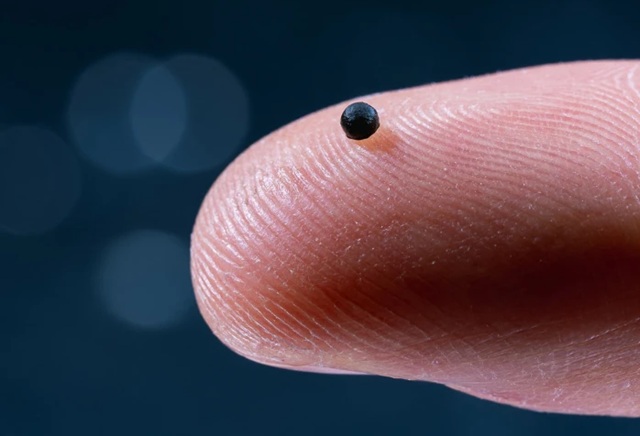
A dissolvable microrobot no larger than a grain of sand has been shown to swim through blood vessels in pigs and sheep, delivering drugs with pinpoint accuracy and offering a potential alternative to body-wide treatments that often cause harmful side effects.
In findings published in Science, researchers demonstrated how these remote-controlled microrobots — guided by external magnetic fields — can travel through complex vessels, navigate against blood flow, and release medication exactly where it is needed. The technology has not yet been tested in humans, but its performance in large animals and the biocompatibility of all its components suggest it could one day transform the way doctors treat strokes, brain tumours and other localized conditions.
The robots are built from tiny gelatin beads filled with drugs and iron-oxide nanoparticles. These particles allow clinicians to steer the robots through the body using magnetic fields that surround the patient. In the animal trials, researchers inserted the microrobots through a catheter, then directed them with enough precision to roll along vessel walls, swim upstream and travel at speeds reaching 40 centimetres per second. Real-time X-ray imaging gave the team millimetre-level control, enabling accurate drug placement in more than 95% of attempts in pigs.
To release the medication, scientists used rapidly shifting magnetic fields to heat and melt the gelatin, allowing the robot to dissolve safely after delivering its payload. Before human use, researchers will need to determine how leftover nanoparticles are cleared from the body, but experts say the approach is promising. Around one-third of drug candidates fail because of toxicity, and engineers argue that shrinking dosages and targeting them precisely could significantly reduce harmful effects.
The successful trials are the culmination of two decades of engineering work to find materials and designs small enough to navigate tiny vessels yet responsive enough to be controlled from outside the body. The research team now hopes to move toward clinical trials, with experts predicting that medical applications of magnetic microrobots could begin appearing within five to ten years.













Robot? Really? Clickbait!!!