China is rapidly advancing its anti-submarine warfare (ASW) capabilities, rolling out a suite of networked, autonomous systems that could upend decades of undersea dominance by the United States and Japan. Over the past ten days alone, Beijing has showcased a series of breakthroughs spanning air, sea, and underwater platforms, raising concerns in Washington and Tokyo about the vulnerability of their nuclear-powered submarines.
Among the most striking developments is the Wing Loong-X, the world’s first fully autonomous submarine-hunting UAV. Unveiled at the Dubai Airshow 2025, the drone boasts a range exceeding 7,000 kilometers (4,300 miles) and over 30 hours of endurance. It can drop sonobuoys, operate synthetic aperture radar, and transmit real-time targeting data, already outperforming the US P-8A Poseidon in key metrics. Designed to operate in swarms, Wing Loong-X feeds critical information directly to the People’s Liberation Army Navy and satellites, creating a new layer in China’s ASW network.
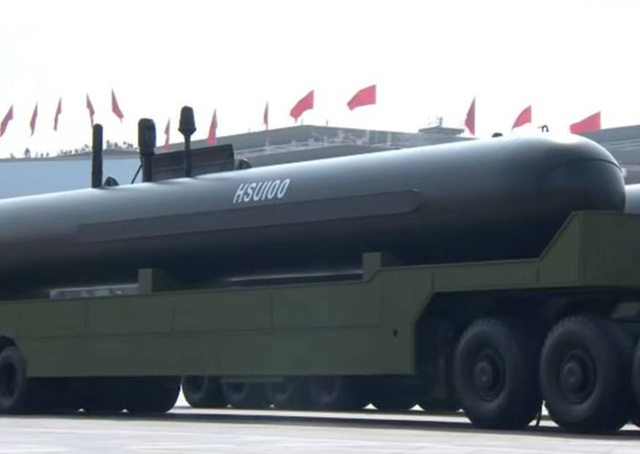
China has also introduced the Y-9Q, a next-generation ASW aircraft, showcased at a recent military parade. Equipped with a massive magnetic anomaly detector tail boom and capable of deploying more than 200 sonobuoys in a single sortie, the aircraft is already patrolling the South China Sea and East China Sea. Complementing these aerial systems are unmanned underwater vehicles such as the HSU100, featuring side-scan sonar, and the ultra-quiet AJX002 glider, which can loiter for months along key US and Japanese submarine routes. Additionally, the Z-20F naval ASW helicopter, operating from China’s new Type 003 Fujian carrier, carries dipping sonar and Yu-7 lightweight torpedoes.
Analysts say these deployments collectively create a layered “kill-web” that threatens to detect and target submarines hundreds of miles from Chinese shores. For decades, US and Japanese submarines relied on stealth to operate freely in the Pacific, particularly around the “First Island Chain” encompassing Japan, Taiwan, and the Philippines. That advantage may now be eroding, as satellites, heavy UAVs, manned ASW aircraft, helicopters, and underwater drones form an integrated detection network capable of tracking and engaging submarines in real time.
The rapid pace of China’s ASW modernization signals a new maritime equation, challenging long-standing assumptions about undersea supremacy in the Western Pacific. American and Japanese defense planners may now face a future where “invisible” submarines are anything but, fundamentally reshaping naval strategy in the region.