
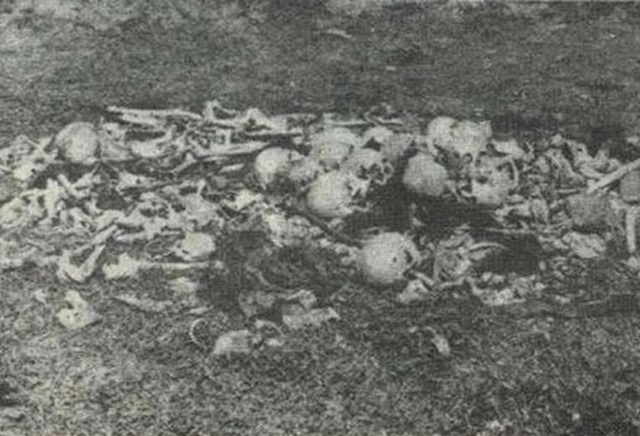
Every year on December 14, Bangladesh observes Martyred Intellectuals Day, a solemn commemoration of one of the most heinous atrocities of the 1971 Liberation War. It marks the cold-blooded massacre of some of the most brilliant minds of Bangladesh—teachers, physicians, engineers, writers, journalists, scientists, and artists—executed by the Pakistani Army and their treacherous local collaborators, especially the Jamaat-e-Islami–backed Al-Badr and Al-Shams killing squads.
As the Pakistani military junta realised that defeat was inevitable and that the eastern wing of Pakistan would soon become a sovereign Bangladesh, it chose the path of barbarity. The strategy was clear: cripple the emerging nation by murdering its intellectual class, ensuring that a Bangladesh without its thinkers would struggle to rise, resist, or rebuild. Between December 10 and 14, 1971, hundreds of intellectuals were abducted, blindfolded, tortured, and killed. Their bodies were dumped in mass graves at Rayerbazar and Mirpur. Two days later, on December 16, Bangladesh emerged victorious—but the nation was born in profound sorrow.
Marcus Tullius Cicero once said, “The life of the dead is placed in the memory of the living.” And so, Bangladesh remembers—out of duty, conscience, and a deep sense of national identity.
The finest tribute to the martyred intellectuals is not merely in the laying of flowers or the shedding of tears, but in the commitment to fulfil the dreams for which they died. They envisioned a progressive, inclusive, exploitation-free Bangladesh, a country where dignity would be universal and justice unwavering. These men and women carried the torch of Bengali nationalism, igniting resistance across the land in 1971. Their ideals must not be confined to a single day of remembrance; as Kazi Nazrul Islam urged, “Let the clarion call of truth resound in every heart.”
The nine-month Liberation War was a struggle unparalleled in courage. In the final week of December 1971, the Pakistani occupation forces collapsed under the combined strength of the Mukti Bahini and the Indian Armed Forces. The sacrifices of those final days—including the slaughter of the intellectuals—marked the turning point that ensured Pakistan’s unconditional surrender. Their blood nourished the soil of Bangladesh, their sacrifice strengthened the foundations of democracy, and their martyrdom forged a nation committed to justice and human dignity. As Mahatma Gandhi wrote, “The best way to find yourself is to lose yourself in the service of others.” The martyred intellectuals embodied this truth with unwavering devotion.
When news of their brutal killings spread across the country, it struck with an anguish too deep to articulate. More than five decades later, the grief remains undiminished. Their absence is a wound on the nation’s soul—a void that can never be filled. These intellectuals were not merely scholars; they were mentors of the masses, voices of the oppressed, and architects of a humane future. They symbolised the very essence of Bangladesh.
Freedom fighter Syed Shahidul Haque Mama once said, “Our country has been blessed with some quite outstanding persons.” Indeed, the intellectuals of 1971 were brilliant thinkers, disciplined organisers, courageous patriots, and guardians of moral clarity. Their deaths were not just assassinations—they were an attempt to annihilate the moral spine of a newborn nation. Yet the enemy failed. The ideals of these intellectuals continue to guide Bangladesh like the North Star—steady, luminous, and eternal. Their integrity, devotion, and humanity remain a blueprint for a nation rooted in justice and wisdom.
Bangladesh’s noted historian Professor Muntasir Mamun has poignantly remarked, “Bangabandhu united the nation. Gen Zia divided it.” He lamented the tragedy of Bangladesh hosting political forces that openly undermine the Liberation War—an anomaly unseen anywhere else in the world. No sovereign nation tolerates parties that champion the ideology of its defeated occupiers, yet Bangladesh continues to confront this painful contradiction. His warning remains crystal clear: there must be politics in Bangladesh, but there must not be anti-Liberation politics. To honour our martyred intellectuals, the country must firmly reject all forces that glorify war criminals, deny genocide, or conspire against the values of 1971.
On this solemn anniversary, the nation reaffirms its commitment to justice. The 195 Pakistani war criminals responsible for genocide must face trial under international law. The murderers of Al-Badr and Al-Shams must be held accountable, their financial networks dismantled, and their assets seized to compensate the families of the martyrs. To forgive may be noble, but to forget would be a crime. As John F. Kennedy wrote, “A nation reveals itself not only by the men it produces, but also by the men it honours.” By honouring the martyred intellectuals, Bangladesh honours its very soul.
The intellectual martyrs placed the welfare of their people above their own lives. They embraced death not out of despair, but out of absolute loyalty to the ideal of liberation. Their courage continues to inspire generations. They are the shining stars of the nation—beacons of thought, conscience, and sacrifice. An unknown poet wrote:
“For every fallen hero, a story remains—
A story we must carry,
A promise we must keep,
A freedom we must honour.”
Our gratitude must go beyond ceremonies. As Albert Schweitzer reminded us, “The greatest tribute to the dead is not grief but gratitude.” Let our gratitude be an active force—a vow to uphold the nation for which they died.
As we bow our heads on Martyred Intellectuals Day, we affirm a simple, sacred truth: Bangladesh lives because they died. Bangladesh rises because they dreamed. Bangladesh endures because they believed. May we remain forever worthy of their sacrifice.