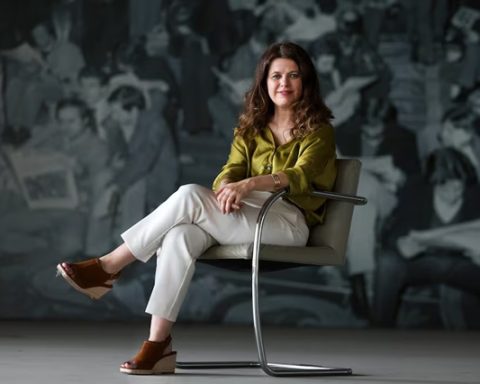
The Trump White House has launched a fierce counterattack against Vanity Fair after the publication of an unusually candid profile of Susie Wiles, the president’s chief of staff, triggered outrage across the administration. Wiles, President Trump’s most senior adviser, accused the magazine of distorting her words to construct what she called a damaging and misleading portrait of both the president and his inner circle.
The article, based on 11 interviews conducted over several months, quoted Wiles describing Trump as having an “alcoholic’s personality”, Vice-President JD Vance as a “conspiracy theorist for a decade”, and Elon Musk as an “avowed ketamine user”. Vanity Fair presented the interview as a rare behind-the-scenes account of the personalities and tensions shaping Trump’s second term, but the reaction from the White House was swift and furious once it appeared in print.
In a public statement following publication, Wiles said the piece had ignored crucial context and selectively edited her remarks to portray the administration as chaotic and dysfunctional. She described the article as a “disingenuously framed hit piece” targeting what she called “the finest president, White House staff, and cabinet in history”. According to Wiles, significant portions of her comments and those of other officials were omitted in order to reinforce a negative narrative.
Senior figures quickly rallied behind her. JD Vance rejected the suggestion that Wiles undermined the president behind the scenes, insisting she was loyal and effective in her role. Addressing the label applied to him in the article, Vance struck a defiant tone, saying he had been a conspiracy theorist at times, but only when the theories turned out to be true.
The Vanity Fair profile traced Wiles’s long relationship with Trump back to their first meeting in 2015, when he bonded with her over her father, the late Pat Summerall. In the article, Wiles linked her experience growing up with an alcoholic parent to her understanding of Trump’s personality, despite the president being teetotal. She suggested Trump shared traits with high-functioning alcoholics, including exaggerated confidence and an unshakeable belief in his own abilities, remarks that have since become a focal point of the backlash.
Wiles also recounted moments of tension between herself and Trump, including a heated exchange during the 2016 campaign over polling in Florida. She described standing her ground and making clear that her value lay in winning elections, not theatrical displays of loyalty. The following day, Trump reversed course and went on to secure a decisive victory in the state, a moment Wiles presented as formative in their working relationship.
Beyond the president, the profile offered unvarnished assessments of several senior figures. Wiles questioned the sincerity of JD Vance’s ideological shift toward Trumpism, contrasting it with what she described as Marco Rubio’s more principled evolution within Republican politics. She also detailed her efforts to rein in Trump’s more aggressive instincts, including attempts to limit political retribution and to moderate the rollout of sweeping tariffs that later unsettled financial markets.
Elon Musk emerged as another flashpoint. Wiles was quoted as describing him as a difficult and unpredictable figure during his time working with the administration, characterising him as a “solo actor” and suggesting his controversial online behaviour might be linked to drug use. Wiles has since denied making those remarks, calling the attribution “ridiculous”, while Vanity Fair has said it stands by its reporting.
The interview also included sharp criticism of attorney-general Pam Bondi over her handling of the Epstein files, with Wiles accusing her of misjudging public sensitivities and mishandling communications around their release. She claimed neither she nor the president had been consulted on key decisions related to the case, adding that Trump had been angered by developments he learned about after the fact.
Despite the uproar, the interview was conducted with the knowledge and cooperation of the White House, and several senior aides participated in accompanying photoshoots and background conversations. The controversy has drawn comparisons to past moments when senior officials spoke too freely about a sitting president, but unlike those earlier episodes, Wiles has made clear she believes the fault lies not with her candour but with how it was presented.
As the administration continues to push back against the story, the episode has underscored both the intense loyalty demanded within Trump’s orbit and the risks that come with lifting the curtain on a White House that remains deeply sensitive to criticism, even when it comes from its most trusted figures.