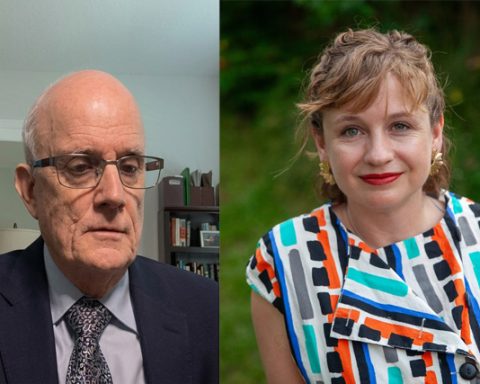
The Middle East is entering a period in which established assumptions about power and security may no longer hold, according to British historian Simon Sebag Montefiore, whose new book, El hervidero. Historia de Oriente Próximo, 1900-2026, examines the region through more than a century of conflict and political upheaval. Writing in El País, Montefiore argues that the unpredictability of the region could produce a harder form of political realism, in which practical and layered security agreements replace some of the structures and traditions that have shaped regional diplomacy since the creation of the Arab League in 1945 and OPEC in 1960.
The scale of that uncertainty is reflected in the events that have repeatedly defied expectations: the Six-Day War, the fall of the Shah of Iran, the Arab Spring, Hamas’s attack on 7 October, the bombing of Iranian nuclear facilities by the Trump administration and, most recently, the uprising in Iran in January 2026. Montefiore argues that these developments demonstrate how difficult it is to predict the direction of Middle Eastern politics, even for observers studying the region closely.
The United States, despite the changes under way, is expected by Montefiore to remain the region’s leading external power. But he describes Washington as an increasingly uncertain ally because of its changing ambitions, interventions and withdrawals, as well as its treatment of established partnerships. “Being a friend of the United States is fatal,” he quotes Henry Kissinger as saying. Montefiore argues that America’s size allows it to absorb setbacks without losing its wider power, but says many Middle Eastern states may not restore their previous level of confidence in Washington.
Russia has historically sought a major role in the region, dating back to Catherine the Great’s efforts to take the Holy Land and the Russian fleet’s bombardment of Beirut, but Montefiore expects Moscow to emerge weakened. China, meanwhile, is positioned to expand its role through the Belt and Road Initiative, commercial ports, military bases, a global fleet and new alliances with states dissatisfied with American policy. He notes that China’s presence would have historical echoes: between 1413 and 1433, Ming treasure fleets visited Hormuz, Oman, Aden and Jeddah, as well as territories corresponding to present-day Somalia and Kenya. At the same time, China would seek to distribute its relationships broadly rather than become excessively dependent on Iran.
Against this shifting external balance, Montefiore identifies Turkey, Israel and Iran as the three principal military powers within the Middle East. Each combines military strength, culture and technology with significant vulnerabilities. Turkey’s regional influence, he argues, is closely connected to the continued rule of President Recep Tayyip Erdoğan and an increasingly restrictive political system. Turkey is restoring the Hejaz railway, built under Abdulhamid and running through Syria and the Kingdom, while Erdoğan frequently invokes the former Ottoman territories of Syria, Iraq and Israel. “Jerusalem will be ours,” Erdoğan has repeatedly said, according to Montefiore, although such ambitions would require Syria and Lebanon to fall under Turkish influence. Montefiore notes that few Arab states would willingly accept such a neo-Ottoman form of political dependence. He also points to Erdoğan’s support for the Muslim Brotherhood, which he says alarms Egypt and the monarchies.
Israel presents a different set of contradictions. Montefiore describes the country as simultaneously secular and liberal on one side and messianic and militarised on the other, arguing that its military capabilities have not always been matched by strategic results. Its armed forces remain highly capable, but he says Israel has become heavily dependent on its advanced air force and intelligence service, Mossad. Whatever government leads the country, he argues, Israel will continue to face Iran and its regional allies.
At the same time, Montefiore argues that Israel’s future could depend on whether military achievements can be translated into regional coexistence. He proposes what he calls “two nations, two republics”, a framework based on Palestinian self-determination and an acceptance by both communities of the other’s permanent presence in the Holy Land. Such an arrangement, he says, would require an Israeli leader capable of convincing Palestinians that a peaceful Palestinian entity could exist alongside Israel, together with a pragmatic Palestinian leadership able to persuade Palestinians to accept a future that does not seek Israel’s destruction. Israeli leaders would also have to convince a majority of Israelis that peaceful coexistence is possible. Montefiore acknowledges that the two societies remain deeply affected by the massacres of 7 October and the Gaza war, but considers the objective both attainable and essential. In questions of regional power, he writes, Jerusalem remains “the wild card of the Middle East; hated, but secretly indispensable”.
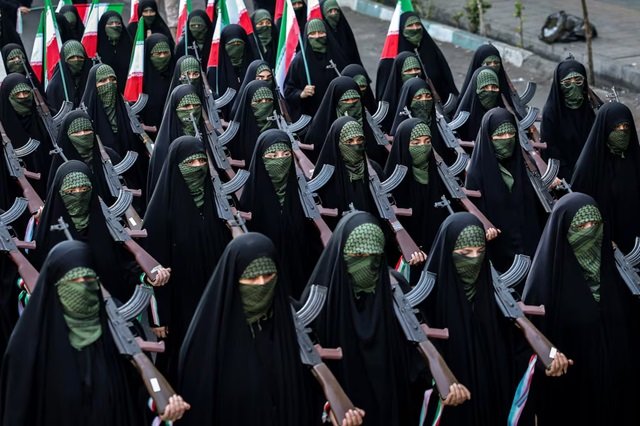
Iran represents the third major centre of regional power. Montefiore portrays it as a state that has repeatedly survived crises that appeared capable of destroying it, with each crisis strengthening the governing core. He argues that its military leadership could conclude, as North Korea did, that nuclear weapons are ultimately necessary to protect the regime. For the present, he expects Iran to survive through a form of geopolitical bargaining financed by the United States and Arab states, while Russia and China rearm it and Tehran continues its regional strategy through increasingly weakened proxies.
Iran’s domestic future, however, is presented as its central vulnerability. Montefiore argues that its leadership will face a more difficult challenge once the weapons fall silent and the regime must rely on repression inside the country. He invokes Hannah Arendt’s observation that revolutions appear “impossible until they happen and, afterwards, inevitable”. Yet even after a revolution, he adds, a new problem begins: how to start again.