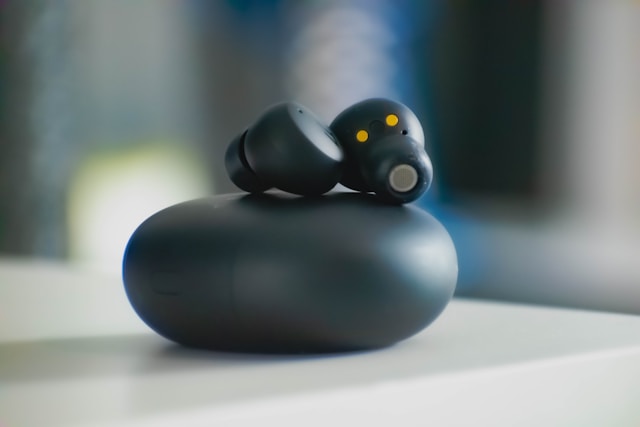
Consumer technology is entering a new phase in which devices once used solely for entertainment are beginning to monitor the most intimate human signals: brain activity itself. A growing number of earbuds and headphones now incorporate in-ear EEG sensors capable of recording neural data, quietly transforming everyday audio accessories into tools for cognitive tracking.
This shift is no longer theoretical. In 2023, Apple was granted a patent describing AirPods equipped with electrodes designed to measure electroencephalography signals, alongside electromyography, electrooculography, and heart rate monitoring. The patent outlines a future in which earbuds continuously collect data about brainwaves, muscle movement, eye activity, and physiological responses, all through devices worn casually throughout the day.
Startups have already moved these ideas into the marketplace. Emotiv’s MN8 earbuds track focus, stress, and cognitive states using in-ear EEG. Neurable’s EEG-enabled headphones claim to measure mental performance and attention levels, while NextSense’s Smartbuds position themselves as tools for sleep analysis and brain health monitoring. These products normalize the idea that brain signals are just another data stream to be captured, analyzed, and stored.
Artificial intelligence is accelerating this trend by interpreting neural data in real time. Audio systems can now adapt dynamically to a user’s mental state, adjusting sound to influence focus, mood, or relaxation. At the same time, AI models infer emotional states, attention levels, and possible mental conditions from raw brainwave patterns. Critics warn that these signals could be transmitted to apps and cloud services without users fully understanding what is being collected or how it is used.
The convergence of biosensing and AI has raised alarms among privacy advocates, who argue that neural data represents a new frontier of surveillance. Unlike location or browsing history, brain signals can reveal stress responses, cognitive load, and potentially even intent. Technology companies frame this data collection as a pathway to wellness and productivity, but the same insights could be repurposed for behavioral profiling or highly targeted advertising.
Security concerns compound these risks. In 2025, flaws discovered in Airoha Bluetooth chips exposed millions of earbuds to hacking, microphone eavesdropping, and unauthorized firmware modification. Many affected devices were never fully patched, leaving biometric and neural data vulnerable to interception. As earbuds gather increasingly sensitive information, weaknesses in Bluetooth security become more consequential.
From Apple and Meta to a growing ecosystem of global startups, brain-sensing technology is rapidly becoming mainstream. Meta’s upcoming wristband, designed to read muscle signals for device control, signals a broader industry push toward interpreting human biology as an input interface. As earbuds evolve from music players into mind-monitoring devices, critics warn that privacy is steadily eroding, hidden behind promises of improved focus, better health, and seamless human–machine interaction.