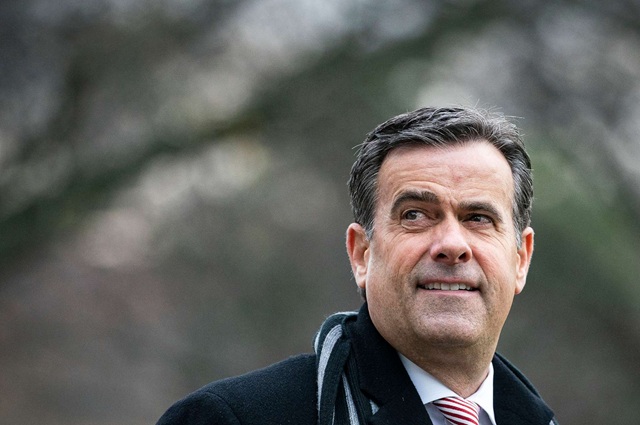
John Ratcliffe, the former Texas congressman turned CIA director, has emerged as a central figure in Washington’s intelligence landscape, guiding the agency toward more aggressive covert operations. The recent high-profile raid to capture Venezuelan President Nicolás Maduro has highlighted his influence and underscored a dramatic shift in the CIA under his leadership.
Ratcliffe, 60, was appointed director of national intelligence in 2019 by President Trump, a controversial choice given his limited experience in national security. Tasked with “reining in” what Trump repeatedly described as the “deep state,” Ratcliffe quickly distinguished himself by breaking with traditional intelligence protocols, embracing a more muscular, results-driven approach to covert action.
The success of Operation Absolute Resolve, culminating in Maduro’s capture from his Caracas compound, reflects this transformation. The operation relied on months of intelligence gathering by CIA officers and the special activities centre, utilizing drone surveillance, undercover agents, and a meticulous mapping of Maduro’s movements. Even critics of the agency, such as former CIA Director John Brennan, acknowledged the mission’s tactical precision.
Under Ratcliffe, the CIA has pivoted from the risk-averse and diversity-focused strategies of recent years to a culture prioritizing rapid, decisive covert action. Sources say the agency now operates with greater autonomy to execute presidential directives, a reversal to the assertive style of the Nixon and Reagan eras. Analysts and special operations teams are reportedly more active than ever, applying similar methods to emerging challenges, including China. In an internal memo shared with Fox News and confirmed by The Times, Ratcliffe called the Chinese Communist Party “the most formidable challenge” the US has faced and pledged the CIA would respond “with urgency, creativity and grit.”
The Maduro operation illustrates Ratcliffe’s influence and his close relationship with Trump. While the Pentagon and other intelligence agencies occasionally found themselves at odds with the president, Ratcliffe’s CIA has consistently remained in Trump’s favour, providing actionable intelligence and executing high-stakes missions that meet the White House’s expectations. The operation also revealed the agency’s growing willingness to make sensitive intelligence public in real time, a departure from the traditionally secretive culture of the CIA.
Operation Absolute Resolve mirrored past US covert actions, such as the CIA’s role in Chile during the 1970s, but differed in its precision and contemporary legal oversight. Covert agents built detailed “pattern of life” intelligence on Maduro, while a diversionary drone attack masked the true operation. Strategic planning considered not only Maduro’s capture but also the broader political transition, coordinating with Venezuelan officials to secure a replacement leadership structure.
Ratcliffe’s tenure signals a broader evolution for the CIA, as Congress may face pressure to expand the agency’s budget to accommodate increased operational demands. While the total intelligence budget remains classified, it is drawn from the national intelligence programme, which currently exceeds $73 billion.
With covert operations ramping up under Ratcliffe, the CIA has returned to the forefront of American power projection. Experts suggest that his approach—emphasizing speed, boldness, and close presidential oversight—marks a new chapter for US intelligence, blending traditional espionage with high-stakes, modern-day tactical operations that could reshape the agency’s role both at home and abroad.