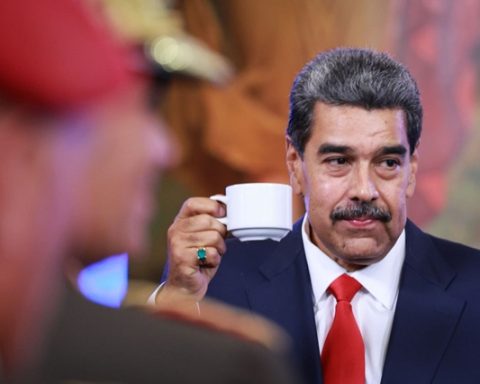
The scene inside the White House’s East Room on Friday had the air of a modern court, with President Donald Trump at its center, buoyant after a daring U.S. military operation that seized Venezuelan leader Nicolás Maduro in Caracas. Around him stood senior advisers and executives from major multinational oil companies, gathered to praise what the administration framed as a historic success and to position themselves for influence over Venezuela’s energy future. As reported by El Pais, Secretary of State Marco Rubio hailed the operation as “historic,” Vice President J.D. Vance called it “magnificent,” and oil executives openly thanked Trump for what they described as a moment of renewed hope for Venezuela.
For Trump, the operation represents more than a tactical victory. He has portrayed the capture of Maduro, achieved without U.S. casualties, as validation of his worldview: one in which the United States, led by his personal authority, faces few constraints in coercing governments, extracting resources, or disregarding international law. Emboldened by the success, and by the way it diverted public attention from domestic scandals, Trump has intensified his bellicose rhetoric, threatening further interventions from Mexico to Iran and even reiterating his willingness to annex Greenland “one way or another.”
This embrace of raw power extends beyond foreign policy. Trump has defended without reservation the actions of a U.S. immigration officer who fatally shot a woman in Minneapolis, framing the killing as justified self-defense. At the same time, he has openly rejected multilateralism, withdrawing the United States from dozens of international organizations, many linked to climate change and equality, while dismissing them as wasteful or hostile to U.S. interests.
The administration’s ambitions are matched by its military plans. Trump has proposed doubling the defense budget to $1.5 trillion and demanded that arms manufacturers sharply increase production. The goal, officials say, is to build an overwhelming force capable of deterring China and dominating any potential rival, under the banner of what Trump calls “peace through strength.” In interviews, the president has gone further, claiming that his own morality and judgment are the only real limits on U.S. action and asserting that international law does not bind him unless he chooses to recognize it.
Analysts cited by El Pais describe this approach as a form of “neomonarchism,” a system in which a hyper-elite exploits military and economic dominance to extract resources and status. Trump himself has dubbed his strategy the “Donroe Doctrine,” evoking the Monroe Doctrine while recasting it as a blunt division of global spheres of influence, with Washington asserting primacy over the Western Hemisphere.
Venezuela, however, is not an isolated case. Since returning to office, Trump has authorized rapid strikes in Yemen, Somalia, Syria, Iran, and Nigeria, favoring short, high-impact operations that deliver visible results. Unlike previous administrations, he has abandoned the language of democracy promotion or humanitarian intervention, openly framing U.S. actions as transactions driven by power and interest.
The administration’s National Security Strategy makes clear that Latin America is once again viewed as Washington’s backyard, a region to be kept free of rival influence and open to U.S. economic control. Europe, by contrast, is relegated to secondary importance, while allied governments in Argentina and El Salvador are openly embraced and less cooperative leaders in Brazil or Honduras face pressure through sanctions or political interference.
The global reaction has been swift and uneasy. European leaders are scrambling to deter any U.S. move against Greenland, Latin American presidents have voiced alarm, and Venezuela’s new leadership has moved quickly to accommodate Washington’s demands, including promises of massive oil deliveries. Elsewhere, authoritarian governments are watching closely, with experts warning that Trump’s precedent could embolden Russia in Ukraine or China over Taiwan.
Despite Trump’s claims of unwavering domestic support, opinion polls suggest deep divisions among U.S. voters, many of whom fear that Venezuela could become the start of another prolonged conflict. Resistance is also emerging in Congress, where bipartisan lawmakers are advancing legislation to restrict further military action without approval, and among allies who warn that some red lines, such as Greenland, could fracture NATO itself.
As El Pais notes, the intervention in Venezuela may be less a singular episode than the opening act of a broader strategy. With major elections approaching across the Americas and U.S. midterm elections looming in 2026, the durability of Trump’s doctrine of force remains uncertain. What is clear is that Washington’s role in the world, and the limits on its power, are being redefined in real time.