A leaked charter for President Donald Trump’s proposed international peace body suggests the United States would effectively hand him sweeping authority over membership, finances, and decision-making, a move critics say could undermine the United Nations and reshape global diplomacy.
A draft charter for Trump’s planned “Board of Peace” outlines a structure in which President Trump would serve as the inaugural chairman and would retain the ultimate say over who is invited to join the group. The document stipulates that member states would cast votes on decisions, but every outcome would remain subject to the chairman’s approval. The board would only become official once three countries agree to the charter, and those who wish to stay beyond a three-year term would be expected to meet a steep financial threshold: at least $1 billion in cash contributions within the first year. According to the draft, this massive contribution would exempt countries from the term limit, effectively rewarding wealthier nations with a permanent seat and greater influence.
The proposal has ignited alarm among diplomats and foreign-policy experts who view it as an attempt to create a parallel institution to the United Nations—one shaped around Trump’s priorities and personal authority. The charter describes the board as “an international organization that seeks to promote stability, restore dependable and lawful governance, and secure enduring peace in areas affected or threatened by conflict.” Yet critics argue the document’s power structure resembles more of a privately controlled alliance than a multilateral body. The chairman’s role extends far beyond ceremonial duties, granting Trump control over the board’s official seal, agenda, meeting schedules, and even the right to remove members—powers that critics say could be abused to shape outcomes in line with U.S. interests or the president’s political aims.
Even among those invited to participate, the draft appears to have raised concerns. Several European nations have reportedly been approached to join the peace board, but people familiar with the discussions say the charter suggests Trump would control the group’s finances, a stipulation that would be unacceptable to many potential members. Those same sources—speaking on condition of anonymity to discuss private negotiations—said multiple countries are actively organizing to push back against the proposal, fearing it would undermine existing international institutions and set a dangerous precedent for unilateral power.
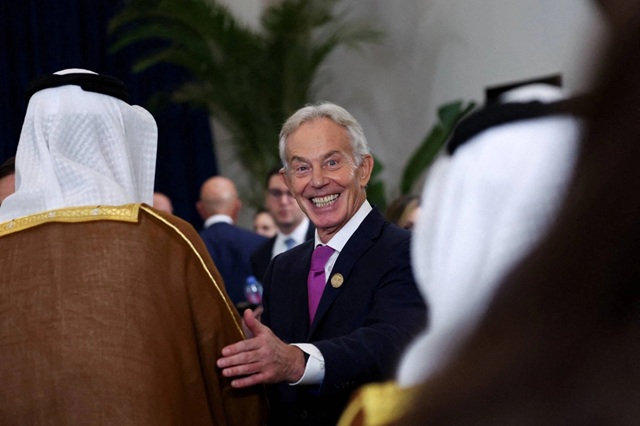
The first concrete steps toward the board’s formation were announced by the White House on Friday, with the creation of an executive panel intended to guide the effort before the larger body is formally established. The panel includes Secretary of State Marco Rubio, Middle East envoy Steve Witkoff, Trump’s son-in-law Jared Kushner, and former British Prime Minister Tony Blair. The inclusion of Blair—who attended a world leaders’ summit on ending the Gaza war last October—signals an attempt to lend the initiative a veneer of global legitimacy, even as the charter’s provisions suggest a highly centralized and U.S.-led governance model.
The plan to create a Gaza-focused Board of Peace under the broader umbrella of the proposed global body has already drawn criticism from key regional actors. Israeli Prime Minister Benjamin Netanyahu publicly rebuked the idea, saying the details had not been coordinated with Israel. Trump has also reportedly invited leaders such as Argentina’s Javier Milei and Canada’s Mark Carney to join the Gaza board, but the lack of consultation with regional stakeholders has heightened skepticism about the board’s credibility and strategic coherence.
The draft charter also details the board’s meeting structure, including annual voting sessions and additional gatherings “at such additional times and locations as the Chairman deems appropriate.” Non-voting meetings with an executive board would be held quarterly, but the agenda and timing would remain subject to Trump’s discretion. Member states could be removed by the chairman, although the draft allows a veto by a two-thirds majority. The chairman would also have the authority to designate his successor, entrenching a leadership model that could endure beyond Trump’s presidency.
The proposed financial terms are among the most controversial elements. The charter’s requirement that countries contribute at least $1 billion in cash within the first year to avoid term limits effectively creates a pay-to-play system, favoring wealthy states and potentially excluding smaller nations that lack such resources. Critics argue the provision undermines the principle of equal sovereignty and could turn the board into an instrument of financial leverage rather than a genuine multilateral peace mechanism.
White House officials did not immediately respond to requests for comment on the draft charter. But the document’s circulation has already sparked a debate about whether the United States is seeking to reinvent global governance around Trump’s personal brand and political agenda. If the board becomes operational, it would represent a dramatic departure from traditional diplomatic norms, positioning a single leader at the center of a new international institution with broad authority over membership, funding, and policy direction. For opponents, the proposal is less about peace than about power—an attempt to build a rival to the United Nations that answers first to one man.