


Kobani, the Syrian town that became a symbol of Kurdish resistance and the turning point in the fight against ISIS, is once again under siege — this time from the Syrian government, and with the backing of the United States. The dramatic shift in alliances has left residents feeling abandoned, according to reporting by Times UK.
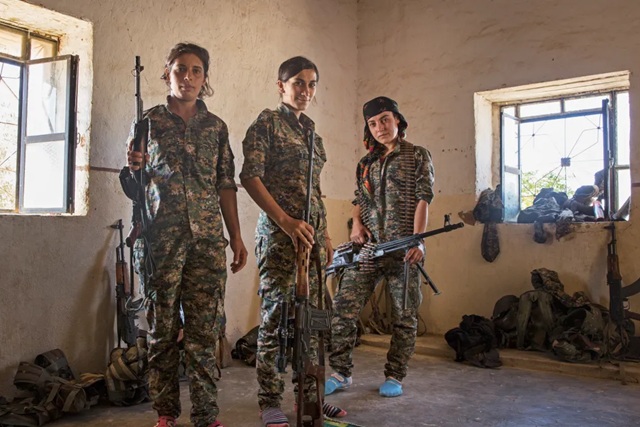
Just over a decade ago, Kobani was the site of a desperate struggle as a small group of Kurdish fighters, led by Narin Afrin, held off an advancing ISIS force in brutal street-to-street combat. The town’s defenders persuaded a US-led coalition to intervene, and the tide turned. In the years that followed, the Kurdish-led Syrian Democratic Forces (SDF) helped contain and eventually defeat ISIS, becoming a crucial partner for Western powers.
Now, as Kobani prepares to mark the 11th anniversary of its liberation, it is once again at the centre of a fierce battle. The attackers have changed, but the geography and stakes remain strikingly similar. After overthrowing Bashar al-Assad in 2024, President al-Sharaa has moved to reassert central control over the autonomous Kurdish enclave in eastern Syria. In a twist that has stunned many Kurds, the United States has shifted its support to the besiegers rather than the besieged.
The change has deepened a sense of betrayal among residents and displaced people who fled the countryside to seek refuge in Kobani. “Why we did sacrifice our men to fight Isis with US soldiers who left us now to face this attack?” asked Nadia Omar, a Kurdish woman who fled to Kobani. “I and many others from my village feel betrayed by what the Americans did to us.”
Tens of thousands have been displaced by the latest fighting, crowding into schools and mosques, sleeping in cars and queuing for hours for basic food supplies. The town is suffering from shortages of electricity, water and internet access, leaving residents cut off from the outside world and exposed to winter cold without heating.
Although Turkey lies just across the border, Kobani’s residents are effectively trapped. Ankara has supported the military campaign against the Kurdish enclave, which emerged during the Syrian civil war. Meanwhile, President Trump — who re-entered office in 2025 — has backed al-Sharaa’s push to unify Syria, further isolating the Kurdish forces.
The conflict has already resulted in significant territorial losses for Kurdish forces, including prisons and camps holding ISIS inmates and their relatives. The Kurds have accused al-Sharaa’s forces, which include former jihadists, of committing atrocities during the campaign. Damascus has made similar accusations against the SDF, which the Kurdish group denies.
In the capital of the Kurdish enclave, Hasakah, Kurdish leader Mazloum Abdi is said to have believed the West would support Kurdish autonomy after a decade of partnership against ISIS. His confidence was reinforced by trophies and plaques from Western countries recognizing the SDF’s role in defeating ISIS. But as Times UK reports, Abdi’s belief that the US would never allow Kurdish territory to fall to al-Sharaa has proven to be a grave miscalculation.
The US shift reflects a broader realignment in Washington’s priorities under Trump, who has treated Syria as a low priority. US officials, including those at the National Security Council, reportedly warned Kurdish leaders that US troops would eventually withdraw and urged compromise with Damascus. But the Kurds held out, hoping their role guarding ISIS prisons and camps would secure continued support.
Instead, a rapid change of course saw Trump meet al-Sharaa after a visit to Saudi Arabia, where Crown Prince Mohammed bin Salman encouraged the US leader to give the new Syrian president a chance. Trump was reportedly impressed, describing al-Sharaa as “tough” and praising his past — even his al-Qaeda connections. Sanctions were lifted, and Trump later hosted al-Sharaa in Washington, symbolically presenting him with Trump-branded perfume.
Now, al-Sharaa’s forces are closing in on Kobani with the aim of ending Kurdish self-rule and reunifying Syria. For many Kurds, the sense of betrayal is not just political but deeply personal. “It is shameful of the American people and the UK,” said Haysem Muslima, a university professor in Kobani. “They are not returning what we did for them… we shared the same bread but now they are just watching on.”
As the siege continues, Kobani’s residents are left wondering whether the town that once symbolized the defeat of ISIS will now become a symbol of Kurdish abandonment in the shifting geopolitics of the Middle East.












