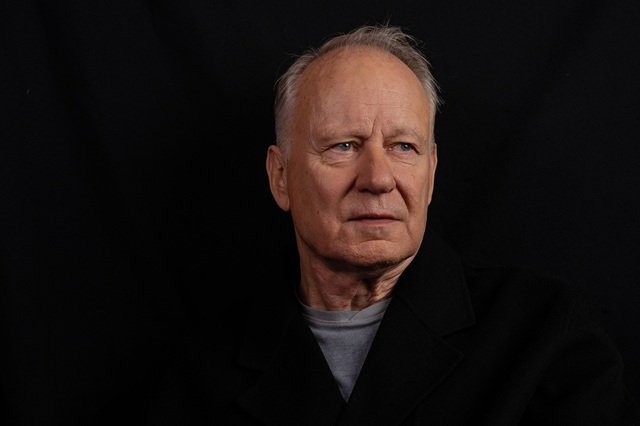
Stellan Skarsgård, one of European cinema’s most enduring presences, is experiencing an unexpected career crescendo at 74. After six decades of work across theater, arthouse cinema, and Hollywood blockbusters, the Swedish actor is now an Oscar contender for the first time, thanks to his performance in Sentimental Value, the latest film by Norwegian director Joachim Trier. The recognition comes as Skarsgård confronts aging, illness, and legacy with a disarming honesty that mirrors the themes of the film itself.
Speaking to El País during the San Sebastián Film Festival, Skarsgård appears weary but content. He is in the midst of an intense international promotional tour that began at Cannes, where Sentimental Value premiered to strong acclaim. The film, slated for release in 2025, centers on Gustav, a once-celebrated film director whose career and family life have both frayed. Following the death of his ex-wife, Gustav returns to the family home in an attempt to reconnect with his estranged daughters and revive his creative purpose through a deeply personal screenplay.
The story unfolds largely through intimate conversations and quiet observations within the house the family once shared, a setting that becomes a vessel for memory, grief, and unresolved conflict. Gustav hopes to cast his youngest daughter, an actress played by Renate Reinsve, in the lead role, only to be rejected. He instead turns to a younger star, portrayed by Elle Fanning, intensifying the emotional rift. The film’s overt Bergman-like sensibility builds on Trier’s earlier work, particularly The Worst Person in the World, but here leans more openly into melodrama and reflection.
For Skarsgård, the role resonates without being autobiographical. He told El País that while he understands the core conflict of balancing art and parenthood, his own choices differed sharply from those of his character. After leaving Sweden’s Royal Dramatic Theatre in 1989, he structured his career to work only part of the year, reserving long stretches of time for his eight children. Six of them, including Alexander and Bill Skarsgård, went on to become actors themselves, a fact he describes with self-deprecating humor as being a “nepo daddy.”
The actor’s reflections on fatherhood form the emotional spine of both the interview and the film. Skarsgård rejects the idea of parental perfection, arguing instead for honesty and vulnerability. He believes that admitting flaws to children is not a weakness but a necessity, a theme echoed in Sentimental Value’s portrayal of reconciliation as messy, incomplete, and deeply human.
Despite his calm demeanor, Skarsgård’s recent years have not been without hardship. Three years ago, he suffered a stroke that has affected his memory, forcing him to rely on a discreet earpiece on set to receive his lines. Yet he continues to work, recently appearing in projects such as Andor and Dune: Part Two, adapting his craft to new physical limits. He speaks candidly about fear, recalling a period early in his career when he was terrified of the camera and nearly unable to act, an experience that still informs his commitment to creating trust and warmth on set.
Skarsgård’s career has spanned radically different eras and styles, from collaborations with Ingmar Bergman and Lars von Trier to mainstream successes like Good Will Hunting, Mamma Mia!, Pirates of the Caribbean, and major franchises in recent years. Staying current, he argues, is not about trends but about playing human beings, who remain endlessly complex regardless of the time period. Yet he expresses concern about the present moment, particularly shrinking attention spans and the concentration of wealth and power, which he sees as deeply corrosive.
In Sentimental Value, Skarsgård views tenderness itself as a form of resistance. Echoing Trier’s idea that “tenderness is the new punk,” he describes the film as a quiet protest against cynicism and dehumanization. Shot on film rather than digitally, it defends nuance over spectacle and empathy over irony. The house at the center of the story, he notes, functions almost as a living character, bearing the imprints of past and future generations with indifference to individual lives.
Asked about legacy, Skarsgård dismisses the notion entirely. He has no interest in memoirs or monuments, insisting that family, not career, is what endures. While he acknowledges that Sentimental Value may be remembered as one of his finest performances, he treats the surrounding Oscar buzz with characteristic ambivalence, calling artistic competition absurd even as he admits the pleasure of recognition.
For Skarsgård, the film’s success is less a culmination than a continuation, proof that vulnerability, age, and imperfection can still command the screen. As he told El País, art may not save the world, but it can allow people to see through someone else’s eyes. At this stage of his life, that act of shared vision appears to be enough.