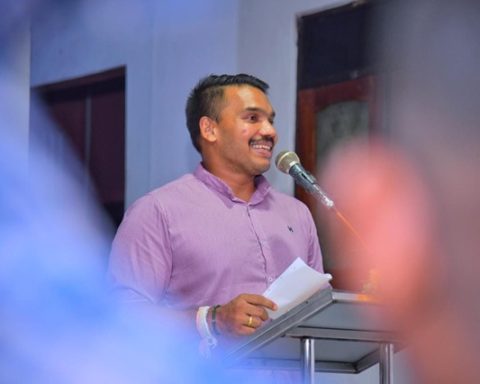
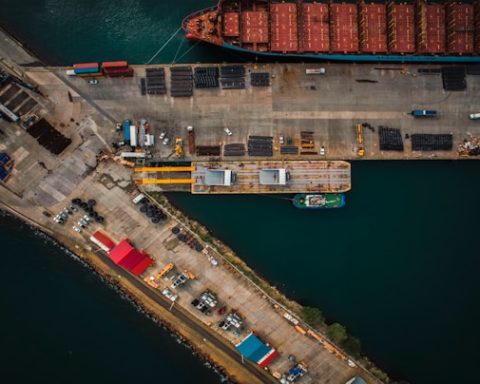
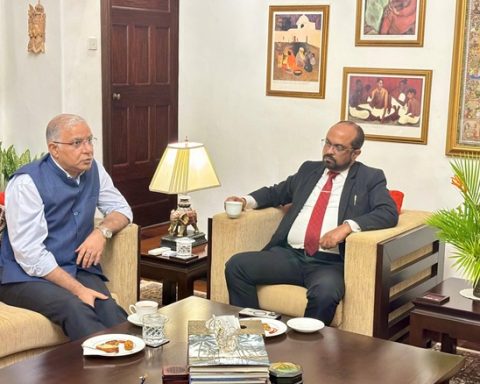
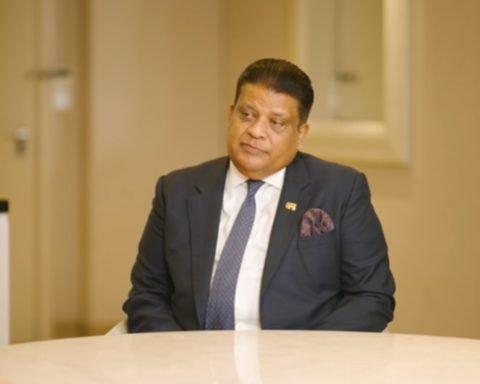
The General Manager of the Lanka Coal Company, Namal Hewage, announced that a fine of approximately 2.1 million US dollars will be imposed on a coal supplier for delivering consignments that failed to meet prescribed quality standards. He made these remarks at a media briefing held at the Government Information Department on January 28, convened to address public concern over the controversial coal imports destined for the Norochcholai Lakvijaya Power Plant.
Hewage explained that coal samples were taken in the presence of experts from the Lak Vijaya Coal Power Plant and sent to India for laboratory testing. According to him, the test reports related to the second coal ship showed no quality issues, while the third and fourth ships are currently unloading coal. He added that the fines imposed would be deducted directly from payments owed for the coal and that reports from other samples sent to India are expected around February 10 or 11.
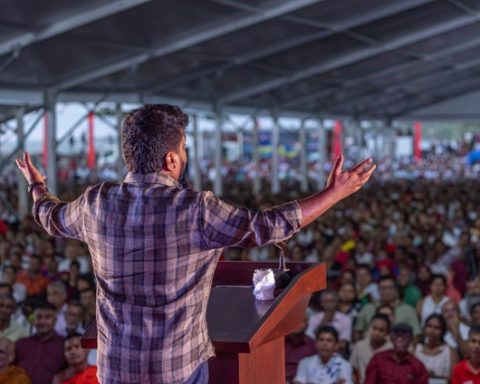
However, strong objections were raised by Pubudu Jayagoda, Education Secretary of the Frontline Socialist Party, who rejected claims by government representatives that the imposition of fines means there is no economic loss to the country. Jayagoda described such statements as misleading, directly contradicting remarks made by Cabinet Media Spokesperson Minister Nalinda Jayatissa and echoed earlier by the Minister of Power and Energy.
Jayagoda clarified that while fines have been applied in the past for coal that marginally failed to meet higher calorific benchmarks, there has always been a clear rejection threshold. Coal with an energy value below 5900 KCal per kilogram, known as the Reject value, was never accepted even with a fine. He cited a previous incident involving an Indonesian company, Trafigura, where an entire shipment of substandard coal was rejected, the vessel diverted, and future orders canceled. Based on these precedents and the existing tender agreement, Jayagoda argued that the current supplier, India-based Trident Chemphar, should face rejection of the coal and cancellation of the contract if multiple substandard shipments are confirmed.
Beyond contractual violations, Jayagoda warned that the economic consequences extend far beyond fines. He explained that the lower energy content of the coal has already reduced electricity generation at the Norochcholai plant. On January 21, power output reportedly dropped to about 715 megawatts instead of the expected 810 megawatts, creating a shortfall of nearly 100 megawatts per hour. This deficit, particularly during nighttime hours when solar power is unavailable, must be compensated using diesel-powered generation, which costs roughly four times more per unit of electricity than coal-based power.
Jayagoda emphasized that this increased cost is not absorbed by the supplier or the government but is ultimately passed on to electricity consumers through higher bills. He also warned that the high ash content of the coal could damage power plant machinery, adding maintenance and repair costs that would again be transferred to the public. In this context, he argued that claims of “no economic loss” ignore the broader and longer-term financial burden placed on consumers.
Further doubts were raised about whether even the announced fines would be successfully collected. Jayagoda alleged that the supplier is attempting to send an umpire sample to a third-party laboratory while disputing existing test reports. He warned that if the sample does not genuinely represent coal from the disputed shipment but instead comes from standard coal stocks already at Norochcholai, the testing process could falsely indicate compliance. Such an outcome, he cautioned, would leave the country with low-quality coal, reduced power generation, and no compensation, likening the situation to a self-defeating act that benefits no one.
Calling for transparency, Jayagoda urged that any further sampling be conducted openly with the participation of all stakeholders. He stressed the need for a comprehensive investigation into the entire procurement and testing process, warning that without accountability, the cost of flawed decisions in the energy sector will continue to fall squarely on the shoulders of the public.