On the sun-drenched islands of Fiji, known for pristine beaches and exclusive resorts, a hidden epidemic has quietly taken hold. Methamphetamine use and HIV infections are rising at alarming rates, fueled by the island nation’s role as a transshipment hub for international drug syndicates. Residents in squatter settlements describe a weekly ritual in which blacked-out trucks deliver meth, which is repackaged and sold locally for a few dollars per dose. The distribution occurs in a maze of makeshift shacks without plumbing or electricity, a world apart from Fiji’s postcard-perfect tourist enclaves. For children growing up here, addiction is often “only a matter of time,” according to a 17-year-old resident.
For years, law enforcement agencies and the United Nations warned that criminal networks were exploiting Fiji’s location to move meth from Southeast Asia and Latin America to Australia, New Zealand, and North America. Yet these warnings did little to prevent the drugs from permeating local communities. The white crystals, often injected rather than smoked or ingested, have taken a heavy toll. Community workers report users as young as ten, while unsafe injection practices, including the sharing of needles, have sparked a fast-growing HIV crisis. According to the Fijian Health Ministry, more than 1,583 new HIV cases were recorded in 2024—over a 500 percent increase since 2018—and preliminary assessments suggest this number could double in 2026.
Health workers and former users describe an environment in which needles are routinely shared. In tight-knit communities, the culture of communal living and limited knowledge about safe drug use exacerbate the risks. Many users inject directly into the blood of peers to achieve a residual high, a practice observed by Washington Post reporters. Ben Morrison, who co-founded the Inspire Pacific youth program, said nearly a third of the boys he works with are HIV-positive, most through needle-sharing. The outbreak disproportionately affects young adults aged 15 to 34, and rising maternal transmission rates threaten the next generation.
Public health systems are strained and dependent on international aid. Shortages of antiretroviral medication and testing equipment have hindered efforts to control the epidemic, and recent pledges of support from Australia, New Zealand, and U.S. agencies aim to address these gaps. Discussions with the U.S. Centers for Disease Control and Prevention and USAID are ongoing, though progress has been slow, particularly in the wake of political and logistical hurdles.
Criminal syndicates operating in Fiji are highly organized, law enforcement officials say. Chinese triads, Mexican cartels, Australian biker gangs, and even networks with ties to Nigeria collaborate rather than compete, treating the islands as a coordinated hub rather than a contested territory. Officials describe this multinational approach as unprecedented in the Pacific region, with syndicates sharing routes, resources, and profits. The Oceania Customs Organization Secretariat told the Washington Post that traditional enforcement methods are increasingly ineffective, and law enforcement agencies are struggling to respond to the scale and sophistication of transnational crime.
Corruption has further complicated containment. Investigations into leaked messaging app chats in December revealed police officers coordinating with traffickers, and dozens of officers have faced charges for drug-related offenses. Yet prosecutions often focus on “middle-level” operatives, and identifying the origins of trafficked drugs has proven nearly impossible. In one major bust, 4.1 metric tons of meth valued at over a billion dollars were intercepted, but authorities could not link it to a specific criminal organization.
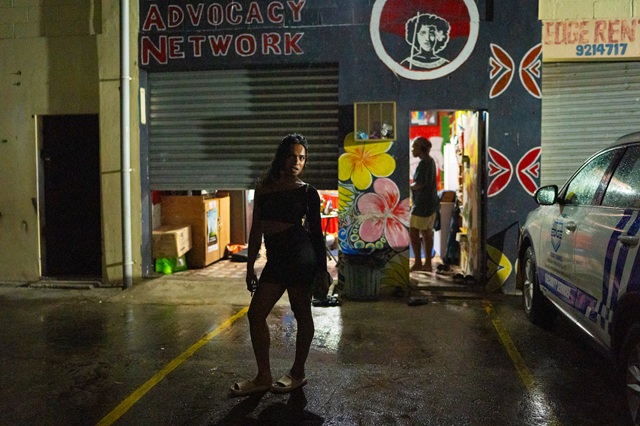
Locals describe meth as a form of “white money,” used by traffickers to pay runners and later sold locally, inadvertently seeding addiction among Fijians. Users report casual, communal injection practices that amplify HIV transmission. Rochelle Naulunimagiti, a transgender sex worker and community activist, recalled sharing needles despite knowing the risks, later testing positive for HIV. Mark Shaheel Lal, a 24-year-old HIV-positive gay man, has become a public advocate, counseling more than 100 newly diagnosed patients while navigating a culture that stigmatizes the illness.
The Fijian government has begun addressing the twin crises. Needle-exchange programs and Pre-Exposure Prophylaxis (PrEP) are planned, though legal and cultural obstacles persist. Syringes, once scarce, have become critical commodities, sometimes treated with the same caution as illicit drugs themselves. Public health experts, including those from the World Health Organization and UNDP, stress that access to sterile injection equipment is among the highest priorities for curbing HIV.
Meanwhile, meth and cocaine continue to flow into Fiji. A recent police operation seized over two metric tons of cocaine, highlighting the ongoing scale of the drug trade. Six suspects, including foreign nationals and locals, have been charged, yet systemic issues, including police complicity and limited intelligence sharing, mean the island remains vulnerable. Deputy public prosecutor John Rabuku warned that as long as participation in the drug trade persists within law enforcement and society, Fiji will continue to be a transshipment point.
The combined impact of meth addiction, unsafe injection practices, and HIV has created a perfect storm, threatening to unravel the social fabric of Fiji. In communities where poverty, limited access to education, and a culture of silence around illness intersect, the consequences are severe. The Washington Post highlights a nation at a critical juncture: the paradise of Fiji is now facing a public health emergency that extends far beyond its borders, reflecting a broader regional crisis in the Pacific.