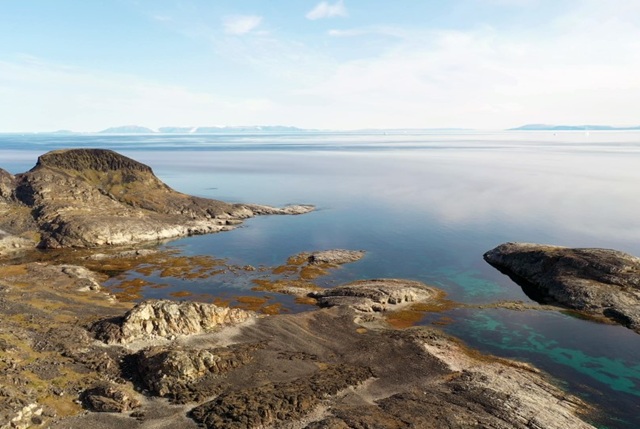
Archaeologists have uncovered compelling evidence that the first humans to inhabit the High Arctic were not merely surviving at the edge of the world, but actively transforming it. Newly discovered archaeological sites on the remote Kitsissut island cluster north of Greenland reveal that Paleo-Inuit communities were skilled maritime navigators who repeatedly undertook perilous open-water journeys and, in doing so, played a decisive role in shaping Arctic ecosystems more than 4,500 years ago.
The findings come from nearly 300 archaeological features documented on the islands, including early Paleo-Inuit tent rings and hearths, indicating sustained and repeated occupation. These discoveries show that humans arrived in the High Arctic shortly after glacial retreat and quickly developed sophisticated strategies to exploit both land and sea. Until now, poor preservation of early Arctic sites had left unanswered questions about how deeply humans influenced the region’s ecological development during this formative period.
Reaching Kitsissut would have required crossing approximately 50 kilometers of open water through Pikialasorsuaq, a vast polynya that remains unfrozen even in winter between northern Greenland and Canada. This journey represents the longest sea crossing inferred anywhere in the Arctic for this early period. Conducted in small skin-on-frame boats, the voyage would have exposed travelers to unpredictable weather, strong winds, dangerous currents, and the risk of being swept into Baffin Bay.
Researchers say the evidence shows these crossings were not rare feats but routine journeys made to access seasonal marine resources such as seabird colonies and marine mammals. Entire families and supplies were likely transported, pointing to a high level of maritime expertise embedded in social life and passed down across generations. This challenges long-standing assumptions that early Arctic peoples were largely confined to land-based or near-shore activities.
The research also redefines how Indigenous influence on Arctic environments is understood. By hunting marine animals and seabirds and transporting their remains back to land, Paleo-Inuit communities moved marine nutrients into terrestrial ecosystems. This process likely altered soil composition, vegetation patterns, and wildlife dynamics, effectively making these early inhabitants active agents of ecological change rather than passive occupants of a harsh landscape.
The study concludes that Arctic ecosystems were never untouched wildernesses awaiting human arrival. Instead, they were shaped from the outset by Indigenous knowledge, mobility, and stewardship. The ancient inhabitants of Kitsissut emerge not only as resilient survivors of extreme environments, but as ecological engineers whose relationship with the Arctic continues to define the region to this day.