Iran is reportedly close to finalizing a deal with China to acquire supersonic anti-ship cruise missiles, according to six sources familiar with the negotiations. The move comes as the United States positions a substantial naval force near Iran amid heightened concerns over possible military escalation.
The missiles, identified as Chinese-made CM‑302s, are capable of flying at supersonic speeds up to 290 kilometers, making them difficult for ship defenses to intercept, weapons experts said. Their acquisition would considerably enhance Iran’s naval strike capacity and pose a direct threat to U.S. forces operating in the region. No delivery timeline has been confirmed, and the number of missiles involved remains undisclosed.
Sources told Reuters that talks, which have been ongoing for at least two years, accelerated sharply after a 12-day Israel-Iran conflict in June. Senior Iranian officials, including Deputy Defence Minister Massoud Oraei, traveled to China last year to advance the negotiations, marking an unprecedented level of high-level engagement.
“It’s a complete gamechanger if Iran has supersonic capability to attack ships in the area,” said Danny Citrinowicz, a former Israeli intelligence officer and senior Iran researcher at the Institute for National Security Studies. “These missiles are very difficult to intercept.”
While Iran confirmed it has agreements with allied countries to enhance its military capabilities, Chinese and U.S. officials declined to comment on the potential deal. Reuters could not independently verify whether China will proceed with the sale amid the current geopolitical tensions. China’s Ministry of Foreign Affairs stated it was not aware of the reported negotiations, and its defence ministry did not respond to requests for comment.
The possible missile acquisition underscores the deepening military relationship between China and Iran at a time when the U.S. is seeking to limit Tehran’s missile program and nuclear ambitions. It would also signal Beijing’s growing willingness to assert influence in a region historically dominated by American military power. China, Iran, and Russia have conducted joint naval exercises in recent years, while U.S. sanctions have targeted Chinese entities allegedly supplying materials for Iran’s missile program.
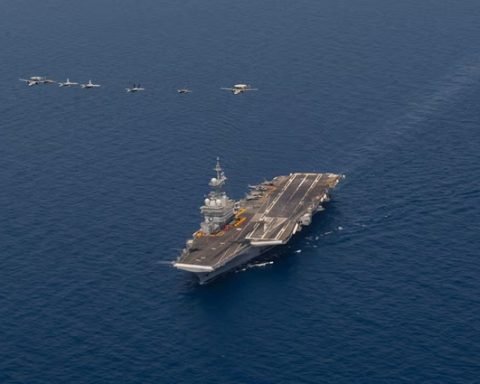
The deal arrives as the U.S. deploys the USS Abraham Lincoln carrier strike group and the USS Gerald R. Ford and its escorts to the region, capable of carrying more than 5,000 personnel and 150 aircraft. Analysts warn that such a missile capability could alter calculations for any potential conflict.
Pieter Wezeman, a senior researcher at the Stockholm International Peace Research Institute, said the CM-302 missiles would replenish an Iranian arsenal weakened by last year’s conflict. China’s state-owned China Aerospace Science and Industry Corporation markets the CM‑302 as capable of sinking an aircraft carrier or destroyer, and the system can be deployed from land, air, or sea platforms.
Iran is also reportedly exploring purchases of Chinese surface-to-air missiles, anti-ballistic systems, and anti-satellite weapons, further signaling a broader effort to strengthen its strategic military capabilities. Reuters reported that such a purchase would challenge U.N. weapons embargoes and highlight the growing complexity of U.S.-China-Iran relations.