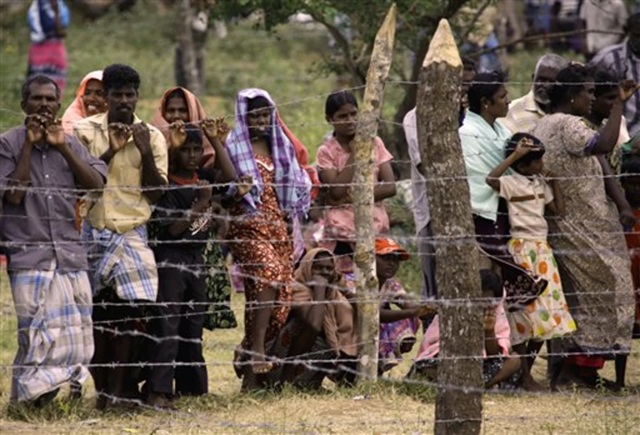
Iran has been under sustained military pressure from the United States and Israel for almost a week, raising fears of a direct strike. Professor K.T. Ganeshalingam, Head of the Department of Political Science at the University of Jaffna, says the situation resembles the final stages of the Sri Lankan civil war, when the Eelam Tamil people were left isolated and without international support. Writing in the Yarl Thinakkural, he points out that Iran had previously supplied military support to the Sri Lankan government during the war, highlighting the complexity of international alliances.
The professor emphasizes that in 2009, the Eelam Tamils were systematically destroyed because no global power intervened. The United States, Israel, Russia, China, India, and Pakistan all provided support to the Sri Lankan government. The Tamils had no protection and no allies, leaving them completely vulnerable to the military operation that ended the war.
He also critiques the internal failures of Tamil leadership. Even sixteen years after the war, there has been no comprehensive evaluation of why the movement collapsed. The North and East of Sri Lanka offered little organized resistance during the final military offensive, and political organizations failed to maintain international connections that could have provided support.
Professor Ganeshalingam points out that in modern geopolitics, outcomes are determined by the strongest powers. Unlike the Tamils in 2009, Iran currently has support from Russia, China, and other international partners, and maintains a position within the UN Security Council, giving it some leverage. He warns, however, that the situation shows the importance of unified national strategy and international alliances, lessons the Tamil community has yet to fully apply.
The professor concludes that Iran’s response, including the unification of its population and strategic planning, contrasts sharply with the failures of Tamil political organizations. The ongoing crisis should serve as a warning about the consequences of isolation and the necessity of international support in conflicts involving small or vulnerable communities.