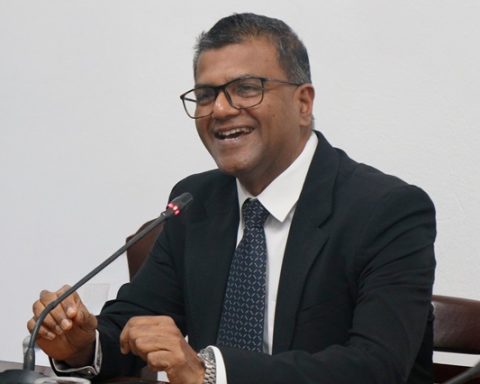

Indian Foreign Minister Dr. S. Jaishankar recognised Hambantota harbour as a Chinese military facility that underlined intimidating foreign military presence in the Indian Ocean. Jaishankar was responding to queries regarding India’s widely mentioned status as the region’s net security provider against the backdrop of a US submarine blowing up an Iranian frigate IRIS Dena, off Galle, within Sri Lanka’s Exclusive Economic Zone.
This happened at the Raisina Dialogue 2026 (March 5 to 7) in New Delhi. Raisina Dialogue was launched in 2016, three years after Narendra Modi became the Prime Minister.
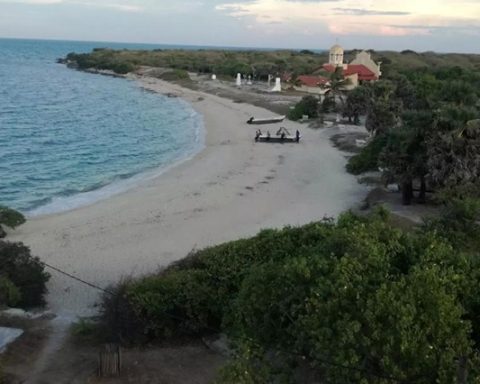
The query obviously rattled the Indian Foreign Minister. Urging the moderator, Ms. Pakli Sharma Ipadhyay, to understand, what he called, the reality of the Indian Ocean, Dr. Jaishankar pointed out the joint US-British presence at Diego Garcia over the past five decades. Then he referred to the Chinese presence at Djibouti in East Africa, the first overseas Chinese military base, established in 2017, and Chinese takeover of Hambantota port, also during the same time. China secured the strategically located port on a 99-year lease for USD 1.2 bn, under controversial circumstances. China succeeded in spite of Indian efforts to halt Chinese projects here, including Colombo port city.
The submarine involved is widely believed to be Virginia-class USS Minnesota. The crew, included three Australian Navy personnel, according to international news agencies. However, others named the US Navy fast-attack submarine, involved in the incident, as USS Charlotte.
Diego Garcia is responsible for military operations in the Middle East, Africa and the Indo-Pacific. Dr. Jaishankar didn’t acknowledge that India, a key US ally and member of the Quad alliance, operated P8A maritime patrol and reconnaissance flights out of Diego Garcia last October. The US-India-Israel relationship is growing along with the US-Sri Lanka partnership.
The Indian Foreign Minister emphasised the deployment of the US Fifth Fleet in Bahrain, one of the countries that had been attacked by Iran, following the US-Israeli assassination of Iranian Supreme Leader, and key government functionaries, in a massive surprise attack, aiming at a regime change there. The Indian Minister briefly explained how they and Sri Lanka addressed the threat on three Indian navy vessels following the unprovoked US-Israeli attacks on Iran. Whatever the excuses, the undeniable truth is, as Sharma pointed out, that the US attack on the Iranian frigate took place in India’s backyard.
Sri Lankan Foreign Minister Vijitha Herath who faced Sharma before Dr. Jaishankar, struggled to explain the country’s position. Dr. Jaishankar made the audience laugh at Minister Herath’s expense who repeatedly said that Sri Lanka would deal with the situation in terms of the UN Convention on the Law of the Sea (UNCLOS) and international laws. Herath should have pointed out that Hambantota was not a military base and couldn’t be compared, under any circumstances, with the Chinese base in Djibouti.
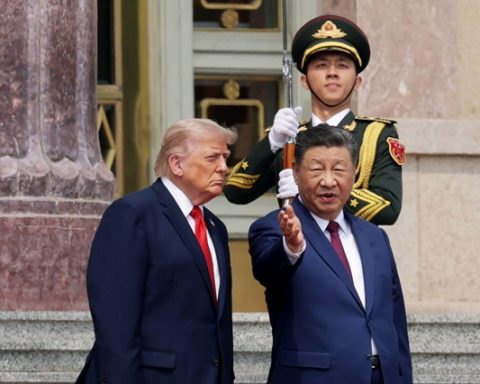
Typical of the arrogant Western power dynamics, the US never cared for international laws and President Donald Trump quite clearly stated their position.
Israel is on record as having declared that the decision to launch attacks on Iran had been made months ago. Therefore, the sinking of the fully domestically built vessel that was launched in 2021 should be examined in the context of overall US-Israeli strategy meant to break the back of the incumbent Islamic revolutionary government and replace it with a pro-Western regime there as had been the case after the toppling of the democratically elected government there, led by Prime Minister Mossadegh, in August, 1953.
US Defence Secretary Pete Hegseth declared that IRIS Dena “thought it was safe in international waters’ but died a quiet death.” A US submarine torpedoed the vessel on the morning of March 4, off Galle, within Sri Lanka’s exclusive economic zone and that decision must have been made before the IRIS Dena joined International Fleet Review (IFR) and Exercise Milan 2026, at Visakhapatnam, from February 15 to 25.
The sinking of the Iranian vessel, a Moudge –class frigate attached to Iran’s southern fleet deployed in the Gulf of Oman and Strait of Hormuz, had been calculated to cause mayhem in the Indian Ocean. Obviously, and pathetically, Iran failed to comprehend the US-Israeli mindset after having already been fooled with devastating attacks, jointly launched by Washington and Tel Aviv against the country’s nuclear research facilities, while holding talks with it on the issue last June. Had they comprehended the situation they probably would have pulled out of the IFR and Milan 2026. Perhaps, Iran was lulled into a false sense of security because they felt the US wouldn’t hit ships invited by India. The US Navy did not participate though the US Air Force did.
The US action dramatically boosted Raisina Dialogue 2026, but at India’s expense. Prime Minister Modi’s two-day visit to Tel Aviv, just before the US-Israel launched the war to effect a regime change in Teheran, made the situation far worse. BJP seems to have decided on whose side India is on. But, the US action has, invariably, humiliated India. That cannot be denied. The Indian Navy posted a cheery message on X on February 17, the day before President Droupadi Murmu presided over IFR off the Visakhapatnam coast. “Welcome!” the Indian Navy wrote, greeting the Iranian warship IRIS Dena as it steamed into the port of Visakhapatnam to join an international naval gathering. Photographs showed Iranian sailors and a grey frigate gliding into the Indian harbour on a clear day. The hashtags spoke of “Bridges of Friendship” and “United Through Oceans.”
US alert
Altogether, three Iranian vessels participated in IFR. In addition to the ill-fated IRIS Dena, the second frigate IRIS Lavan and auxiliary ships IRIS Bushehr comprised the group. Dr. Jaishankar disclosed at the Raisina Dialogue 2026 that Iran requested India to allow IRIS Lavan to enter Indian waters. India accommodated the vessel at Cochin Port (Kochi Port) on the Arabian Sea in Kerala.
At the time US torpedoed IRIS Dena, within Sri Lanka’s EEZ, IRIS Lavan was at Cochin port. Sri Lanka’s territorial waters extend 12 nautical miles (approximately 22 km) from the country’s coastline. The US hit the vessel 19 nautical miles off southern coastline.
Sri Lanka, too, participated in IFR and Milan 2026. SLN Sagara (formerly Varaha), a Vikram-class offshore patrol vessel of the Indian Coast Guard and SLN Nandimithra, A Fast Missile Vessel, acquired from Israel, participated and returned to Colombo on February 27, the day before IRIS Lavan sought protection in Indian waters.
Although many believed that Sri Lanka responded to the attack on IRIS Dena, following a distressed call from that ship, the truth is it was the Indo-Pacific Command (INDOPACOM) that alerted the Maritime Rescue Coordination centre (MRCC) after blowing it up with a single torpedo. The SLN’s Southern Command dispatched three Fast Attack Craft (FACs) while a tug from Sri Lanka Ports Authority (SLPA) joined later.
The INDOPACOM, while denying the Iranian claim that IRIS Dena had been unarmed at the time of the attack, emphasised: “US forces planned for and Sri Lanka provided life-saving support to survivors in accordance with the Law of Armed Conflict.” In the post shared on X (formerly Twitter) the US has, in no uncertain terms, said that they planned for the rescuing of survivors and the action was carried out by the Sri Lanka Navy.
IRIS Lavan and IRIS Bushehr are most likely to be held in Cochin and in Trincomalee ports, respectively, for some time with the crews accommodated on land. With the US-Israel combine vowing to go the whole hog there is no likelihood of either India or Sri Lanka allowing the ships to leave.
Much to the embarrassment of the Modi administration, former Indian Foreign Secretary Kanwal Sibal has said that IRIS Dena would not have been targeted if Iran was not invited to take part in IFR and Milan naval exercise.
“We were the hosts. As per protocol for this exercise, ships cannot carry any ammunition. It was defenseless. The Iranian naval personnel had paraded before our president,” he said in a post on X.
Sibal argued that the attack was premeditated, pointing out that the US Navy had been invited to the exercise but withdrew at the last minute, “presumably with this operation in mind.”
Sibal added that the US ignored India’s sensitivities, as the Iranian ship was present in the waters due to India’s invitation.
He stressed that India was neither politically nor militarily responsible for the US attack, but carried a moral and humanitarian responsibility.
“A word of condolence by the Indian Navy (after political clearance) at the loss of lives of those who were our invitees and saluted our president would be in order,” Sibal said.
Iran and even India appeared to have ignored the significance of USN pullout from IFR and Milan exercise at the eleventh hour. India and Sri Lanka caught up in US-Israeli strategy are facing embarrassing questions from the political opposition. Both Congress and Samagi Jana Balwegaya (SJB), as well as Sri Lanka Podujana Peramuna (SLPP), exploited the situation to undermine respective governments over an unexpected situation created by the US. Both India and Sri Lanka ended up playing an unprecedented role in the post-Milan 2026 developments that may have a lasting impact on their relations with Iran.
The regional power India and Sri Lanka also conveniently failed to condemn the February 28 assassination of Iranian Supreme Leader Ayatollah Ali Khamenei, while that country was holding talks with the US, with Oman serving as the mediator.
Condemning the unilateral attack on Iran, as well as the retaliatory strikes by Iran, Leader of the Opposition in the Lok Sabha and Congress leader Rahul Gandhi on Tuesday (March 3, 2026) questioned India’s silence on the Middle East developments.
In a post on social media platform X, Gandhi said Prime Minister Narendra Modi must speak up. “Does he support the assassination of a Head of State as a way to define the world order? Silence now diminishes India’s standing in the world,” he said.
Under heavy Opposition fire, India condoled the Iranian leader’s assassination on March 5, almost a week after the killing. Foreign Secretary Vikram Misri met the Iran Ambassador in Delhi and signed the condolence book, though much belatedly.
SL-US relations
The Opposition questioned the NPP government’s handling of the IRIS Dena affair. They quite conveniently forgot that any other government wouldn’t have been able to do anything differently than bow to the will of the US. Under President Trump, Washington has been behaving recklessly, even towards its longtime friends, demanding that Canada become its 51st state and that Denmark handover Greenland pronto.
SJB and Opposition leader Sajith Premadasa cut a sorry figure demanding in Parliament whether Sri Lanka had the capacity to detect submarines or other underwater systems. Sri Lanka should be happy that the Southern Command could swiftly deploy three FACs and call in SLPA tug, thereby saving the lives of 32 Iranians and recovering 84 bodies of their unfortunate colleagues. Therefore, of the 180-member crew of IRIS Dena, 116 had been accounted for. The number of personnel categorised as missing but presumably dead is 64.
There is no doubt that Sri Lanka couldn’t have intervened if not for the US signal to go ahead with the humanitarian operation to pick up survivors. India, too, must have informed the US about the Iranian request for IRIS Lavan to re-enter Indian waters. Sri Lanka, too, couldn’t have brought the Iranian auxiliary vessel without US consent. President Trump is not interested in diplomatic niceties and the way he had dealt with European countries repeatedly proved his reckless approach. The irrefutable truth is that the US could have torpedoed the entire Iranian group even if they were in Sri Lankan or Indian Exclusive Economic Zone (EEZ) that extends to 200 nautical miles from its coastline.
In spite of constantly repeating Sri Lanka’s neutrality, successive governments succumbed to US pressure. In March 2007, Mahinda Rajapaksa’s government entered into Acquisition and Cross- Servicing Agreement (ACSA) with the US, a high profile bilateral legal mechanism to ensure uninterrupted support/supplies. The Rajapaksas went ahead with ACSA, in spite of strong opposition from some of its partners. In fact, they did not even bother to ask or take up the issue at Cabinet level before the then Defence Secretary Gotabaya Rajapaksa, a US citizen at the time, and US Ambassador here Robert O. Blake signed it. Close on the heels of the ACSA signing, the US provided specific intelligence that allowed the Sri Lanka Navy to hunt down four floating LTTE arsenals. Whatever critics say, that US intervention ensured the total disruption of the LTTE supply line and the collapse of their conventional fighting capacity by March 2009. The US favourably responded to the then Vice Admiral Wasantha Karannagoda’s request for help and the passing of intelligence was not in any way in line with ACSA.
That agreement covered the 2007 to 2017 period. The Yahapalana government extended it. Yahapalana partners, the SLFP and UNP, never formally discussed the decision to extend the agreement though President Maithripala Sirisena made a desperate attempt to distance himself from ACSA.
It would be pertinent to mention that the US had been pushing for ACSA during Rail Wickremesinghe’s tenure as the Premier, in the 2001-2003 period. But, he lacked the strength to finalise that agreement due to strong opposition from the then Opposition. During the time the Yahapalana government extended ACSA, the US also wanted the Status of Forces Agreement (SOFA) signed. SOFA, unlike ACSA, is a legally binding agreement that dealt with the deployment of US forces here. However, SOFA did not materialise but the possibility of the superpower taking it up cannot be ruled out.
Gotabaya Rajapaksa, who won the 2019 presidential election, earned the wrath of the US for declining to finalise MCC (Millennium Challenge Corporation) Compact on the basis of Prof. Gunaruwan Committee report that warned that the agreement contained provisions detrimental to national security, sovereignty, and the legal system. In the run up to the presidential election, UNP leader Ranil Wickremesinghe declared that he would enter into the agreement in case Sajith Premadasa won the contest.
Post-Aragalaya setup
Since the last presidential election held in September 2024, Admiral Steve Koehler, a four-star US Navy Admiral and Commander of the US Pacific Fleet visited Colombo twice in early October 2024 and February this year. Koehler’s visits marked the highest-level U.S. military engagement with Sri Lanka since 2021.
Between Koehler’s visits, the United States and Sri Lanka signed a Memorandum of Understanding (MoU) formalising the defence partnership between the Montana National Guard, the US Coast Guard District 13, and the Sri Lanka Armed Forces under the Department of War’s State Partnership Programme (SPP). The JVP-led NPP government seems sure of its policy as it delayed taking a decision on one-year moratorium on all foreign research vessels entering Sri Lankan waters though it was designed to block Chinese vessels. The government is yet to announce its decision though the ban lapsed on December 31, 2024.
The then President Ranil Wickremesinghe was compelled to announce the ban due to intense US-Indian pressure.
The incumbent dispensation’s relationship with US and India should be examined against allegations that they facilitated ‘Aragalaya’ that forced President Gotabaya Rajapaksa out of office. The Trump administration underscored the importance of its relationship with Sri Lanka by handing over ex-US Coast Guard Cutter ‘Decisive ‘to the Sri Lanka Navy. The vessel, commanded by Captain Gayan Wickramasooriya, left Baltimore US Coast Guard Yard East Wall Jetty on February 23 and is expected to reach Trincomalee in the second week of May.
Last year Sri Lanka signed seven MoUs, including one on defence and then sold controlling shares of the Colombo Dockyard Limited (CDL) to a company affiliated to the Defence Ministry as New Delhi tightened its grip.
Sri Lanka-US relations seemed on track and the IRIS Dena incident is unlikely to distract the two countries. The US continues to take extraordinary measures to facilitate war on Iran. In a bid to overcome the Iranian blockade on crude carriers the US temporarily eased sanctions to allow India to buy Russian oil.
Treasury Secretary Scott Bessent declared a 30-day waiver was a “deliberate short-term measure” to allow oil to keep flowing in the global market. The US sanctioned Russian oil following Moscow’s invasion of Ukraine, forcing buyers to seek alternatives.
The US doesn’t care about the Ukraine government that must be really upset about the unexpected development. India was forced to halt buying Russian oil and now finds itself in a position to turn towards Russia again. But that would be definitely at the expense of Iran facing unprecedented military onslaught.