What are the thieves who have committed shameful acts of theft and have been exposed before our courts doing now? The topic of the extremely infamous and corrupt transaction allegedly carried out in the purchase of Airbus aircraft by SriLankan Airlines has once again ignited the political and legal discourse in Sri Lanka. Although investigations into this large-scale financial fraud that occurred in 2013 have not yet been properly concluded, several hidden aspects have been revealed through facts recently presented by the Bribery Commission to the Colombo Chief Magistrate’s Court. The central allegation in this transaction is that SriLankan Airlines received bribes from a European aircraft manufacturing company during the process of acquiring a new fleet of aircraft.
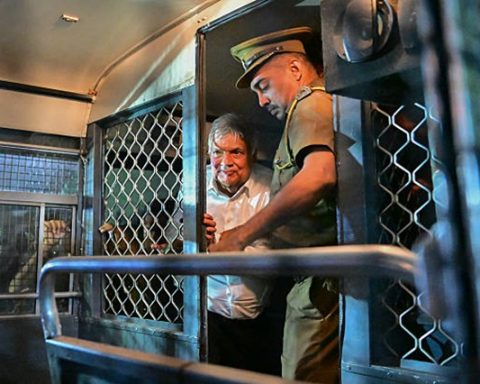
The Bribery Commission informed the court that eighty million rupees of the bribe money received by suspect Kapila Chandrasena, who was the CEO of the airline at the time, had been partially funneled to the highest political authorities of the period. The Commission reported that portions of the bribe were allegedly given to former President Mahinda Rajapaksa and the former Minister of Aviation. When the complaint against Kapila Chandrasena, who is currently in remand, was called, Bribery Commission officials disclosed several highly sensitive facts. They stated that two crore rupees had been given to former Minister of Aviation Priyankara Jayaratne, two crore rupees to former President Mahinda Rajapaksa, and six crore rupees on multiple occasions.
This transaction had both domestic and international dimensions. Kapila Chandrasena had established a shell company in Brunei under the name of his wife, and evidence shows that he received a bribe of €1,454,645.54, approximately two million US dollars, from the well-known civil aircraft manufacturer European Aeronautic Defence and Space Company (EADS) through that shell company. Colombo Chief Magistrate Asanga S. Bodaragama ordered the further remand of Kapila Chandrasena until the 2nd of the following month in connection with this fraudulent act.
The Criminal Investigation Department (CID) has also named Shamindra Rajapaksa, the son of former Speaker Chamal Rajapaksa, as a prime suspect in the case. The Fort Magistrate’s Court had previously issued orders to arrest him and produce him in court. Kapila Chandrasena and his wife, Neomali Wijenayake, were initially charged with receiving US$2 million in bribes related to the purchase of six Airbus A330 aircraft and eight A350 aircraft for SriLankan Airlines in 2013. They were later arrested and released on bail after being produced in court, but Shamindra Rajapaksa was subsequently named as the third suspect in the case based on the ongoing progress of investigations. Fort Magistrate Isuru Netthikumara also ordered that a Red Notice be obtained through Interpol for the arrest of the suspect, who is currently abroad.
Moreover, the CID recorded statements from Sri Lanka Podujana Peramuna National Organizer and Parliamentarian Namal Rajapaksa for approximately five hours in February 2025 regarding this corrupt transaction. The Financial and Commercial Crimes Investigation Division is conducting these investigations following a complaint filed by a former Secretary to the Ministry of Public Enterprise Development.
To understand this fraud, it is necessary to go back to 2008. When Emirates stepped down from managing SriLankan Airlines, the airline had incurred a loss of Rs. 4,428 million. At that time, fourteen aircraft were in operation, and according to the business plan prepared by the company, it was decided to retire the old aircraft and add fourteen modern wide-body aircraft over the period from 2013 to 2021. Accordingly, the then board of directors decided in 2013 to purchase six Airbus A330-300 aircraft, four A350-900 aircraft, and to acquire an additional four A350-900 aircraft on a lease basis, with Kapila Chandrasena serving as CEO.
The most alarming aspect is that these multi-billion investment decisions were taken without any approval from the Cabinet. Furthermore, no formal cost-benefit analysis had been conducted. Despite the country’s foreign exchange crisis, the airline had proceeded to make an advance payment of Rs. 2,528.12 million, equivalent to US$19.21 million, to Airbus. The government elected in 2015, confronted with this enormous financial burden, decided to cancel the lease agreement for the four A350-900 aircraft. As a result, the Sri Lankan government was compelled to pay a staggering compensation of Rs. 16,924.36 million, over sixteen billion rupees, to the relevant companies, a sum that had to be drawn from the public treasury.
The details of this large-scale financial fraud were first revealed through a lengthy investigation conducted by the UK’s Serious Fraud Office (SFO). Airbus, contracted to sell ten aircraft to SriLankan Airlines, faced accusations of bribery and corruption, resulting in a case filed against the company in the UK Crown Court. During the four-year investigation, the entirety of the infamous aircraft purchase deal related to SriLankan Airlines was disclosed before the UK Crown Court. According to the findings, Airbus had agreed to pay a total of US$16.84 million to a company acting as an intermediary during the aircraft purchase process. It was revealed that US$2 million of the agreed amount had already been paid, and the most controversial aspect was that the intermediary company was confirmed to be owned by Kapila Chandrasena’s wife, the CEO of SriLankan Airlines at the time.
Airbus had made this payment to influence the purchase deal. Audit reports confirmed that the bribe was intended to sway the acquisition of six Airbus A330-300 aircraft and four A350-900 aircraft and to facilitate the lease of an additional four A350-900 aircraft. The decision of the Supreme Court of the United Kingdom, which approved the agreement reached between the Serious Fraud Office and SAS Airbus, reaffirmed these facts. At that time, Airbus had quoted a price of US$275,099,000 for each A350-900 aircraft and allocated US$9,672,000 for the supply of equipment.
Despite the international exposure of this fraud, the audit reports indicate that SriLankan Airlines has not yet taken any formal action against the former CEO. The airline sent a demand letter to Airbus requesting the return of the advance payment for the aircraft acquisition with interest. Recovery of the advance payment made prior to the delivery of the aircraft can only occur through legal action. The airline’s management stated that, following legal advice, they have taken steps to terminate the agreement with SAS Airbus and have informed the company in writing regarding the recovery of the advance payment and related compensation. Management also indicated that Airbus has expressed willingness to reach an amicable settlement, a process being actively pursued on the advice of the Attorney General’s Department. The management further informed the audit that advice has been sought regarding whether civil action can be taken against the former CEO.
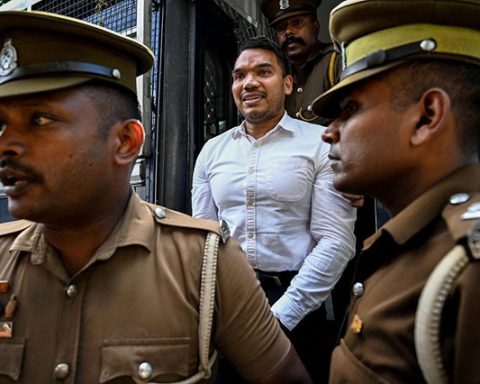
The audit recommended that detailed and realistic cost-benefit analyses be conducted before undertaking large-scale investments and that Cabinet approval be obtained for such decisions. In this transaction, the airline’s board of directors acted unilaterally, performing essentially a ‘one-man show’. The audit also advised that the company carefully determine its aircraft mix after conducting a comprehensive cost-benefit analysis to prevent similar corrupt transactions in the future. Following the audit, the Criminal Investigation Department initiated an investigation into the questionable transaction. On February 6, 2020, former SriLankan Airlines CEO Kapila Chandrasena and his wife, Neomali Wijenayake, were arrested and remanded after being produced before the Fort Magistrate’s Court. They were later released on bail, with legal proceedings continuing in the same court.
While legal proceedings were ongoing, Kapila Chandrasena was remanded again. Initially, he was remanded until March 19, but the Colombo Magistrate’s Court extended his remand until April 2. During his time in custody, he submitted an affidavit to the court stating that the Director General of the Commission to Investigate Bribery and Corruption obtained his statements under threats of death and severe mental pressure. According to the affidavit, on March 12, 2026, he was separated from his lawyer, taken to another room, and threatened by Director General Ranga Dissanayake. He recalled a prior story about a suspect committing suicide and stated that he was pressured to include the names of former Presidents Mahinda Rajapaksa and Namal Rajapaksa in his statement, fearing for his own life. He clarified that he had previously stated that neither the former President nor Namal Rajapaksa had exerted influence or received money during the aircraft replacement process, and that any inclusion of their names in his statement was not voluntary. Kapila Chandrasena confirmed that he had been coerced into naming them due to fear for his life and suffered severe mental distress as a result. Legal commentators have observed that the disclosure of these latest facts will make the legal process surrounding the Airbus deal more complex and controversial in the future.
Although passenger revenue increased to Rs. 51.7 billion in 2025/2026 compared to the 2024/2025 financial year, SriLankan Airlines remains in a precarious financial position. The net loss for the first quarter of 2025/2026 amounted to Rs. 10.7 billion, and the airline’s total accumulated loss has reached an astonishing Rs. 628.3 billion. The government made a capital contribution of Rs. 9.8 billion last year alone. The unbridled greed of a few individuals and corrupt political dealings have already pushed the national airline into an almost irrecoverable financial crisis.