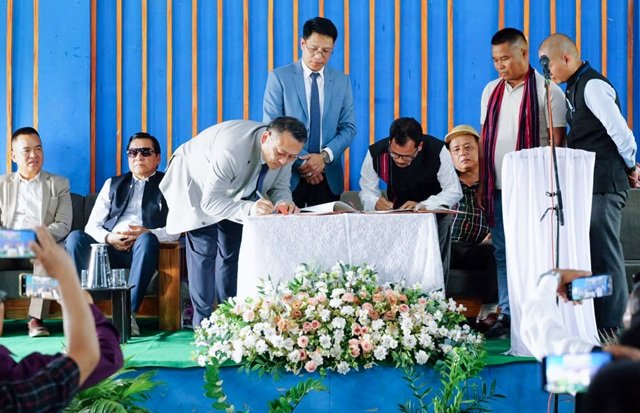
On April 14, 2026, the Government of Mizoram (GoM) signed a Memorandum of Settlement (MoS) with the Hmar People’s Convention-Democracy-Lalhmingthanga Sanate faction (HPC-D-LF) at Sakawrdai in the Aizawl District of Mizoram, formally ending the last remaining strand of Hmar insurgency in the State. The agreement was signed by Home Secretary David Lalthantluanga on behalf of the GoM and HPC-D-LF ‘president’ Lalhmingthanga Sanate. Senior officials, including Adviser to the Chief Minister (Political) Lalmuanpuia Punte and DIG (Northern Range) Rodingliana Chawngthu, were present. According to the agreement, 43 cadres of the outfit will lay down arms at a formal ceremony scheduled for April 30, 2026, at Sesawng, near Aizawl. The accord outlines a development roadmap for the Hmar-dominated Sinlung Hills Council (SHC) region, including enhanced budgetary allocations, infrastructure upgrades, improved connectivity, and cultural recognition measures such as the Sikpui Ruoi Festival.
The April 14, agreement marks the culmination of a phased peace process spanning over three decades. The original Hmar People’s Convention (HPC), formed in 1986, entered into a peace agreement in 1994, leading to administrative arrangements for Hmar-inhabited areas. However, factional splits resulted in the emergence of HPC-D and later HPC-D-LF, prolonging a low-intensity insurgency centred on demands for autonomy, administrative restructuring, and development. The 2018 accord with HPC-D addressed some concerns, but the persistence of the Lalhmingthanga Sanate-led faction indicated residual dissatisfaction within sections of the Hmar community.
The identification of HPC-D-LF as the last active underground armed group in Mizoram and the initiation of talks since mid-2024 underline the State’s calibrated approach to conflict resolution. Multiple rounds of negotiations between September 2024 and March 2026 ensured that the settlement emerged through sustained dialogue. The group’s acceptance of the Government’s position in December 2025, followed by continued consultations, indicates that its operational capacity and strategic options had significantly narrowed, making a negotiated settlement the most viable outcome.
The surrender of 43 cadres reflects the limited residual strength of the insurgency and reinforces the assessment that militancy in Mizoram had already entered a terminal phase. The planned “laying of arms” ceremony and the establishment of a peace camp are consistent with the State’s emphasis on rehabilitation and reintegration. Mizoram’s experience demonstrates that smaller insurgent groups, when engaged through credible dialogue and offered dignified reintegration, are more likely to abandon violence.
The development-centric provisions of the MoS are critical to its long-term success. The SHC region has historically faced deficits in infrastructure, connectivity, and public services, contributing to perceptions of neglect. Commitments to enhanced financial allocations, targeted development initiatives, and improved connectivity seek to address these grievances. However, the durability of peace will depend on timely implementation, as delays could risk renewed discontent.
The agreement also incorporates symbolic measures, particularly the recognition of the Sikpui Ruoi Festival, contributing to reconciliation by affirming cultural identity. While symbolic gestures cannot substitute for material and political solutions, they play an important role in building trust between the State and the community.
The decision to sign the agreement publicly at Sakawrdai, rather than in the state capital, Aizawl, as in earlier accords, reflects a shift towards greater transparency and community participation, strengthening local ownership of the peace process.
With this accord, Mizoram effectively has no remaining underground armed groups, marking a significant consolidation of internal security and reinforcing its reputation as one of the most peaceful States in the Northeast.