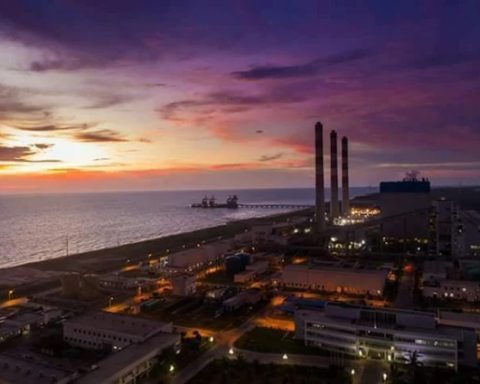
A ceremony has been held in Bangladesh to mark the beginning of nuclear fuel loading into the first unit of the Rooppur Nuclear Power Plant, the country’s first-ever nuclear power facility. The process involves inserting 163 nuclear fuel assemblies into the reactor core, a key step that signals the transition from construction to the initial operational phase of the plant. The event was broadcast live, highlighting its national significance as Bangladesh steps into the group of nations utilizing nuclear energy for power generation.
According to officials and reports from Bangladesh media, the fuel loading process is expected to take approximately 45 days to complete. Once finished, the reactor will gradually move toward a minimum controllable power level, during which a series of checks and technical tests will be carried out to ensure safe and stable operation. Power output will then be increased in controlled stages as the commissioning process continues.
Speaking at the ceremony, Fakir Mahbub Anam, Minister of Science and Technology, described nuclear energy as a strategic asset for national development, emphasizing its role in strengthening energy security, accelerating industrial growth, and supporting a technology-driven economy. He characterized the Rooppur project as a symbol of Bangladesh’s scientific progress and its capability to responsibly adopt advanced technologies. Rosatom Director General Alexei Likhachev also marked the occasion, stating that Bangladesh has now joined the group of countries using peaceful nuclear energy as a foundation for sustainable development, and that the plant will become a key component of the national energy system.
The Rooppur Nuclear Power Plant project was launched following an agreement signed in 2011 between Russia’s Rosatom and the Bangladesh Atomic Energy Commission, with an initial contract valued at USD 12.65 billion finalized in 2015. Construction of the first reactor began in 2017, followed by the second unit in 2018. The project has a planned operational life of 60 years, with the possibility of a 20-year extension. The first nuclear fuel arrived at the site in October 2023, officially designating it as a nuclear facility, while major system tests and turbine installation for Unit 1 were completed in 2024 ahead of regulatory approval for operation.