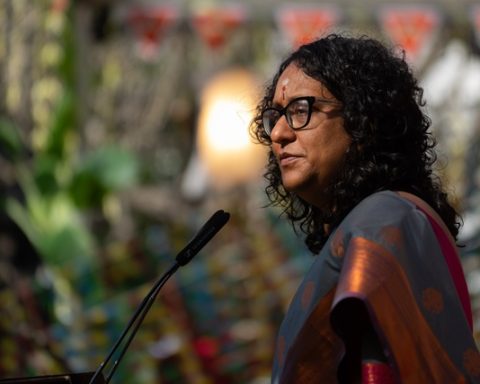
In a region long shaped by linguistic diversity and political complexity, a university department in northern Sri Lanka is quietly redefining the future of higher education and employment. Speaking in an interview published by Yarl Thinakkural, Dr. Mathura Sivakumaran, Head of the Department of Translation Studies at the University of Jaffna’s Faculty of Arts, described translation studies not merely as an academic field, but as a pathway to national development, social inclusion, and professional opportunity.
Her remarks come at a time when countries across the world are confronting the realities of multilingual societies. Governments, courts, hospitals, humanitarian organizations, and educational systems increasingly depend on translators and interpreters to bridge communication gaps that affect millions of people daily. In Sri Lanka, where Tamil, Sinhala, and English continue to shape public life, the need is especially urgent.
According to Dr. Mathura Sivakumaran, the Department of Translation Studies at the University of Jaffna was established in 2011 to address precisely these challenges. What began as an academic unit has since evolved into a recognized department offering specialized training in translation and interpretation across the country’s major languages. The department now trains students not only in linguistic accuracy, but also in communication, cultural understanding, administration, media translation, and professional writing.
The interview in Yarl Thinakkural highlights how translation in Sri Lanka extends far beyond literature or classroom exercises. Graduates from the programme have reportedly secured employment in government ministries, the Central Bank, media institutions, Parliament, non-governmental organizations, and private companies. Others have entered fields such as teaching, journalism, research, administration, and international communication. For many students, translation studies has become a practical route toward stable employment in a competitive economy.
This reflects a broader global shift in the value of language skills. As migration, international trade, and digital communication continue to expand, multilingual professionals are increasingly sought after. International organizations rely on translators during humanitarian crises. Courts require interpreters to ensure legal fairness. Hospitals depend on accurate communication to avoid potentially life-threatening misunderstandings. Even technology companies developing artificial intelligence systems now invest heavily in multilingual language expertise.
Dr. Mathura Sivakumaran argued that Sri Lanka’s multilingual reality makes translation professionals indispensable. In many public institutions, language barriers still prevent people from accessing critical services. Patients may struggle to explain medical conditions in hospitals. Citizens may fail to understand legal documents or government notices. Students may find educational materials inaccessible because of language differences. Translation, she explained, serves as the bridge that connects communities separated not only by language, but also by opportunity.
One of the most significant developments mentioned in the interview is the department’s planned introduction of a one-year programme called “Community Translation.” The initiative is designed to train individuals to work directly within multilingual public environments such as hospitals, courts, schools, and social service institutions. Unlike traditional academic translation programmes focused primarily on texts, community translation emphasizes real-life communication and public accessibility.
The proposal reflects a growing international recognition that translation is deeply tied to social justice. Across Europe, North America, and Asia, governments have increasingly acknowledged that equal access to public services depends on effective multilingual communication. Community translators often become essential intermediaries between marginalized populations and state institutions. By introducing this programme, the University of Jaffna appears to be aligning itself with global conversations about inclusion, public service, and linguistic rights.
The department itself has also seen significant growth. According to details shared in the interview, more than 200 students are currently enrolled in the programme, with female students forming a large majority. This rise in enrollment suggests changing perceptions among students and parents, many of whom traditionally favored medicine, engineering, or law as the primary routes to professional success.
Dr. Mathura Sivakumaran challenged these assumptions directly. She urged students not to fear choosing translation studies as a field of higher education, emphasizing that the discipline offers strong employment prospects and meaningful societal impact. Her message was particularly aimed at young people interested in languages, communication, public engagement, and multicultural environments.
The interview also sheds light on the broader educational transformation taking place in Sri Lanka’s northern region. The University of Jaffna has long played an important role in rebuilding educational opportunities following decades of civil conflict. In this context, the expansion of translation studies carries symbolic importance as well. Language, once associated with division and political tension in Sri Lanka, is increasingly being reframed as a tool for connection and reconciliation.
Observers note that translation studies may become even more important in the coming decade as artificial intelligence and automated translation systems reshape communication worldwide. While machine translation tools continue to improve, experts argue that human translators remain essential for cultural nuance, ethical judgment, and contextual understanding. Academic programmes that combine linguistic expertise with social awareness may therefore become increasingly valuable rather than obsolete.