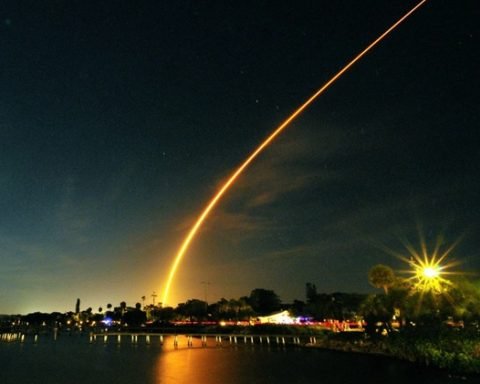
SpaceX is preparing for one of the largest initial public offerings in history, positioning itself around an extraordinary long-term vision that includes building a self-sustaining human presence on Mars, mining asteroids and industrialising the Moon. According to reporting by El País, the company’s IPO filing submitted to the US Securities and Exchange Commission outlines ambitions that stretch far beyond Earth-based aerospace services, even as it acknowledges that many of its future markets remain unproven or do not yet exist.
The company, led by founder and chief executive Elon Musk, is reportedly targeting a public listing around 12 June, with a potential valuation reaching up to $2tn and fundraising estimated between $75bn and $80bn. The scale of the proposed listing would place it among the largest equity offerings in financial history, reflecting both investor enthusiasm for Musk’s ventures and the growing centrality of space infrastructure and satellite communications in global technology markets.
However, the El País-reported filing also highlights that SpaceX remains unprofitable, with operating losses of $2.2bn in 2025 and a further $1.94bn in the first quarter of this year alone. Despite this, the company is presenting investors with a long-term commercial roadmap that extends well beyond traditional aerospace revenue streams into areas that have historically belonged to science fiction rather than corporate strategy.
At the centre of this vision is a multi-layered expansion into space-based industry, including orbital manufacturing, lunar production systems, interplanetary transport networks and eventual settlement of Mars. SpaceX argues in its prospectus that its ultimate mission is to make humanity “multiplanetary,” a concept that underpins its entire investment narrative. The company suggests that future value creation will depend on transforming space exploration into scalable, revenue-generating infrastructure.
The filing outlines what it describes as the largest total addressable market in human history, estimated at $28.5tn across multiple categories. These include satellite-enabled services, connectivity through Starlink broadband and mobile networks, artificial intelligence infrastructure and future applications ranging from digital advertising to advanced industrial systems. The scale of these projections has drawn attention from analysts, particularly claims that potential digital advertising revenues alone could exceed current global leaders in the sector.
Central to this strategy is SpaceX, which positions its Starlink satellite network as a cornerstone of future global connectivity infrastructure. Alongside this, the company envisions a future in which space-based platforms support not only communications but also computing, manufacturing and energy production systems operating beyond Earth’s atmosphere.
Perhaps the most striking elements of the filing relate to what SpaceX describes as future space industries that are not yet commercially established. These include asteroid mining, lunar manufacturing hubs, interplanetary logistics and even the development of permanent settlements on Mars. According to the El País report, the company explicitly references the extraction of rare materials from celestial bodies, including metals such as platinum group elements, nickel, cobalt and rare earth materials, which it argues could support future energy and computing systems.
SpaceX also suggests that the Moon could become a testbed for closed-loop industrial ecosystems, autonomous construction methods and long-term habitation technologies. In its long-term framing, lunar infrastructure would serve as a staging ground for deeper exploration of Mars, ultimately enabling permanent human presence beyond Earth. The company further argues that local resource utilisation on the Moon and Mars could reduce dependence on Earth-based supply chains, making sustained off-world activity economically viable.
The prospectus goes further still, describing Mars as the eventual site of a self-sustaining civilisation supported by SpaceX-developed transport systems, particularly its Starship vehicle. The document suggests that Starship is designed not only for cargo and crew transport but also for enabling the construction of entire settlements, including infrastructure capable of supporting long-term human life. These ambitions include, in Musk’s framing, the eventual creation of a Mars-based population potentially reaching into the millions.
El País reports that these long-term goals are also tied to performance-linked compensation structures for Musk himself, which are structured around highly ambitious milestones, including the establishment of a permanent Martian colony and a multi-trillion-dollar valuation threshold for the company. These targets underscore the extent to which SpaceX is being positioned not simply as a launch provider, but as a potential architect of interplanetary industrial systems.
In parallel with its space ambitions, SpaceX is also expanding its terrestrial and near-Earth business footprint. The company highlights its growing role in artificial intelligence infrastructure and cloud services, including partnerships with major technology firms. It also references collaborations in advanced computing and digital platforms, positioning itself as a hybrid aerospace and technology infrastructure company.
Despite the scale of its ambitions, SpaceX acknowledges substantial uncertainty around many of its proposed future markets. The filing explicitly concedes that several of the industries it is targeting—particularly those involving off-world manufacturing, interplanetary transport and asteroid resource extraction—are still emerging concepts or do not yet exist in functional form. It warns investors that these markets may not develop as expected, or may fail to materialise entirely.
The report by El País highlights this tension between visionary ambition and commercial uncertainty, noting that SpaceX is asking investors to value the company not only on its current aerospace and satellite operations, but also on speculative future industries that could take decades to develop. This includes a fundamental shift from Earth-based logistics to a model of space-enabled industrial expansion.
As SpaceX moves toward what could become the largest IPO in history, its prospectus effectively reframes the company as a long-term civilisational infrastructure project rather than a conventional aerospace firm. Whether investors accept this framing will determine not only the valuation of the company, but also the credibility of its vision for a future in which economic activity extends far beyond Earth, into orbit, the Moon and eventually Mars.