The conflict between Israel and Hezbollah in Lebanon has entered a new phase of political and military tension after US President Donald Trump reportedly intervened to halt further Israeli strikes on Beirut. According to media reports, Trump issued a clear warning during a heated phone call with Israeli Prime Minister Benjamin Netanyahu, blocking additional attacks on the Lebanese capital and announcing a renewed ceasefire framework involving Israel and the Shiite militia Hezbollah.
The decision has triggered sharp reactions within Israeli politics. Opposition leader Naftali Bennett accused the government of losing control over national sovereignty, while other critics described Netanyahu’s position as one of dangerous dependency on the United States. Yair Lapid, another prominent opposition figure, went further by calling the prime minister a “complete vassal,” and Avigdor Lieberman condemned the situation by stating that Israel is not a “banana republic.” The comments reflect deep political divisions over the handling of the escalating conflict.
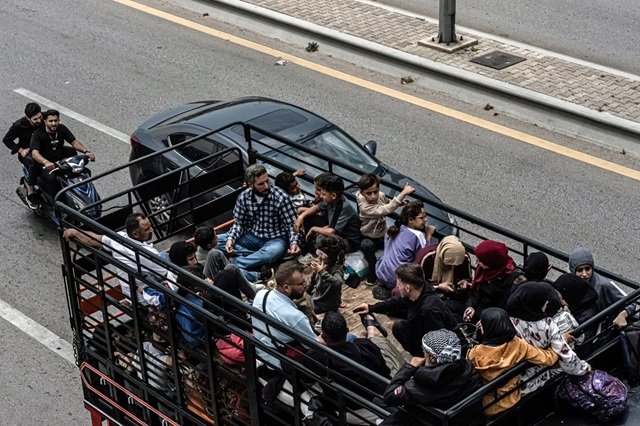
At the center of the controversy is Netanyahu’s recent decision to launch a renewed offensive in Lebanon, a move that now appears increasingly difficult to control politically and militarily. While European governments and now the United States criticize the escalation due to civilian casualties and mass displacement, internal critics demand the opposite approach: a far more aggressive campaign aimed at decisively crushing Hezbollah’s infrastructure in southern Beirut, particularly the Dahieh district.
The Israeli leader’s motivations are now under intense scrutiny. With parliamentary elections approaching in the autumn, Netanyahu faces pressure from multiple fronts. None of the wars conducted since the Hamas-led attacks of October 7, 2023, has produced a clear strategic victory. Hamas remains active in Gaza, Iran has not been neutralized, and its nuclear program remains unresolved. Against this backdrop, the Lebanon offensive is widely interpreted as an attempt to achieve a decisive breakthrough on at least one front or to restore Netanyahu’s image as a strong wartime leader.
However, the military logic of the campaign suggests a far more complex and potentially uncontrollable trajectory. Hezbollah has reportedly developed new drone capabilities that challenge Israeli defenses and threaten northern Israeli communities, raising fears of renewed large-scale evacuations and prolonged instability along the border. Israeli forces have already expanded their presence in southern Lebanon to create a wider security buffer zone, but this strategy risks continuous escalation as both sides adapt and retaliate.
The central strategic question remains unresolved: how far can such an offensive go before it becomes an open-ended war? Historical precedent looms large, with references to Israel’s 1982 Lebanon invasion and the possibility of deeper incursions toward Beirut. As the situation develops, analysts warn that the confrontation with Hezbollah carries the danger of becoming a prolonged and potentially endless conflict with no clear exit strategy.