


Europe’s NATO allies are moving to address a new challenge at the heart of the continent’s defence strategy: how to replace key military capabilities that the United States will no longer keep available for rapid deployment in a crisis.
Washington’s decision to reduce the forces and assets assigned to NATO’s European defence plans marks a significant adjustment in the alliance’s long-standing military structure. The equipment affected includes fighter aircraft, tanker planes, naval vessels, aircraft carriers and submarines that remain based in the United States but are designated to support European operations if needed.
The exact timetable for the change remains unclear, but allied sources indicate that the transition will happen gradually. The message from Washington is that the previous model of sharing the defence burden is changing into a transfer of responsibility, with European countries expected to increase defence spending, contribute more forces and assume a greater role in protecting the continent.
For NATO’s European members, the shift has moved from a political discussion to a practical military challenge. After receiving confirmation of the U.S. adjustment, many of the alliance’s 32 members, including Spain, reviewed their contributions and presented proposals for the future force model, the system that determines which military resources can be deployed quickly during an emergency.
European countries are also examining ways to increase participation in rotations and missions on NATO’s eastern flank, where the alliance continues to focus on the security challenge posed by Russia.
The American reduction comes alongside other planned changes to the U.S. military presence in Europe, including the withdrawal of around 5,000 troops from Germany and the freezing of defence programmes designed for the continent, such as the planned deployment of Tomahawk missiles in German territory.
Washington’s strategic priority is increasingly focused on the Indo-Pacific region. That shift is forcing NATO members in Europe to reconsider assumptions that have shaped collective defence planning for decades.
Luis Simón, director of the Brussels office of the Real Instituto Elcano, said the challenge goes beyond replacing individual pieces of equipment. U.S. contributions to NATO’s force structure are not simply isolated military assets but complete combat packages designed to operate together.
The removal of approximately 50 fighter jets or eight tanker aircraft, for example, represents the loss of a wider military system involving logistics, coordination and support capabilities that allow forces to operate effectively.
NATO Secretary General Mark Rutte acknowledged that several European allies have already taken steps forward by offering additional contributions to the alliance. These include capabilities that countries already possess or expect to acquire in the near future.
However, negotiations are continuing, and the gap has not yet been completely closed. NATO allies are seeking a clearer picture of Washington’s timeline and developing replacement plans ahead of the alliance’s July summit in Ankara, Turkey.
The discussions come at a sensitive moment for NATO, with some European governments concerned that U.S. President Donald Trump could pursue further reductions in American involvement or even question the country’s future role in the alliance.
Rutte said that much of what the United States would stop providing had already been addressed, with a significant portion nearly resolved, although some areas still required further discussion.
“It is a little strange that we still need so much help from a country eight hours away by flight,” Rutte said ahead of a key NATO defence ministers’ meeting in Brussels.
That meeting is expected to include U.S. Defence Secretary Pete Hegseth, who has been among the strongest critics of NATO’s current structure, arguing that European members have not assumed enough responsibility for the alliance’s defence.
The Brussels meeting represents the first high-level NATO gathering since Washington’s representative Alex Vélez-Green informed allied officials of the planned adjustment. During that announcement, specific figures were presented outlining the scale of the reduction.
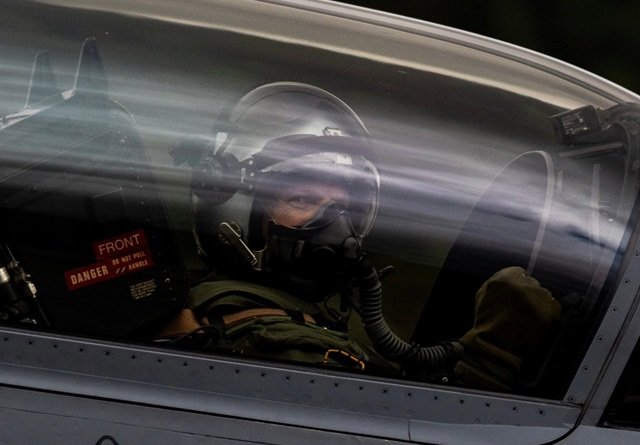
The United States plans to stop making available to NATO in Europe around 50 fighter aircraft, tanker planes, maritime reconnaissance aircraft, a missile submarine, an aircraft carrier, warships and several bombers.
A Pentagon document cited by The New York Times later provided additional details and suggested that the adjustment could happen faster and more abruptly than previously expected.
Despite the concerns, allied sources reject the idea that Europe will be left without protection. The continent will continue to host significant permanent deployments of U.S. troops and military equipment, including in countries such as Spain, although Germany remains the main centre for American logistics and operations.
The more immediate difficulty concerns rapid response capabilities and the ability to deploy forces together during a major crisis, including under NATO’s Article 5 collective defence commitment. European forces are not yet organised, integrated, trained or prepared to operate together at the same level as U.S. forces.
According to Simón, European military structures still depend heavily on key American enablers and operational depth. These capabilities include aerial refuelling, strategic transport, intelligence, surveillance and reconnaissance systems, early warning platforms, command and control networks, and electronic and space warfare capabilities.
Some of these functions can be replaced by European allies, but others represent a far greater challenge. Capabilities such as intelligence, surveillance and reconnaissance, airborne early warning and strategic transport require significant investment, coordination and time to develop.
The challenge is not only about identifying which countries can provide replacements for American assets. NATO’s defence plans themselves may also need revision, as they were designed for years around the expected participation of specific U.S. forces.
As European allies negotiate the next stage of the alliance’s military structure, the central question remains how quickly they can adapt to a new reality in which Washington’s role in defending Europe is being reduced and greater responsibility is shifting across the Atlantic.










