A mother’s emotional appeal to Pope Leo XIV has placed fresh attention on the legal and humanitarian questions surrounding the detention of retired Major General Suresh Sallay, the former Director of Sri Lanka’s State Intelligence Service (SIS), who remains in custody under the Prevention of Terrorism Act (PTA) in connection with investigations into the Easter Sunday attacks.
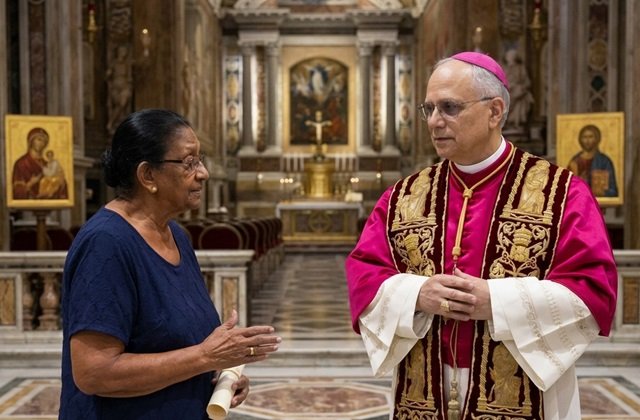
In a letter sent to the Vatican on 23 June 2026, Mrs Claudia Sallay has urged the Pope to intervene against what she describes as a public campaign that has effectively judged her son before any court has delivered a verdict. Her central appeal is that no individual should be condemned before the judicial process determines guilt or innocence.
The letter, addressed to Pope Leo XIV at the Apostolic Palace in Vatican City, raises concerns over the constitutional principle of presumption of innocence, alleged mistreatment during detention, and what the family describes as a lack of impartiality surrounding the investigation process.
Sallay’s mother argues that her son remains only a suspect in an ongoing investigation and has not been convicted of any offence. She refers to Article 13 of the Constitution of Sri Lanka, which guarantees that every person is presumed innocent until proven guilty according to law.
The appeal comes amid continuing public debate over accountability for the Easter Sunday attacks, one of Sri Lanka’s most traumatic security incidents. The attacks, which targeted churches and other locations, caused widespread loss of life and left victims’ families demanding answers about how the violence occurred and whether failures in intelligence and security systems contributed to the tragedy.
While acknowledging the suffering caused by the attacks, Mrs Sallay argues in her letter that accountability must be achieved through a fair and independent judicial process. She maintains that public accusations made before a court decision risk damaging the rights and dignity of any person facing allegations.
The family’s appeal focuses heavily on the claim that Sallay has not been identified as a suspect in several investigations carried out into the Easter Sunday attacks. According to the letter, neither local presidential commissions of inquiry nor investigations involving international agencies identified him as a suspect.
The letter specifically states that Sallay was not named as a suspect in investigations conducted with assistance from the United States Federal Bureau of Investigation (FBI) or the Australian Federal Police (AFP). It argues that despite years of inquiries, no official investigative body concluded that he was criminally responsible for the attacks.
However, the family says that despite the absence of a court judgment or such findings from those investigations, Sallay has been repeatedly portrayed publicly as the alleged “mastermind” behind the Easter Sunday attacks.
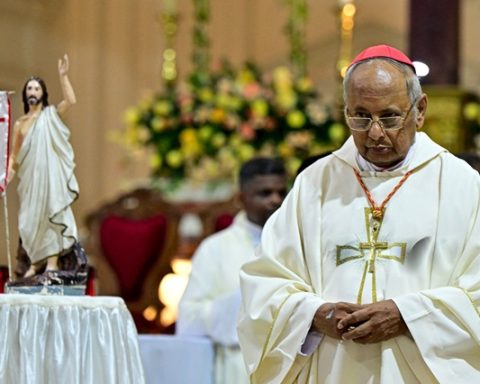
The letter identifies public statements by two Catholic priests, Father Jude Rohan Silva and Father Cyril Gamini Fernando, as a major concern. Mrs Sallay alleges that repeated media briefings and statements by the priests have contributed to a public perception of guilt against her son while the legal process is still underway.
According to the appeal, the priests’ statements have been particularly influential because of their position within the Catholic community. The family argues that comments from religious figures carry significant weight among believers and that repeated allegations can shape public opinion before evidence is tested in court.
The letter states that the statements have contributed to what the family describes as a “court of public opinion” in which Sallay’s reputation has already been affected before a judicial determination has been made.
It further claims that Father Silva and Father Fernando have connections to the investigation through complaints and statements related to the case. The family argues that continued public commentary by individuals connected to proceedings raises questions about fairness and impartiality.
The appeal also raises concerns regarding the independence of the investigation itself. Mrs Sallay claims there is a possible conflict of interest because some officials involved in the current process have previously faced criticism relating to alleged failures to prevent the Easter Sunday attacks, intelligence handling, and the response following the incident.
The family argues that individuals whose own conduct has been questioned in relation to the tragedy should not be placed in positions where they direct, supervise, or influence investigations involving the same events.
The letter states that public confidence in justice depends not only on investigations being fair but also on them being visibly independent. It argues that unresolved questions regarding institutional accountability should not be overshadowed by a focus on portraying one individual as responsible before a court has examined the evidence.
Beyond concerns about legal procedure, the letter highlights allegations regarding Sallay’s treatment while in state custody.
According to the appeal, forensic medical reports have documented severe physical and psychological suffering that the family says is consistent with torture and cruel, inhuman, or degrading treatment. The matter has also been presented to United Nations Special Rapporteurs, according to the letter.
The family states that Sallay’s condition deteriorated during detention, leading him to begin a hunger strike in protest against his treatment. He was later admitted to the National Hospital, where he continues to receive medical care.
The allegations of mistreatment add a humanitarian dimension to the case, with the family asking for protection of Sallay’s dignity and basic rights while legal proceedings continue.
The letter also details Sallay’s military background, describing him as a senior officer who served more than 35 years in Sri Lanka’s armed forces. His mother states that he received numerous gallantry, campaign, and long-service decorations during his career and served under five successive presidents.
She writes that her son’s loyalty was directed towards the state rather than any political party or individual and that he was never convicted of misconduct or any criminal offence during his military career.
For Mrs Sallay, the current circumstances represent a painful contrast to her son’s previous public service record. She argues that his reputation and dignity are being damaged before the legal process has reached a conclusion.
The appeal also stresses that it is not directed against the Catholic Church. Mrs Sallay describes herself as a lifelong Catholic with deep family connections to the Church and says her appeal is made from a position of faith and concern for justice.
She recalls raising her children with Christian values of compassion, humility, forgiveness, and respect for others, saying that these principles guide her request for intervention.
The letter asks Pope Leo XIV to encourage religious leaders, public officials, and others involved in the matter to allow Sri Lanka’s courts to determine the truth based on evidence rather than public pressure.
It also calls for restraint from those with influence over public opinion until the judicial process is complete.
The family acknowledges that the victims of the Easter Sunday attacks deserve justice and that those responsible must be held accountable. However, the letter argues that justice for victims cannot come through the punishment of a person before guilt has been legally established.
Sallay remains in custody under the PTA while investigations continue. No court has convicted him of any offence, and the allegations against him remain subject to judicial proceedings.
The Vatican appeal has now brought international attention to questions surrounding due process, investigative independence, and the treatment of individuals accused in one of Sri Lanka’s most closely watched criminal investigations.