The global race for artificial intelligence dominance has entered a new phase as governments debate who controls the world’s most powerful technologies. A decision by the United States to restrict access to Anthropic’s latest AI models has intensified concerns in Europe over dependence on American technology providers and renewed calls for greater digital sovereignty.
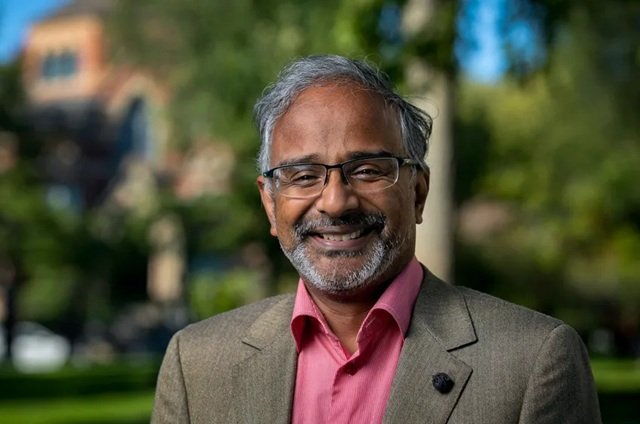
In an interview published by Die Zeit, Suresh Venkatasubramanian, a computer science and data science professor at Brown University and former deputy director of the Office of Science and Technology Policy under President Joe Biden, discussed the implications of US export controls, the future of AI regulation and Europe’s ability to build a more independent technological foundation.
The controversy began when the US government ordered non-US users to be excluded from access to Anthropic’s two newest models, Claude Mythos 5 and Fable 5, on June 12. The decision followed concerns that the systems could potentially be used for highly dangerous purposes, including planning cyberattacks or assisting non-experts in developing biological weapons.
For Venkatasubramanian, however, the effectiveness and justification of the export restrictions remain uncertain. He noted that export controls are not a new tool for the United States, pointing to previous restrictions on encryption technology in the 1990s. But he questioned whether such measures actually improve security or mainly create disadvantages for targeted companies.
The central question, he argued, is whether Anthropic’s models are truly far ahead of competing systems. While he acknowledged that the new models are highly capable, he said it remains unclear how much more powerful or dangerous they are compared with other advanced systems already available, including ChatGPT-5.5 and versions of Grok used in the United States.
The decision has also raised questions about whether the Trump administration is moving toward a broader policy of AI protectionism. Venkatasubramanian said the government increasingly views advanced AI models as strategic assets and sees major technology companies as tools for maintaining American leadership.
However, he said it was too early to determine whether the measures represent genuine protectionism. A clearer example, he argued, would be if Washington blocked Chinese AI models such as DeepSeek or Qwen from operating in the United States.
The dispute with Anthropic may also have been influenced by tensions between the company and the government. Venkatasubramanian pointed to a disagreement earlier in the year, when Anthropic objected to potential government uses of its technology, including mass surveillance and autonomous weapons systems. The company’s public stance, he suggested, may have contributed to tensions with officials.
The debate reflects a wider shift in US AI policy. The second Trump administration initially took an approach focused on limiting regulation, reversing Biden-era AI guidelines and attempting to prevent individual states from creating their own AI laws. The argument was that excessive regulation could weaken American innovation.
As AI systems became more advanced, however, the administration changed direction. In June, Trump signed a security order creating a voluntary framework allowing companies to submit their newest models for government review up to 30 days before release. The move highlighted ongoing divisions within the administration over how much oversight is necessary.
According to Venkatasubramanian, the disagreement involves several competing groups. One side supports rapid development and fewer restrictions, while another argues that powerful AI systems require stronger safeguards. He said similar tensions existed during the Biden administration, where officials debated whether protecting society from high-risk AI applications should take priority over supporting the technology sector.
He identified a third group focused mainly on risks to critical infrastructure, particularly financial systems. Members of this camp are less concerned with broad questions about AI development and more focused on preventing disruptions to essential services.
The role of China has become central to the debate. American technology companies frequently argue that stricter regulation could allow China to overtake the United States in AI development. Venkatasubramanian said this argument contains both strategic concerns and business interests.
He noted that competition with China is often persuasive in Washington, while technology companies use the rivalry to argue against regulations that could limit their growth. He also cautioned that statements from executives warning about extreme AI risks must be viewed alongside upcoming public offerings by companies such as OpenAI and Anthropic, where creating market excitement is an important factor.
China’s progress has challenged earlier assumptions that Chinese companies would struggle to develop advanced AI models. The emergence of companies such as DeepSeek in early 2025 disrupted expectations, while models including Alibaba’s Qwen and Moonshot’s Kimi gained attention among developers because of their lower computing requirements and reduced costs.
Venkatasubramanian argued that the idea that China avoids regulation is inaccurate. He said China regulates AI more aggressively than the United States, although according to government priorities that differ from democratic systems. The debate there, he said, focuses more on practical applications of AI rather than fears of existential risks.
For Europe, the recent export controls have renewed discussions about digital sovereignty. Venkatasubramanian said Europe has the resources and capabilities to become more independent in AI, although achieving that goal would require sustained effort.
Building large language models, he said, is only the first step. True technological independence would require reducing reliance across the entire infrastructure, including semiconductor production and cloud computing services. He pointed to the dominance of companies such as Nvidia in chips and Amazon in cloud services as examples of the deeper technological dependencies Europe would need to address.
The United States’ current AI leadership, he explained, is the result of decades of investment. Advanced systems such as ChatGPT represent only the visible part of a much larger technological ecosystem.
Venkatasubramanian said Europe should pursue greater independence but warned that the process would require patience. He added that increased competition could benefit all sides, including the United States, because technological monopolies create risks.
The possibility of global cooperation on AI standards remains uncertain. Areas such as autonomous weapons and international data flows require coordination, but Venkatasubramanian said cooperation has become more difficult as the United States steps back from some international initiatives.
Still, he pointed to past agreements between rival powers, including nuclear non-proliferation efforts during the Cold War, as evidence that competition does not necessarily prevent cooperation. As artificial intelligence becomes an increasingly important strategic technology, the challenge for governments will be finding a balance between competition, security and shared rules.