As negotiations over the conflict between the United States, Israel, and Iran continue, experts say Tehran’s reliance on proxy groups is expected to remain central to its regional and global strategy, underscoring concerns that any diplomatic agreement may leave one of Iran’s most influential security tools largely untouched.
Even if ongoing negotiations succeed in producing an agreement to end the current U.S.-Israeli war against Iran, Tehran is unlikely to abandon the network of proxy organizations, militant groups, criminal entities, and so-called “disposable agents” that has become a defining feature of its security strategy, according to an assessment by The Soufan Center.
The report argues that Iran’s extensive proxy architecture has evolved into a cornerstone of the country’s hybrid warfare doctrine, providing strategic depth while extending Tehran’s reach across the Middle East and into Europe and North America. Rather than relying solely on conventional military capabilities, Iranian authorities have long viewed non-state actors as a means of projecting influence while creating distance from direct responsibility for operations.
That assessment comes as diplomatic efforts continue to seek an end to the conflict. According to the report, the Trump administration has been working toward bringing the war with Iran to a close, with Vice President JD Vance engaged in negotiations with Iranian counterparts in Switzerland over the details of a potential agreement. Even so, many observers remain skeptical that the talks will produce a lasting settlement, citing both the trajectory of the negotiations and the scale of concessions reportedly under discussion.
Regardless of the outcome, The Soufan Center says the strategic landscape has already shifted in ways that are likely to shape regional security well beyond the negotiating table.
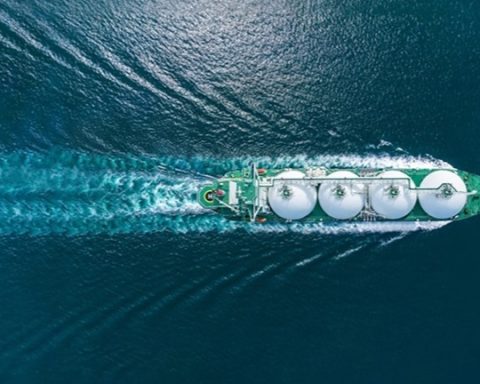
Among the most significant developments is Iran’s growing confidence in its ability to leverage the Strait of Hormuz during periods of heightened tension. The report notes that Tehran increasingly believes it possesses the capacity to disrupt one of the world’s most critical maritime trade routes whenever relations with the United States deteriorate or as a means of influencing Israeli involvement in Lebanon. With few practical alternatives available for global shipping, the waterway remains a strategic pressure point with implications extending far beyond the region.
Yet the report suggests that Iran’s most flexible instrument remains its proxy network. Armed militias, militant organizations, criminal syndicates, and covert operatives provide Tehran with options that conventional state institutions cannot. By operating through intermediaries, Iranian authorities are able to blur lines of accountability while expanding their operational reach across multiple regions simultaneously.
Recent developments cited in the assessment illustrate how that approach continues to evolve. According to reporting referenced from the Jerusalem Post, the Islamic Revolutionary Guard Corps established new operational cells in Iraq designed to target countries hosting American military bases. Unlike previous structures that relied heavily on established militia organizations, these cells reportedly bypass traditional networks in an effort to reduce the risk of detection. Similar IRGC-linked cells have also reportedly been uncovered in Bahrain, the United Arab Emirates, and elsewhere in the region.
The future of Iran’s proxy infrastructure has so far remained outside the scope of the current negotiations, according to the report. Even if the issue eventually enters diplomatic discussions, analysts cited by The Soufan Center suggest Tehran would be unlikely to accept restrictions on what it considers one of its most valuable strategic assets.
The report argues that continuing military pressure from the United States and Israel further reinforces Iran’s incentive to depend on alternative actors capable of carrying out operations on its behalf. Rather than reducing support for these organizations, Tehran could seek to strengthen relationships with militant groups, insurgents, criminal organizations, and other violent non-state actors operating across multiple continents.
Particular attention is given to what the report describes as the growing use of “disposable agents” in Europe. These individuals, often recruited from local criminal circles, have allegedly been involved in attacks across Belgium, the Netherlands, France, and the United Kingdom under the umbrella of the group Harakat Ashab al-Yamin al-Islamiya, or HAYI. According to the assessment, the organization has targeted Jewish and Israeli interests not only in Europe but also in North America, including reported plots involving synagogues in Arizona, New York, and Los Angeles.
The report also points to Iran’s alleged use of criminal organizations as operational partners. Among the examples cited is Sweden’s Foxtrot organized crime network, which has been linked to Iranian-directed activities. The use of criminal intermediaries forms part of what security analysts describe as Tehran’s broader model of hybrid operations, allowing state objectives to be pursued through non-state actors.
The assessment further highlights Iran’s continued campaign of transnational repression targeting dissidents living abroad. It notes that Iranian authorities have previously relied on criminal networks to pursue opponents outside the country’s borders. As one example, it references sanctions imposed in 2024 by the United States, the United Kingdom, Canada, and the European Union against Iranian narcotics trafficker Naji Ibrahim Sharifi-Zindashti for allegedly recruiting criminals in North America to assassinate two Iranian dissidents in Maryland.
Western intelligence and security agencies are also closely monitoring the activities of Iran-backed organizations and allied militant groups beyond the Middle East. According to The Soufan Center, authorities in Denmark, Sweden, Germany, and Italy have uncovered Hamas financing and operational networks, suggesting a wider geographic footprint than previously observed. The report also cites recent arrests in Greece involving alleged Hamas members connected to a dismantled cell in Cyprus, alongside investigations extending as far as Costa Rica.
These developments have contributed to concerns that Tehran could seek to transform Hamas into a more globally connected organization, mirroring the international operational model long associated with Lebanese Hezbollah.
The report also examines the broader implications of any economic relief resulting from future negotiations. Should sanctions on sectors including oil, shipping, or construction be eased, the Islamic Revolutionary Guard Corps could gain access to additional financial resources. Analysts cited in the assessment express concern that such resources could be directed toward rebuilding organizations including Lebanese Hezbollah, the Houthis, Hamas, and Iraqi Shia militias following years of military pressure from Israel and the United States.
At the same time, Iranian-backed groups continue to expand their operational capabilities. The report identifies advances in technologies such as drones as significant force multipliers that enhance the effectiveness of organizations like the Houthis while extending Iran’s influence across multiple theaters.
The Soufan Center concludes that Tehran’s proxy strategy is likely to remain firmly embedded in its national security doctrine. While international attention continues to focus on negotiations and the possibility of a diplomatic breakthrough, the report argues that Iran’s network of allied militant groups, criminal organizations, and covert operatives will continue to represent a central component of its regional and international posture. As discussions continue, the future of that network remains one of the most consequential unresolved issues surrounding any potential agreement.