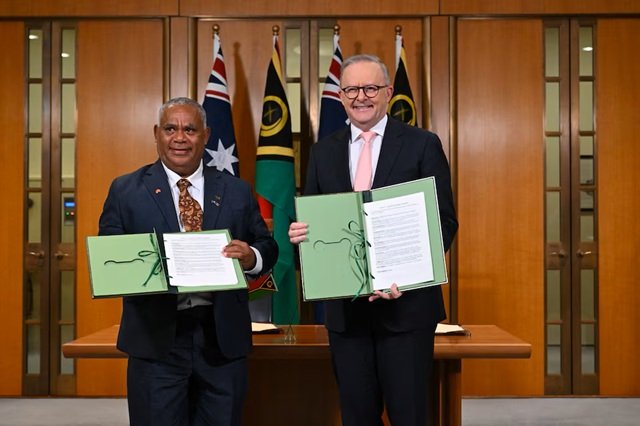
Australia and Vanuatu have signed a long-delayed development and security agreement that strengthens Canberra’s role as the Pacific island nation’s preferred security partner while establishing new consultation measures over foreign investment in critical infrastructure.
The agreement, known as the Nakamal Agreement, was signed on Monday after months of delays caused by concerns within Vanuatu’s government that the deal could limit the country’s ability to attract infrastructure investment from other nations. The pact comes as Australia continues its strategic competition with China for influence across the Pacific region.
Under the agreement, Australia will be consulted on any third-party investment proposals involving Vanuatu’s critical infrastructure. Canberra will also remain Vanuatu’s preferred partner for security and policing cooperation. Australia has previously committed A$500 million, equivalent to about $344.5 million, over a 10-year period to support the agreement.
Speaking alongside Vanuatu Prime Minister Jotham Napat, Australian Prime Minister Anthony Albanese said the agreement reflected Vanuatu’s sovereign decision not to allow its territory to be used for any foreign military base or military infrastructure. He said the pact also ensured that the country’s critical infrastructure would remain free from militarisation.
The agreement had originally been scheduled for signing in September but was postponed after Napat said a coalition partner had raised concerns over its potential impact on Vanuatu’s ability to secure infrastructure financing from other countries. Those concerns delayed final approval of the pact before both governments completed negotiations.
China remains Vanuatu’s largest external creditor, having provided loans through Chinese banks that financed major infrastructure developments carried out by Chinese contractors. Those projects include the construction of the presidential office complex, the parliament building and sections of the country’s road network.
Despite signing the new agreement with Australia, Vanuatu is continuing discussions with China on a separate economic arrangement. Napat said on Monday that the proposed deal with Beijing was awaiting approval from the Chinese government.
Responding to questions about the contents of the pending agreement with China, Napat said the document would be shared publicly and rejected suggestions that it would be concealed. He stated that there was nothing to hide and made the remarks when asked whether the economic agreement would include security-related provisions.
The signing of the Nakamal Agreement formalises Australia’s expanded security partnership with Vanuatu while preserving the Pacific nation’s pursuit of broader economic cooperation with other countries, including China. The agreement follows months of negotiations centred on balancing Vanuatu’s security cooperation with Australia against concerns over maintaining access to foreign investment for future infrastructure development.