Newly declassified records highlighted by the National Security Archive reveal that a Central Intelligence Agency publication marking the United States Bicentennial was far more than a historical tribute to the American Revolution. According to documents uncovered at the Gerald Ford Presidential Library and the CIA’s online reading room, the 1976 pamphlet Intelligence in the War of Independence formed part of a broader effort by the CIA and the Ford administration to defend the role of covert intelligence operations while countering mounting congressional investigations into the Agency’s activities.
Presented publicly as a Bicentennial publication celebrating the role of intelligence during the Revolutionary War, the pamphlet emerged during one of the most turbulent periods in the CIA’s history. The newly available records describe how senior officials viewed the nation’s 200th anniversary not only as a commemorative event but also as an opportunity to improve the Agency’s public standing amid widespread criticism and demands for greater oversight.
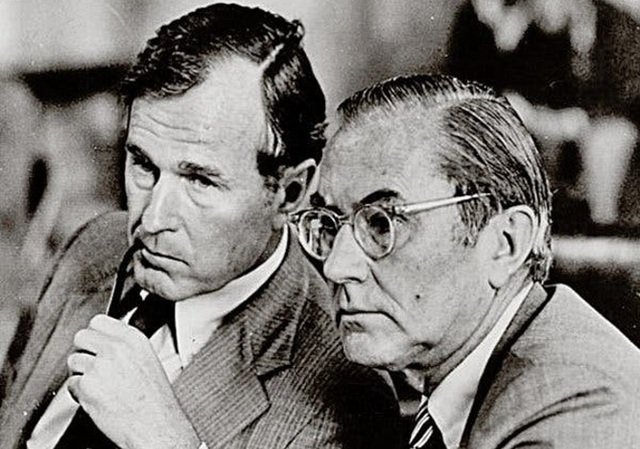
The publication opened with an introduction by newly appointed Director of Central Intelligence George H. W. Bush, who argued that while the exploits of Revolutionary War soldiers had been extensively documented, much less attention had been given to the individuals who quietly gathered intelligence in support of the American cause. Bush described those participants as patriots who served “without recognition” in a secret struggle to uncover the enemy’s intentions.
The pamphlet was widely circulated inside and outside government. Copies were distributed to Cabinet members, members of Congress, the President’s Foreign Intelligence Advisory Board, CIA employees, and organizations including the Virginia chapter of the Sons of the American Revolution. Internal memoranda later showed that the CIA’s Deputy Director for Operations continued requesting additional copies for foreign intelligence partners and visiting officials. Decades later, the publication experienced renewed attention after the CIA shared it on Twitter on July 4, 2014, where an internal social media report recorded nearly one million impressions during the agency’s first month on the platform.
Although the publication initially appeared to be one of thousands of projects organized during the nationwide Bicentennial celebrations, the newly released documents indicate that officials viewed it as part of a larger communications strategy. Internal correspondence described efforts to improve the CIA’s public image while resisting proposals in Congress that sought to place tighter controls on presidential authority over covert intelligence activities.
Preparations for the Bicentennial had begun years earlier. Congress established the American Revolution Bicentennial Commission in 1966 to coordinate the nationwide observance of the country’s 200th anniversary. By 1973, however, criticism over its effectiveness prompted lawmakers to replace it with the American Revolution Bicentennial Administration. The new organization, employing roughly 160 staff members, coordinated nearly 2,800 commemorative projects across the United States, including dozens with international participation, as the official Bicentennial period ran from March 1975 through the end of 1976.
For much of that planning period, the CIA showed little interest in taking part. Records indicate that as early as 1972, William Colby, then serving as the Agency’s Executive Director-Comptroller, wrote that the nature of the CIA offered little suitable contribution to Bicentennial activities. Earlier correspondence also reflected concerns within the Nixon administration that the Agency had not sufficiently cooperated with Bicentennial organizers.
That position changed dramatically following publication of New York Times journalist Seymour Hersh’s December 1974 investigation into CIA abuses. The article triggered a period the Agency later referred to internally as the “Time of Troubles,” leading to unprecedented investigations by the Rockefeller Commission, established by President Gerald Ford, as well as the Senate’s Church Committee and the House’s Pike Committee. As scrutiny intensified from Congress and the press, executive branch officials increasingly viewed the Bicentennial as an opportunity to reshape public understanding of intelligence work.
A memorandum documenting a conversation between President Ford, Secretary of State Henry Kissinger and National Security Adviser Brent Scowcroft illustrates the political atmosphere surrounding those investigations. Kissinger expressed dissatisfaction with Colby’s handling of the fallout and argued that stronger leadership was needed. During the same discussion, Ford explored whether the Bicentennial could be incorporated into a broader foreign policy speech intended to project confidence at a difficult moment for the administration.
Within the CIA, a turning point came during the summer of 1975 after Deputy Director of Central Intelligence Lt. Gen. Vernon Walters delivered the keynote address at the annual congress of the National Society of the Sons of the American Revolution. Walters received the organization’s Gold Good Citizenship Medal, while delegates approved a resolution criticizing efforts that they believed sought to weaken or abolish the CIA through congressional investigations and media scrutiny.
Among those attending Walters’ speech was Edward F. Sayle, curator of the CIA’s Historical Intelligence Collection. Inspired by the audience’s favorable response, Sayle drafted a memorandum proposing that the Agency “exploit the Bicentennial” by highlighting the achievements of Revolutionary War intelligence officers. He argued that organizations such as the Sons of the American Revolution could help reinforce public appreciation for intelligence activities by promoting the historical role of covert operations during the nation’s founding.
Initially cautious CIA leaders gradually embraced the proposal. Internal memoranda show that officials concluded a publication on intelligence during the American Revolution would be particularly appropriate amid the Agency’s unfavorable publicity. What began as a historical project increasingly became part of a wider effort to draw parallels between eighteenth-century intelligence gathering and modern covert operations.
Similar thinking also emerged inside the White House. John O. Marsh, Counselor to President Ford and a key figure overseeing executive branch Bicentennial planning, encouraged staff to work with the CIA to develop historical material demonstrating that intelligence operations had played an important role during the Revolutionary War. Marsh pointed to figures including George Washington, Thomas Jefferson and Benjamin Franklin as examples of leaders who had relied upon intelligence, psychological warfare and deception in pursuit of military objectives. Internal correspondence indicated that Marsh believed such historical examples could help build public understanding and support for intelligence activities at a time when Congress was considering new restrictions.
The administration also explored publishing an article on Revolutionary War intelligence in The New York Times Magazine to reach a broader audience. According to CIA memoranda, officials discussed whether an Agency employee could write anonymously or whether an outside historian could produce the article with CIA assistance. Those plans ultimately gave way to the decision to publish the official CIA pamphlet instead.
By late 1975, internal memoranda described Colby as enthusiastically supporting publication before leaving office. After Bush became Director of Central Intelligence, documents show he encouraged the research to be broken into excerpts suitable for speeches delivered by CIA and White House officials, emphasizing intelligence as an enduring contributor to American independence.
Historical references quickly became recurring themes in public appearances by senior intelligence officials. During a January 1976 interview on NBC’s Today Show, Colby responded to criticism surrounding CIA operations in Angola by citing the Continental Congress’s Committee of Secret Correspondence. He argued that the Revolutionary generation had also recognized the necessity of protecting intelligence information from excessive disclosure, drawing a comparison with contemporary debates over congressional oversight.
Walters adopted similar arguments throughout speeches delivered during the Bicentennial year. Speaking in Houston in January 1976, he maintained that intelligence work had deep roots in American history, citing examples involving George Washington, Benjamin Franklin and wartime deception operations. Walters acknowledged that the Agency had made mistakes but argued that intelligence activities, including controversial operations, had longstanding historical precedents dating to the nation’s founding.
Supportive reactions came from organizations including the Sons of the American Revolution. An article published in the group’s Winter 1976 magazine suggested that members of congressional committees investigating intelligence activities should examine Revolutionary War history to place contemporary controversies into historical perspective.
Sayle’s work also received recognition within the Agency. An internal CIA newsletter announced that he had been awarded a Special Achievement Award for authoring Intelligence in the War of Independence. The citation noted that research from the publication had been used extensively by senior officials and incorporated into speeches delivered by White House representatives during Bicentennial events.
The pamphlet was officially published in the fall of 1976, but its release also generated criticism. A journal entry from the CIA’s Office of Legislative Counsel records Representative Ronald Dellums questioning the expenditure of $4,500 to print 10,000 copies, suggesting the publication could constitute lobbying activity by the Agency. CIA officials defended the expense, stating that the publication had been produced as part of executive branch directives connected to the Bicentennial program.
The collection of declassified memoranda, speeches, correspondence and internal reports assembled by the National Security Archive provides a detailed chronology of how the CIA’s position evolved from reluctance to active participation in the Bicentennial celebrations. Together, the records document how Revolutionary War history became intertwined with debates over intelligence oversight, executive authority and public perception during one of the most consequential periods in the history of the modern American intelligence community.