


As borders become easier to cross for those with wealth, citizenship itself has become part of a growing global marketplace. Countries are increasingly offering passports and residency rights to investors, creating new pathways for the wealthy to secure mobility, protection and access to opportunities across the world.
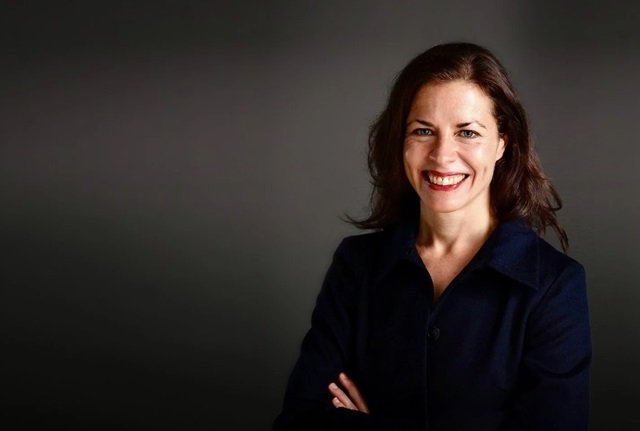
In an interview with Die Zeit, Kristin Surak, professor of political sociology at the London School of Economics, examines this expanding trade in nationality and explains how the movement of money and the movement of people are becoming increasingly connected. Her research focuses on migration, global mobility and the commercialization of citizenship, a subject she explored in her 2023 book “The Golden Passport,” published by Harvard University Press.
Surak argues that today’s wealthy migrants often do not relocate in the traditional sense. Instead, they build networks of residence and opportunity across several countries, buying properties, establishing legal footholds and creating options that protect them against political and economic uncertainty.
“Many shift their assets abroad, some purchase additional citizenships or use Golden Visa programs, where an investment secures the right to live in a country,” Surak told Die Zeit.
The growth of these programs reflects a broader transformation in global mobility. According to figures cited in the interview, wealth migration has reached record levels, with more than 142,000 dollar millionaires estimated to have changed their residence in 2025. Surak said that while tax considerations play a role, many wealthy individuals are motivated by a desire to expand their choices and protect themselves from instability.
When Surak began researching the phenomenon about a decade ago, many applicants for second citizenships came from countries including Russia, China and parts of the Middle East. In recent years, she said, demand has expanded among wealthy Americans and Europeans as geopolitical tensions and domestic uncertainty have increased.
The value of citizenship, according to Surak, is closely linked to the opportunities attached to different passports. A person’s nationality can determine where they can travel, work, invest or educate their children. She explained that global inequality is shaped not only by differences in wealth within countries but also by differences between countries.
A wealthy business executive from India, for example, may have significant financial resources but still face travel restrictions and administrative barriers because of passport limitations. For some members of the global elite, purchasing a second citizenship becomes a way to obtain the mobility advantages associated with more powerful passports.
The result is a growing industry in which governments sell access to national membership. Surak told Die Zeit that around a dozen countries currently offer citizenship by investment programs, while roughly 60 countries operate Golden Visa schemes. Together, these systems represent about one-third of all countries worldwide.
Among the largest citizenship-by-investment programs is Turkey’s, where individuals can obtain citizenship after investing 400,000 US dollars in real estate. Surak explained that such programs can be particularly attractive to people from countries where international mobility is restricted, including parts of the Middle East.
Several Caribbean countries also offer citizenship programs, providing benefits such as tax advantages and visa-free travel to more than 140 countries. In some cases, passports can be obtained for around 50,000 dollars per person and passed down to future generations, turning citizenship into a transferable asset.
European programs have also attracted attention. Malta and Cyprus previously offered citizenship by investment programs costing hundreds of thousands or millions of euros, though both have since been discontinued. However, Surak noted that wealthy individuals can still obtain citizenship through other routes, including exceptional recognition by governments.
She cited cases involving prominent business figures, including Snapchat founder Evan Spiegel receiving French citizenship after investing in a French startup, and PayPal and Palantir founder Peter Thiel receiving New Zealand citizenship after spending limited time in the country, purchasing luxury property and supporting an earthquake project. In another case, Apple co-founder Steve Wozniak received Serbian citizenship, reportedly because the country sought international recognition.
Surak said these examples demonstrate that citizenship can increasingly become subject to individual negotiations between states and wealthy individuals. The issue, she argues, extends beyond financial transactions because citizenship is also a legal and social status connected to identity and belonging.
Traditionally, citizenship has been viewed as a mechanism that provides equal rights within a national community. Surak referenced the British sociologist Thomas H. Marshall, who described citizenship as a force that could reduce inequality by granting shared political, economic and social rights.
Investment-based citizenship challenges that idea, she told Die Zeit, because it allows people to use resources accumulated through their original citizenship to purchase additional forms of belonging elsewhere. In her view, this creates a divide between membership in a state and membership in a nation.
The contradiction is particularly visible among political movements that promote stronger nationalism while simultaneously seeking to attract wealthy global investors. Surak pointed to Argentina’s government under Javier Milei and former U.S. President Donald Trump’s “Trump Gold Card” proposal, which offers residency in exchange for a major financial contribution, as examples of this tension.
“Those who promote nationalism are at the same time courting billionaires around the world,” Surak said in the Die Zeit interview.
She described this as part of a broader shift toward hyperindividualism, where people increasingly view states as service providers rather than communities to which they owe long-term commitments. Surak highlighted privately managed areas such as Honduras’ Próspera, a special economic zone offering a separate framework of rules and services, as an example of new models designed around attracting mobile wealth.
The same trend has expanded beyond billionaires. Golden Visa programs and digital nomad visas have brought the commercialization of mobility closer to the upper middle class. Surak said remote workers increasingly move to lower-cost countries where their income allows them to maintain a higher standard of living, though these movements can also contribute to rising housing costs in popular destinations.
Cities including Mexico City, Lisbon, Medellín, Bali and Chiang Mai have experienced growing demand from internationally mobile residents seeking infrastructure, international networks and lifestyle opportunities.
Surak told Die Zeit that countries now compete not only through tax policies but also through quality of life, infrastructure and social environments. The most attractive destinations combine financial advantages with services and communities that appeal to mobile professionals.
As more people adopt the idea that they can simply leave when their needs are no longer met, Surak argues that societies risk losing a sense of shared responsibility. While she remains critical of nationalism because of its potential links to exclusion and discrimination, she also acknowledges that national communities can create a sense of solidarity and mutual obligation.
The global expansion of investment-based citizenship, she said, raises a fundamental question about the future of belonging: whether communities will continue to be built around shared obligations or increasingly become services available to those who can afford them.










