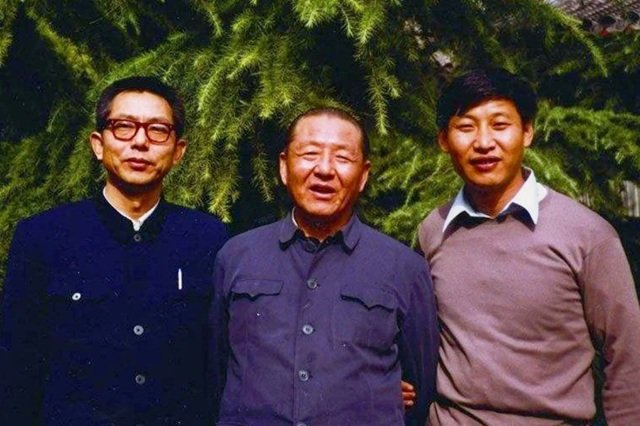
In the long arc of Chinese Communist Party history, Xi Zhongxun occupies a distinctive place. He was a revolutionary, a senior leader and, at times, a victim of political purges. Yet what makes him remarkable is not only his resilience but also his vision for managing China’s ethnic diversity. During the 1950s, as one of the Communist Party’s earliest experts on frontier governance, Xi Zhongxun believed that lasting stability could not be achieved through force alone. Instead, it required respect, dignity and equality for minority communities.
His approach was not merely theoretical. Xi Zhongxun cultivated close relationships with influential figures such as the Panchen Lama, seeking to build trust across cultural and religious boundaries. His philosophy rested on the belief that ethnic minorities were not obstacles to national development but partners in shaping China’s future. Even after suffering political downfall and later rehabilitation during the 1980s, he continued to advocate policies that recognised the humanity, dignity and autonomy of China’s diverse ethnic groups.
This vision stands in sharp contrast to the policies pursued by his son, Xi Jinping. Where Xi Zhongxun viewed diversity as a national strength, Xi Jinping has increasingly approached it as a challenge requiring greater uniformity. Policies implemented in Tibet, Xinjiang and Inner Mongolia have emphasised surveillance, state control and cultural assimilation. The elder Xi’s emphasis on mutual respect has gradually been replaced by a stronger drive towards national integration, raising concerns among critics about the preservation of distinct cultural identities.
The consequences, the author argues, extend beyond the personal contrast between father and son. China’s ethnic diversity represents one of its most significant cultural assets. The languages, traditions, music and religious practices of its frontier communities form an integral part of the country’s historical identity. Xi Zhongxun’s approach demonstrated that it was possible to preserve these traditions while maintaining national unity. Ignoring those principles, the author contends, risks weakening the cultural foundations of Chinese civilisation.
History often presents alternative paths. Xi Zhongxun’s legacy serves as a reminder that respect, dignity and accommodation can be sources of long-term stability rather than signs of weakness. While Xi Jinping’s policies may strengthen state authority in the short term, the author argues that they risk undermining the pluralism that has historically contributed to China’s resilience. If China is to flourish in the future, it must rediscover Xi Zhongxun’s belief that diversity, when treated with respect, is not a liability but a strength.