Benjamin Netanyahu enters Israel’s parliamentary election on 27 October facing the prospect of losing power, but his political survival may depend less on his record in office than on the profound shift in Israeli public opinion since the Hamas attacks of 7 October 2023. Although polls suggest that the prime minister’s right-wing coalition could lose its parliamentary majority, his enduring support reflects a society increasingly sceptical of compromise with the Palestinians and receptive to his emphasis on military force. An analysis published by the German weekly newspaper Die Zeit examines how Netanyahu has turned a catastrophe that damaged his authority into a political argument for the security doctrine he has long advocated.
The immediate electoral picture is unfavourable to the prime minister. Almost all pollsters predict that his coalition will lose its majority, while his Likud party could be overtaken by Jaschar, founded only a year ago by leading opposition candidate Gadi Eisenkot. Recent surveys also place Eisenkot five to ten percentage points ahead of Netanyahu when voters are asked who would make the better prime minister. Netanyahu is therefore not the favourite to win the election, although his record of recovering during the final stages of campaigns makes an outright prediction of defeat premature.
In March 2015, when Netanyahu was completing his third term as prime minister, polls also suggested that Likud was struggling as public sentiment favoured political change. He responded by targeting settlers in the occupied West Bank, sending millions of text messages to mobilise supporters and publishing a Facebook appeal on election day that played on hostility towards the Palestinian minority. “The right is in danger of losing power; Arab voters are heading to the polling stations in droves,” he wrote. The last-minute mobilisation succeeded, with more than half a million votes cast immediately before polling stations closed, allowing Netanyahu to remain in office.
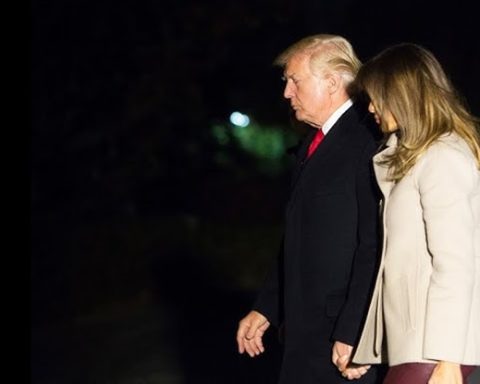
This time, he has received a late endorsement from Washington. On the Sunday before the election, US President Donald Trump praised Netanyahu on Truth Social as a “great warrior prime minister and an even greater partner for peace”, describing him as “strong, brave and brilliant in the face of tremendous resistance, including from within Israel itself”. Trump said he wanted to “finish the job” alongside Netanyahu in the conflict with Iran, adding that if Israel had the wrong leader — anyone other than Bibi — America would have to act alone, something he was unwilling to do.
The electoral value of Trump’s intervention remains uncertain. His fluctuating course in the war against Iran has made him less popular in Israel than he was after helping secure the release of the last hostages held by Hamas in October 2025. Netanyahu has nevertheless sought to exploit the endorsement, staging a public telephone call of thanks with Trump while standing on an airfield with fighter aircraft in the background. Even if Likud performs as poorly as current polling suggests, the final distribution of power may depend on complicated coalition negotiations after election day, an arena in which Netanyahu is widely regarded as particularly skilled.
Die Zeit’s analysis identifies two deeper sources of his resilience: Israel’s fragmented social structure and the political consequences of the 7 October attacks. Former Israeli president Reuven Rivlin once described the country as a collection of different “tribes”, meaning social and cultural communities that coexist with limited connection to one another. A politician who represents one or more of these constituencies can maintain a durable base of support even when major national events damage his standing.
Netanyahu’s Likud has a particularly strong following among Jews of Middle Eastern and North African origin, many of whom have long felt marginalised or discriminated against by Israel’s historically European-influenced elite. His coalition has extended that support through alliances with other constituencies. Ultra-Orthodox parties, which previously also participated in centre-left governments, have become closely tied to Netanyahu because his leadership helps preserve exemptions from military service and state funding for religious schools. Right-wing settlers also support him because his government tolerates and promotes settlement expansion in the occupied West Bank. These alliances provide a political foundation that does not depend solely on his performance as prime minister.
The second source of Netanyahu’s resilience is the transformation in public attitudes following the Hamas attack. His government was in office when Israel suffered the deadliest day for the Jewish people since the Holocaust, making him politically responsible for the security failure. Recent investigations, according to Die Zeit, have also reported that he received serious warnings shortly before the attack and allegedly ignored them. Establishing an independent commission to investigate the circumstances leading to the massacre is a central commitment of the opposition should it win the election.
Yet the attack has also strengthened the worldview underlying Netanyahu’s political programme. According to a Pew Research Center survey cited by Die Zeit, only 16 per cent of Jewish Israelis could envisage peaceful coexistence with a Palestinian state in the spring of 2026, half the proportion recorded in 2023 before the massacre. The decline reflects not merely opposition to a two-state solution but broader scepticism about compromise and reconciliation with the Palestinians. For many Israelis, the prospect of an indefinite state of conflict has become an accepted reality.
Netanyahu has translated that sentiment into an aggressive security doctrine that prioritises pre-emptive military action and minimises concern about international opposition. “Buffer zones,” he has said, “should be on enemy territory, not ours.” His ground offensive in Rafah in the southern Gaza Strip, undertaken against the wishes of then US president Joe Biden, and his attacks against Hezbollah in Lebanon and Iran have embodied that approach. Die Zeit argues that these actions have not simply represented unilateral escalation by Netanyahu but have also reflected a wider national consensus shaped by the attacks.
The prime minister’s political philosophy predates the massacre. In his 2022 memoirs, he wrote that every living organism needed the ability to recognise danger in time to confront it, arguing that the Jewish people had lost this capacity over centuries of exile. His longstanding warnings about the threat of a potentially nuclear-armed Iran form part of the same outlook. Since 7 October, the perception of an existential threat has become more widely shared in Israeli society, giving Netanyahu’s longstanding emphasis on danger a broader political constituency.
Whether that support will keep him in office remains uncertain. But even if the opposition wins, Die Zeit argues, any successor will face the strategic outlook that Netanyahu has come to represent: an Israel surrounded by enemies, living under permanent threat and prepared to use military force to defend itself.