An investigation details how an ambitious Israeli strategy involving Kurdish militias, covert influence operations and former Iranian president Mahmoud Ahmadinejad evolved into one of the most far-reaching regime-change plans ever contemplated before collapsing during its execution.
Nearly six months after a covert Israeli strategy to bring down Iran’s ruling establishment collapsed, a detailed investigation by Haaretz has revealed the scope of an operation that sought to reshape the balance of power in the Middle East through an unprecedented combination of military action, intelligence operations and political engineering. Drawing on interviews with more than 30 senior political, military and diplomatic sources, the investigation reconstructs how Israel attempted to build a pathway toward regime change in Tehran, only to see its most ambitious components fall apart before they could be executed.
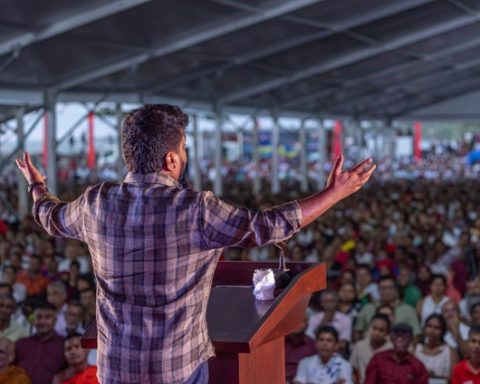
At the heart of the plan was an extraordinary objective. According to Haaretz, Israeli officials believed they had cultivated a relationship with former Iranian president Mahmoud Ahmadinejad, once one of Israel’s fiercest adversaries, after concluding that his growing opposition to Iran’s leadership had fundamentally altered his political trajectory. Officials involved in the effort came to view Ahmadinejad as a potential figure capable of leading a post-clerical Iran should the existing regime collapse.
The strategy did not emerge overnight. Its foundations began taking shape during 2024, following a series of developments that Israeli intelligence interpreted as signs of mounting instability inside Iran. The death of Iranian President Ebrahim Raisi in a helicopter crash near the Azerbaijan border became an early turning point. While Supreme Leader Ali Khamenei remained the country’s ultimate authority, Mossad officials reportedly focused on public celebrations that followed Raisi’s death, interpreting them as evidence of growing public dissatisfaction with the regime.
Those observations coincided with continuing domestic unrest that had followed the protests sparked by the death of Mahsa Amini and the economic pressures created by international sanctions. According to the Haaretz investigation, Israeli intelligence concluded that Iran’s political system appeared more vulnerable than previously believed.
At roughly the same time, Prime Minister Benjamin Netanyahu’s strategic outlook also shifted. Following the October 7 attacks and the continuing conflict with Hamas, Haaretz reports that Netanyahu increasingly viewed Iran as Israel’s central strategic challenge. Rather than limiting efforts to disrupting Tehran’s nuclear ambitions, he directed Mossad Director David Barnea to begin exploring ways to destabilize the Iranian regime itself.
The assignment represented a significant departure from long-standing Israeli policy. Previous Mossad directors had repeatedly concluded that engineering regime change inside Iran exceeded Israel’s operational capabilities. Former Prime Minister Ehud Olmert recalled that former Mossad chief Meir Dagan had rejected similar proposals years earlier, arguing that Israel lacked the resources and infrastructure required for such an undertaking. Other former intelligence officials reached comparable conclusions during subsequent administrations, maintaining that Israel’s priority should remain Iran’s nuclear program rather than attempting to reshape its political leadership.
The new strategy initially focused on influence operations designed to amplify existing public grievances. Mossad reportedly examined methods of encouraging unrest among Iran’s ethnic minorities while expanding networks capable of shaping public opinion inside the country. Intelligence officials remained skeptical about the effectiveness of those efforts, but preparations continued as political support for the project grew.
A dramatic shift occurred after Syrian rebels rapidly overthrew Bashar al-Assad’s government in late 2024. According to Haaretz, Netanyahu viewed the speed of the Syrian regime’s collapse as evidence that entrenched governments could unravel far more quickly than previously assumed if confronted by coordinated military and political pressure.
That conclusion transformed Israeli planning. Rather than relying primarily on covert influence campaigns, Mossad developed a broader concept combining military action with internal destabilization. Kurdish militias operating from Iraq became central to the proposal.
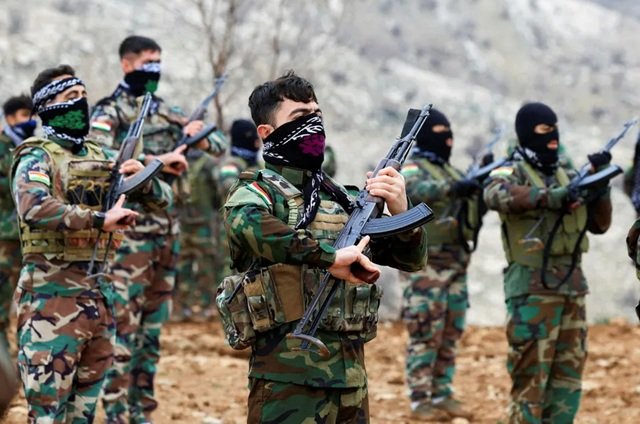
Israeli intelligence had maintained relationships with Kurdish groups for decades, and planners believed those connections could provide the foundation for an armed incursion into western Iran. Mossad officers mapped Kurdish organizations, identifying groups willing to participate while avoiding factions whose involvement could provoke opposition from Turkey.
According to the Haaretz investigation, Mossad agents worked closely with Kurdish commanders in Iraqi Kurdistan, supplying weapons captured during Israel’s conflict with Hezbollah and conducting extensive military training. Officials who reviewed footage from the preparations described organized military installations featuring guard towers, patrols, supply depots and disciplined formations that exceeded their expectations.
The operational concept envisioned approximately 16,000 Kurdish fighters crossing into western Iran under Israeli air cover. Their first objectives would be the Kurdish-majority cities of Kermanshah and Marivan near the Iraqi frontier. Israeli planners believed capturing those areas would encourage local Kurdish populations to join the offensive while prompting other minority groups across Iran to launch coordinated actions against the government.
As Iranian security forces dispersed to contain simultaneous uprisings, Israeli and American air operations would target military infrastructure, Revolutionary Guard positions and senior leadership. Mossad anticipated that the resulting pressure would create conditions for widespread unrest in Tehran and other major cities. Within that environment, influence operations already established inside Iran would seek to guide political developments toward a controlled transition, culminating in Ahmadinejad emerging as the preferred successor to the existing leadership.
Israeli officials acknowledged that Ahmadinejad remained a controversial figure internationally because of his previous statements and presidency. However, according to Haaretz, they believed he retained substantial domestic popularity while increasingly positioning himself against Iran’s ruling establishment. Intelligence officials reportedly concluded that his disputes with the leadership, periods of house arrest and repeated disqualification from presidential elections demonstrated an irreversible break with the regime.
The proposal nevertheless generated significant resistance inside Israel’s own security establishment. Military Intelligence Director Maj. Gen. Shlomi Binder concluded that the chances of successfully bringing down the Iranian government were low. Brig. Gen. Ofir Mizrahi-Rosen, who headed Military Intelligence’s research division, produced a detailed assessment questioning the feasibility of the operation. National Security Adviser Tzachi Hanegbi also withdrew from planning discussions after reportedly concluding that the concept lacked practical foundations.
Despite those reservations, preparations accelerated through late 2025 as Israeli intelligence assessed that Iran was rebuilding key military capabilities following earlier conflicts. When protests erupted in Tehran’s Grand Bazaar amid soaring inflation and the collapse of the rial, followed by a violent government crackdown, Israeli leaders concluded that events inside Iran were moving faster than anticipated.
The prospect of renewed military confrontation with Iran, combined with signals that the United States might support another campaign, pushed planning into its final stages. Netanyahu instructed the defense establishment to prepare both military operations and a comprehensive regime-change strategy, while Mossad intensified coordination with Kurdish forces and expanded preparations for what officials believed could become the decisive phase of the operation.
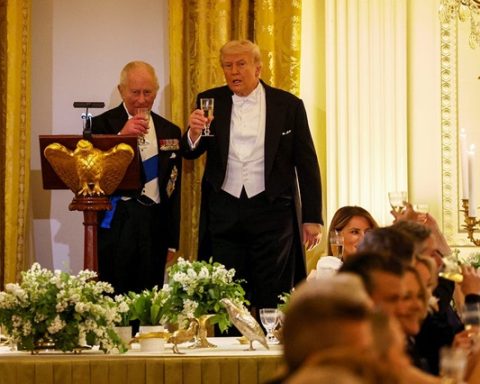
As preparations intensified, the operation expanded beyond military planning into high-level diplomacy. According to the Haaretz investigation, Netanyahu traveled to Washington in February 2026 determined to convince U.S. President Donald Trump that the planned offensive should extend beyond degrading Iran’s nuclear program and instead pursue the collapse of the regime itself. Mossad Director David Barnea joined discussions remotely from the agency’s headquarters, presenting the broad contours of the proposal.
Initial reactions appeared encouraging, but the atmosphere shifted once Trump met with his senior advisers. Haaretz reports that Vice President JD Vance questioned the assumptions underpinning the operation, while Secretary of State Marco Rubio dismissed the proposal outright. CIA Director John Ratcliffe also expressed skepticism, and senior intelligence officials concluded that expectations that a Kurdish offensive would trigger regime change were detached from reality. Trump ultimately determined that removing Iran’s leadership would not become an American objective, leaving Israel without the unequivocal backing that planners regarded as essential.
Those concerns mirrored debates already taking place inside Israel’s defense establishment. Military Intelligence maintained that the proposal rested on assumptions that could not be reliably tested. Officials questioned whether Kurdish groups and other minority organizations would remain committed once combat began and warned that predicting political developments during the collapse of a state was inherently uncertain. Intelligence assessments also cautioned that even if the clerical leadership fell, there was no guarantee that any successor government would prove more stable or more favorable to Israel’s interests. Some warned that the Revolutionary Guards could emerge even stronger in the absence of civilian institutions.
Despite those assessments, Netanyahu continued to press forward. According to Haaretz, the security cabinet was eventually briefed on the plan’s most closely guarded element: the intention to position Ahmadinejad as the leading figure in a post-regime Iran. Ministers were reportedly surprised by the disclosure, having been unaware that Mossad had spent months cultivating a relationship with the former Iranian president. Barnea explained that Ahmadinejad’s prolonged conflict with the Iranian leadership, repeated exclusion from elections and restrictions on his political activity had transformed him from a former president into an opposition figure. Officials were told that his continued popularity inside Iran gave him political value should the existing government collapse.
By late February, the operation had largely been assembled. Kurdish units had completed training, weapons had been distributed and detailed invasion routes had been coordinated with Israeli planners. Air Force preparations were nearing completion, while Mossad expected synchronized action from Kurdish forces, minority groups and covert assets operating inside Iran. According to Haaretz, Netanyahu proceeded under existing wartime authorizations rather than seeking a separate formal vote on the operation.
Three days before the planned offensive, however, another confrontation exposed the fragility of the strategy. During a final operational review, Barnea reportedly informed senior officials that the success of the broader plan depended upon eliminating Supreme Leader Ali Khamenei. Chief of Staff Lt. Gen. Eyal Zamir objected immediately, arguing that an assassination mission could not be treated as a guaranteed outcome and that tying the entire operation to a single uncertain event placed unacceptable risks on the military campaign. Haaretz reports that tensions escalated sharply before Netanyahu intervened and confirmed that preparations would continue.
When Israel and the United States launched their joint military operation against Iran in March 2026, the opening phase unfolded largely as planned. According to the investigation, Israeli strikes inflicted significant damage on Iranian targets, while Khamenei was killed during the offensive. Israeli aircraft also eliminated guards responsible for Ahmadinejad’s house arrest, allowing him to regain his freedom.
Yet the broader regime-change strategy never materialized.
The Kurdish offensive that formed the cornerstone of the operation remained stalled inside Iraq. Other minority groups did not launch the anticipated uprisings. The coordinated chain of events designed to overwhelm Iranian security forces failed to begin.
Haaretz reports that hopes briefly shifted toward Azerbaijan, where intelligence cooperation had reportedly expanded during the conflict. According to the investigation, Israeli operations from Azerbaijani territory included intelligence gathering, drone activities and emergency planning, while a rare strike was conducted against targets in the Caspian Sea. Even so, Azerbaijan did not expand its participation, leaving another potential avenue for the operation unrealized.
The decisive setback came after Trump publicly declared that Kurdish forces would not receive approval to enter Iran. Speaking aboard Air Force One on March 7, he stated that he did not want Kurdish fighters joining the conflict despite their reported willingness to participate. According to Haaretz, Kurdish commanders had consistently maintained that American approval was indispensable, recalling previous conflicts in which Kurdish forces suffered severe consequences after U.S. support ended. Without Washington’s explicit endorsement, they declined to proceed.
Israeli officials interviewed by Haaretz offered differing explanations for the collapse. Barnea reportedly attributed the outcome partly to Turkish President Recep Tayyip Erdogan’s intervention with Trump and partly to American public messaging urging Iranian civilians to remain indoors during the conflict. Other former intelligence officials rejected those explanations, arguing that the operation had lost credibility long before those developments because it failed to meet successive operational milestones. Planned influence campaigns did not gain momentum, minority groups failed to mobilize and the Kurdish timetable slipped repeatedly before the invasion was ultimately abandoned.
Mossad attempted to salvage elements of the strategy by proposing an alternative plan centered on Chaharshanbe Suri, a traditional Iranian festival associated with public gatherings. Officials believed existing networks inside Iran might use the occasion to encourage demonstrations. Military Intelligence opposed activating those assets during wartime, warning that exposure outweighed any likely benefit. Netanyahu accepted that assessment, and the proposal was shelved almost immediately.
Attention then shifted toward strikes against Basij positions using drones already positioned inside Iran alongside continuing Israeli air operations. Officials hoped weakening the security forces responsible for suppressing demonstrations might encourage unrest after hostilities ended. According to Haaretz, those efforts were also discontinued within days.
As prospects for the broader strategy disappeared, Barnea gradually withdrew from daily wartime briefings, with deputies increasingly representing Mossad during operational meetings. Officials attending those discussions concluded that the central objective had effectively collapsed.
The Haaretz investigation presents a picture of striking contrasts. It describes intelligence achievements that included cultivating contacts with Ahmadinejad, building relationships with Kurdish organizations, establishing networks inside Tehran and expanding regional operational capabilities. At the same time, it concludes that the interconnected structure of the overall plan meant each phase depended almost entirely upon the success of the previous one. Once the Kurdish offensive failed to begin, every subsequent stage became impossible to execute.
Former Mossad Director Tamir Pardo and former deputy director Ram Ben Barak told Haaretz that operations aimed at reshaping another country’s political system require many years of preparation, sustained intelligence work and the ability to adapt across successive leaderships. Other current and former officials similarly argued that such an undertaking could not realistically be developed within months, regardless of the capabilities assembled.
The investigation also documents differing views over the operation’s longer-term significance. Some security officials characterized the strategy as a major strategic failure that created expectations it could not fulfill. Others cautioned that broader consequences of the campaign against Iran may not become fully apparent for years. According to Haaretz, Barnea continues to believe Iran’s current system of government remains vulnerable, although he also acknowledged that any future easing of sanctions and restoration of economic resources could significantly strengthen the regime’s prospects for survival.
Six months after the operation unraveled, the investigation reconstructs an effort that combined covert diplomacy, intelligence operations, military planning and political calculations on a scale rarely described publicly. Although portions of the military campaign proceeded, the central objective of engineering regime change in Tehran never moved beyond the planning stage, leaving one of the most ambitious intelligence initiatives outlined by Haaretz without the political transformation it was designed to achieve.