


Every year on 19 July, Kashmiris on both sides of the Line of Control, along with the wider Kashmiri diaspora, observe Kashmir Accession Day — a commemoration rooted in a pivotal resolution passed in Srinagar nearly eight decades ago. The day marks the anniversary of a 1947 declaration by the All Jammu and Kashmir Muslim Conference that called for the state’s accession to the newly created state of Pakistan, and it remains, for many in the region, a living symbol of an unresolved political struggle.
The 1947 Resolution
On 19 July 1947, at a gathering held at the Srinagar residence of Sardar Muhammad Ibrahim Khan, the Muslim Conference unanimously adopted what became known as the “Ilhaq-e-Pakistan” (Accession to Pakistan) Resolution. The text argued that geography, demography, and economics all pointed toward union with Pakistan rather than India. It cited the state’s roughly 80 percent Muslim population, the passage of Punjab’s principal rivers through Kashmiri territory, and shared linguistic, cultural, and ethnic bonds with the areas that would become Pakistan.
The resolution also expressed strong support for Muhammad Ali Jinnah and the Pakistan movement, and it issued a pointed warning to Maharaja Hari Singh, the state’s ruler: he was urged to declare accession to Pakistan before 14 August 1947, with the resolution cautioning that disregarding popular sentiment could carry serious consequences. In the view of those who commemorate the day, the eventual partition of the state — and its accession instead to India — was shaped less by the wishes of the Muslim-majority population than by the decisions of a small circle of elites and the policies of the Dogra ruling house.
A Day of Annual Observance
Nearly eighty years on, 19 July continues to be marked with considerable public ceremony across Azad Jammu and Kashmir, throughout Pakistan, and among Kashmiri communities abroad. Towns and cities in AJK are typically decorated with Pakistani and Kashmiri flags, banners bearing slogans such as “Kashmir Banay Ga Pakistan” (“Kashmir will become Pakistan”), and illuminated public buildings. Political parties, student organizations, and civil society groups organize rallies, seminars, and conferences reaffirming the goals of the original resolution and calling for implementation of United Nations resolutions on Kashmir. Pakistani national and regional broadcasters typically devote extensive coverage to the day, including documentaries and statements from political leaders.
Supporters of the observance describe it as an assertion of continuity — a reminder that the demand articulated in 1947 has not been abandoned, whatever political developments have occurred since.
The Situation in Indian-Administered Kashmir
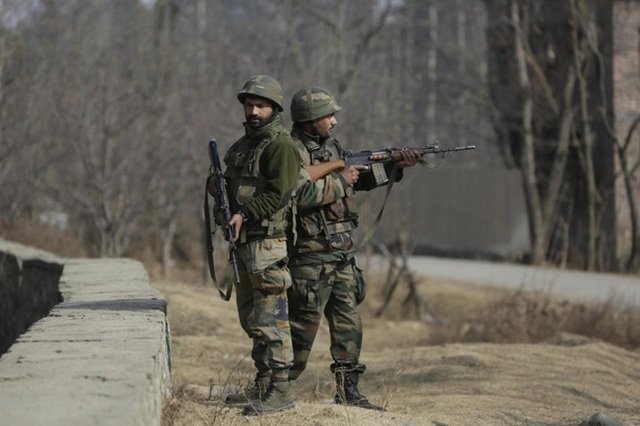
Advocates for accession to Pakistan point to conditions in Indian-administered Jammu and Kashmir as evidence that the underlying dispute remains unresolved. They argue that a heavy security presence and continued unrest reflect popular opposition to Indian administration, and that developments since the 2019 abrogation of Article 370 — which had granted the region special constitutional status — have intensified restrictions, including increased detentions, periodic communications blackouts, and changes to residency and domicile rules that critics say are altering the region’s demographic composition.
Human rights organizations, including Amnesty International and Human Rights Watch, have over the years documented allegations of extrajudicial killings, enforced disappearances, torture, and the use of pellet-firing shotguns against protesters in the region. Various Kashmiri and international estimates put the number of people killed in the conflict since 1989 at over 100,000, though such figures are contested and vary considerably by source. UN human rights bodies have periodically described the human rights situation in the region as deeply troubling, noting that it remains one of the most heavily militarized areas in the world.
Historic Commitments
Supporters of self-determination for Kashmir frequently invoke early statements by Indian leaders themselves. Mahatma Gandhi is recorded as having said in July 1947 that the people of Kashmir should be free to choose between joining Pakistan or India, declaring that “the ruler is nothing, the people are everything.” Jawaharlal Nehru, in a November 1947 radio broadcast, pledged that Kashmir’s future would ultimately be decided by its people — a commitment he described as binding both domestically and before the world. Sheikh Abdullah, the state’s early political leader, later suggested in 1970 that he regretted trusting these assurances, maintaining that the 1947 accession to India had been intended as provisional pending a plebiscite.
These domestic commitments were echoed internationally. The United Nations Security Council, through Resolution 47 of 1948 and the subsequent UNCIP resolutions of August 1948 and January 1949, called for the state’s future to be settled through a free and impartial plebiscite conducted under UN auspices — a call reiterated in more than a dozen subsequent Security Council resolutions. Prominent international figures have also weighed in over the decades: philosopher Bertrand Russell criticized India’s refusal to permit a plebiscite; Nelson Mandela urged a peaceful negotiated resolution; Bill Clinton described the Kashmir dispute as one of the most dangerous flashpoints in the world; and former UN High Commissioner for Human Rights Mary Robinson called the human rights situation in the region “very gloomy.”
A Continuing Dispute
For those who mark 19 July as Accession Day, the observance is inseparable from the broader claim that the 1948–49 UN resolutions remain the internationally sanctioned framework for resolving the dispute, and that the right of self-determination first voiced in Srinagar in 1947 has yet to be honored.
It is worth noting that this is one side of a dispute that India views very differently. New Delhi maintains that Jammu and Kashmir’s 1947 accession to India was legal and final, that the UN resolutions calling for a plebiscite were conditioned on troop withdrawals that Pakistan never completed, and that subsequent Kashmiri elections have provided a democratic mandate within the Indian union. India also disputes casualty figures and characterizations of the security situation put forward by Pakistani and Kashmiri advocacy groups, and regards cross-border militancy — which it says Pakistan has supported — as the principal driver of unrest in the region. The Kashmir dispute remains one of the world’s longest-running unresolved territorial conflicts, and any account of it inevitably reflects the perspective from which it is told.










