The historic city of Herat has long occupied a distinctive place in Afghanistan’s cultural heritage. Known for its ancient citadel, bustling bazaars and rich tradition of scholarship, the city has for centuries served as a crossroads between Central Asia, Persia and the wider world. Since the Taliban returned to power under their supreme leader Akhundzada Haibatullah, however, Herat has become one of the clearest examples of how Afghanistan’s new authorities have dramatically restricted the lives of women and girls.
A detailed investigation published by The Spiegel documents how the Taliban have steadily expanded controls over nearly every aspect of women’s daily lives, enforcing increasingly strict dress codes, limiting movement, excluding women from education and employment, and intensifying the activities of the country’s morality police.
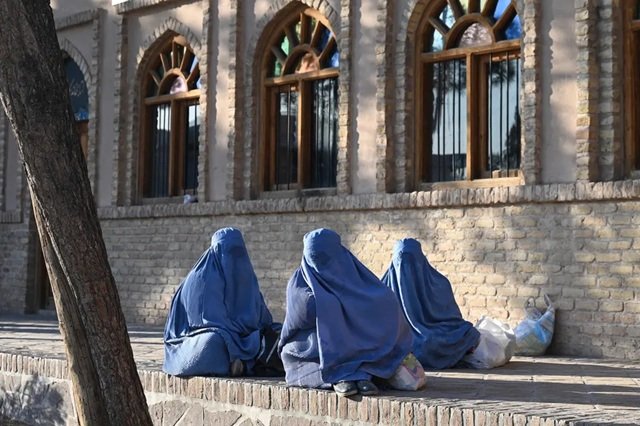
The tightening restrictions began soon after the Taliban consolidated power but accelerated significantly from December 2022. Women were barred from working for many of the remaining international organisations, including the United Nations. Female teachers, doctors, nurses and patients were instructed to wear the floor-length burqa or the full-body chador while working, treating patients or teaching classes, with the threat of arrest for those who failed to comply.
Across Herat, morality police established checkpoints in busy commercial districts including Darb-e Malik, Khwaja Kalla and Shahr-e Naw. According to The Spiegel, officers wearing white coats routinely stop buses, taxis and private vehicles to inspect female passengers. They scrutinise faces, examine the length of women’s outer garments and look for what they consider violations of the dress code. Even small amounts of make-up or a veil deemed improperly worn can result in women being removed from vehicles and taken into custody.
Such arrests carry consequences extending well beyond temporary detention. In Afghanistan’s current social environment, the detention of a woman often creates lasting stigma for her entire family. Relatives frequently have little information about what occurs inside police stations or detention centres, while international media have repeatedly reported allegations that women imprisoned by the Taliban have experienced torture and sexual violence. Women returning after hours or days in detention may face social ostracism simply because of suspicions surrounding their imprisonment.
The situation intensified further in June when morality police reportedly began driving through Herat in vans, forcibly detaining women in public. An eyewitness told The Spiegel that some of those arrested were wearing full-length hijabs that covered their hair, neck, shoulders and chest, exposing only their faces. Many of the arrests reportedly occurred in the Jebrail district, an area largely inhabited by Afghanistan’s Shiite Hazara minority.
Taliban authorities defended the operations by arguing that women’s clothing had become increasingly inappropriate. Herat Governor Noor Ahmad Islamjar described the detentions as an act of care, claiming that the women concerned suffered from “psychological and religious problems” and required guidance rather than punishment.
The campaign prompted public protests involving both men and women. According to the report, Taliban security forces dispersed demonstrators using batons and gunfire. At least two people were killed and several others injured. Officials denied that either arrests or demonstrations had taken place, but the United Nations Assistance Mission in Afghanistan (UNAMA) reported that authorities detained at least thirty people.
One single mother told The Spiegel by telephone that she secured the release of her sixteen-year-old daughter after forty-eight hours in police custody by paying 13,000 Afghani, equivalent to more than two average monthly salaries. She said her daughter returned home visibly traumatised but refused to discuss what had occurred during detention. Although such individual accounts cannot be independently verified, the report notes that international media outlets and Afghan journalists have repeatedly documented allegations that women detained by the Taliban have been subjected to sexual abuse and later blackmailed using compromising photographs.
Alongside physical enforcement, the Taliban have continued issuing new decrees governing women’s behaviour. One regulation states that women wearing perfume in public while passing men, allegedly with the intention of attracting attention, are to be regarded as “adulteresses”. The measure reflects an expanding interpretation of morality regulations that now extends beyond clothing to encompass ordinary aspects of personal appearance.
According to The Spiegel, an unofficial list circulating within Afghanistan now contains more than fifty restrictions affecting women and girls. Girls may attend school only until the sixth grade, while women are prohibited from attending university. Beauty salons have been closed, women are barred from entering parks and participating in sport, and travel without a male guardian, or mahram, is prohibited. Additional restrictions reportedly include bans on speaking loudly in public, reading aloud, singing or even standing visibly on balconies.
Following the June crackdown, United Nations Special Rapporteur on the situation of human rights in Afghanistan Richard Bennett called for those responsible for the violence to be held accountable. His appeal, however, produced no visible change on the ground.
Many Afghan women now believe the international response has become increasingly muted. Farida Hamidi, a former legal trainee who asked not to be identified by her real name, told The Spiegel that European governments had effectively normalised engagement with the Taliban while overlooking what she described as the humiliation and systematic violation of women’s rights. She criticised consultations between European officials and Taliban representatives, arguing that such engagement had not been accompanied by meaningful pressure over the treatment of Afghan women.
Taliban officials reject accusations that they are imposing arbitrary restrictions. During a recent visit to Herat, Minister for the Propagation of Virtue and Prevention of Vice Mohammad Khalid Hanafi insisted that conditions in the city were normal. Addressing local dignitaries and journalists, he said his ministry was protecting the rights of his “sisters” and argued that critics were falsely portraying the implementation of what he described as God’s commandments as uniquely Taliban legislation.
For many women living in Herat, those assurances bear little resemblance to everyday reality. The report describes increasingly empty streets as many women leave their homes only when absolutely necessary, fearing harassment, detention or public humiliation.
Hamidi’s experience reflects the wider transformation affecting a generation of Afghan women. She had hoped to complete her legal education and represent women in court as a lawyer, ambitions that came to an abrupt end following the Taliban’s return to power. Today, she says, the world beyond her front door has ceased to be a place of opportunity or freedom. Instead, it has become a place defined by fear, uncertainty and the constant risk of punishment, illustrating the profound impact that the Taliban’s expanding restrictions continue to have on women’s lives across Herat.