A Financial Times investigation reveals how Google has built one of the largest infrastructure financing programmes ever assembled to support the rapid expansion of artificial intelligence, bringing together technology companies, private credit investors, investment banks and data centre developers in a web of transactions worth around $200 billion. The arrangements illustrate how AI investment is increasingly extending beyond traditional corporate spending into a complex financial ecosystem that could reshape both the technology industry and global capital markets.
Google has quietly assembled one of the largest infrastructure financing programmes in history, creating an intricate financial architecture designed to support the deployment of more than $150 billion worth of artificial intelligence chips destined for Anthropic. As first reported by the Financial Times, the project represents a striking example of how the race to build AI infrastructure is transforming not only the technology sector but also the mechanics of global finance.
The arrangements unite Google, Broadcom, Apollo, Blackstone, Morgan Stanley and a number of crypto mining companies in a sophisticated network of transactions stretching from semiconductor manufacturing to data centre construction. According to people involved in the project and corporate filings reviewed by the Financial Times, the interconnected contracts amount to approximately $200 billion. Together, they reveal how the financing of artificial intelligence is evolving into an industry-wide ecosystem that reaches well beyond conventional corporate investment.
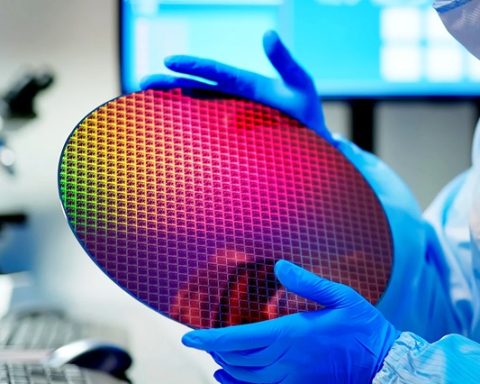
At the heart of the programme are Google’s tensor processing units, or TPUs, specialised AI chips that the company has co-developed with Broadcom since 2016. Originally deployed primarily within Google’s own data centres, these processors have increasingly been marketed to external customers, positioning Google as a more direct competitor to Nvidia in the rapidly expanding AI processor market. Rather than selling individual chips, Google packages them into interconnected “pods” consisting of server racks taller than a person, linking thousands of processors into a single computing system capable of powering advanced AI workloads.
The scale of the undertaking reflects the extraordinary value now attached to advanced AI hardware. “AI chips are some of the most valuable goods ever produced,” a senior banker close to the transactions told the Financial Times. “It’s a scale like we’ve never seen before because it’s a product we’ve never seen before.”
Meeting Anthropic’s surging demand has required a financing structure unlike traditional technology procurement. Because the AI start-up does not possess a credit rating, Google, Broadcom and major Wall Street investors have each assumed different elements of the financial risk. Google, which is also an investor in Anthropic, guarantees the data centres that will house the computing infrastructure. Broadcom commits to purchasing the chips while also helping finance them. Meanwhile, Apollo and Blackstone provide much of the private-credit capital used to purchase the hardware before leasing it back to Anthropic.
“This is each of us putting our balance sheet to work,” a Google executive involved in the effort told the Financial Times. “We’re doing it on the data centre side, [Broadcom’s] doing it on the chip side.”
Collectively, the contractual arrangements underpinning this structure amount to around $200 billion, with approximately four-fifths of that value linked directly to the chips themselves. Such a programme presented a significant financial challenge. None of the companies involved wished to hold tens of billions of dollars of AI hardware on their own balance sheets.
Google, already undertaking record levels of capital expenditure, sought to avoid adding further large hardware holdings. Broadcom agreed to purchase the AI hardware from Google, but it too preferred to allocate its capital elsewhere. As one person familiar with the arrangements observed to the Financial Times, “Broadcom is the financing provider, but they don’t want to be in the financing business.”
The solution emerged through an adaptation of vendor financing models previously used in industries such as aviation. Morgan Stanley helped establish a private-credit investment vehicle funded by outside investors. The structure purchases Google’s AI chips before leasing them to Anthropic, echoing financing models developed by Boeing and GE to market aircraft and engines.
In June, the first tranche of TPU hardware moved through this structure. A special-purpose vehicle known as Compute SPV purchased approximately $35 billion worth of AI hardware—equivalent to roughly one gigawatt of computing capacity and around one million TPUs. The acquisition was financed through three debt tranches anchored by Apollo and Blackstone.
Broadcom further strengthened the financing by providing what is known as residual value support. Under this arrangement, it effectively guaranteed approximately $30 billion of the $35 billion financing by agreeing to absorb any shortfall should Anthropic cease making lease payments and the hardware fail to generate sufficient resale value to repay senior investors. Broadcom’s financial exposure gradually declines as Anthropic continues making lease payments.
According to the Financial Times, this financing model is expected to become the template for funding hundreds of billions of dollars worth of future TPU deployments. The largest transaction so far emerged in April, when Google agreed to sell an additional 3.5GW of TPU hardware to Broadcom for Anthropic’s use.
Broadcom’s corporate filings disclose $128 billion in purchase commitments, including $55.2 billion scheduled for delivery during its 2027 fiscal year and $72.9 billion during fiscal 2028. People familiar with the arrangements told the Financial Times that these commitments relate almost entirely to Broadcom’s agreement to purchase the 3.5GW of TPU hardware from Google.
Financing the chips represented only one part of Google’s challenge. Equally critical was securing sufficient powered data centre capacity to house the rapidly expanding AI infrastructure. “We have a schedule and we’re looking for capacity that will fit the schedule,” the Google executive said. “Crypto miners with excess capacity were helpful.”
This search for infrastructure has transformed several cryptocurrency mining companies into AI data centre developers. TeraWulf became the first to receive a Google-backed arrangement, enabling the construction of a 360MW data centre at its campus in upstate New York. Google guaranteed lease payments on the Anthropic-bound facility, allowing Morgan Stanley to package the project into a construction bond that raised $3.2 billion in October. In exchange for providing the guarantee, Google received penny warrants granting it an ownership stake in TeraWulf.
The approach was subsequently expanded to additional crypto mining companies, including Cipher Digital and Hut 8, supporting data centre developments in Texas and Louisiana. The Financial Times identified five projects representing 1.4GW of power that collectively raised $15 billion in debt through Google’s backing.
People familiar with the arrangements told the Financial Times that Google has so far provided guarantees for 10 developments representing 2.4GW of power dedicated to TPU deployment. Those guarantees could expose Google to liabilities of up to $44 billion should every lease fail, although the company currently records the liability at $815 million on its balance sheet. Google also retains the ability to step into the leases directly if required.
The company continues assembling additional data centre projects capable of accommodating the full 4.5GW of TPU hardware it has agreed to sell. “We’re spending a lot of time on [power] right now — all of our time,” the Google executive said.
By this spring, according to the Financial Times, Google’s financial backing had already begun reshaping the economics of AI infrastructure financing. Data centre projects supported by Google secured borrowing at a median interest rate of 7.1 per cent, compared with 9.3 per cent for neocloud operators building around Nvidia’s chips. Jefferies analysts described the difference as “a structural cost-of-capital disadvantage” for companies operating within Nvidia’s ecosystem.
Despite the scale and sophistication of the financing structure, the concentration of risk remains significant. Approximately $200 billion in contracts ultimately depend upon Anthropic’s ability to meet its chip and data centre lease obligations. As the Financial Times noted, the arrangements also reflect a broader challenge facing the AI industry, where enormous infrastructure investments increasingly depend upon the continued spending appetite of a relatively small number of hyperscale technology companies and frontier AI laboratories.
“There’s a whole world that’s been built underneath those companies, and if their appetite to invest decreases, all of it sees a slowdown,” Jefferies analyst Jonathan Petersen told the Financial Times. “That’s the big macro risk.”