Nato’s senior military commanders say the alliance possesses overwhelming conventional military superiority over Russia and is developing detailed plans to defeat any attack on its territory, as Russian sabotage, drone incursions and other hostile activities intensify concerns about European security.
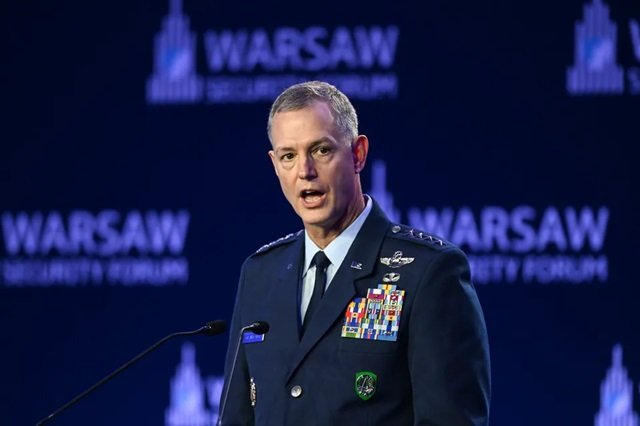
In an interview with the German news magazine Der Spiegel, published in issue 43/2026, US General Alexus Grynkewich, Nato’s Supreme Allied Commander Europe, and General Carsten Breuer, Germany’s chief of defence, described preparations for a potential conflict, including a three-stage strategy to repel attacks, weaken enemy forces and destroy the systems sustaining an offensive. Both commanders argued that maintaining credible deterrence, modernising armed forces and preserving transatlantic unity were essential to preventing a wider war.
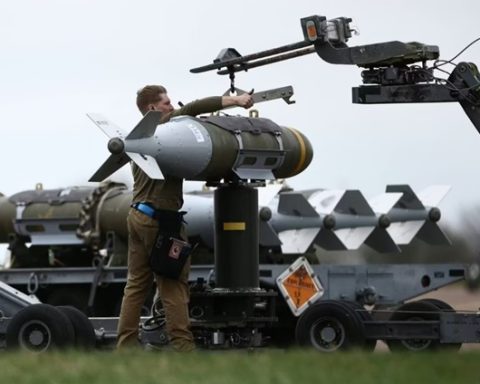
“Our military capabilities, which we would deploy in a major conflict, far exceed Moscow’s by a wide margin,” Grynkewich said, describing Nato’s conventional advantage in a war involving the full alliance. He cited the alliance’s F-35 fighter aircraft and its larger numbers of modern destroyers and submarines as capabilities Russia could not match.
Grynkewich, 55, commands Nato’s allied forces in Europe and all US forces stationed on the continent. He spoke to Der Spiegel at the alliance’s operational headquarters in Mons, Belgium, alongside Breuer, 61, who is due to become chairman of Nato’s influential Military Committee in the summer of 2027.
The interview came amid reports of Russian drones entering Nato airspace, aggressive manoeuvres by the Russian navy and an alleged attempt to attack Leipzig airport. Breuer said Germany had quickly attributed the suspected attack on the airport to Russia and received support from Nato allies within hours. He described the response as evidence of the alliance’s strength and cohesion.
Grynkewich said the suspected operation itself represented a crossing of a boundary. Had it succeeded, several fully fuelled Antonov aircraft could have exploded, potentially causing deaths. He argued that governments should pay greater attention to the risks Russia was prepared to take to inflict damage, rather than focusing exclusively on the risks associated with their own responses.
Both generals rejected suggestions that the possibility of conflict should deter continued support for Ukraine. Grynkewich said Russian President Vladimir Putin wanted European and American populations to fear that assisting Kyiv could lead to war with Russia. Breuer added that Moscow was also attempting to drive a wedge between European Nato members and the United States, warning that alliance unity must be preserved.
They also differed in emphasis over terminology used to describe Russian activities. Grynkewich said he preferred precise operational terms such as sabotage, arson and terrorist attacks to the broader description of hybrid warfare. Breuer said the term “shadow war”, recently used by Martin Jäger, president of Germany’s Federal Intelligence Service, helped convey the seriousness of developments and avoid language that minimised their significance.
Grynkewich maintained that Russia was unlikely to launch a large-scale conventional attack against Europe because Nato’s deterrent capabilities made direct confrontation unattractive. Breuer said the threat nevertheless depended on three factors: Moscow’s willingness to use military force, its growing military capabilities and an opportunity created by weakness among its opponents. Nato, he argued, must ensure that Russia perceived no such weakness.
The alliance’s response includes a strategy Grynkewich called its “theory of victory”, organised around three stages: “to block, to blunt and to break”. Nato forces would first block incursions into allied territory using land forces, aircraft and naval assets. If attacks continued, they would weaken the opposing forces through artillery and air strikes against their first and second lines. A third stage would target command posts, supply routes, defence industries and the wider system supporting the attack.
“We will immediately and decisively repel and destroy an attack,” Grynkewich said. He described the strategy as a framework for ensuring that member states understood their responsibilities and could respond without delay. Breuer said it would guide Germany’s forces, including its 45th Brigade stationed in Lithuania, while retaining the flexibility needed to adapt to changing battlefield conditions.
The Suwalki Corridor, which connects the Baltic states with the rest of Nato territory, remains a central consideration in eastern-flank planning. Breuer compared its strategic importance with the Fulda Gap, a potential invasion route from the former Soviet Union during the Cold War. Grynkewich said Nato’s exercises were intended to demonstrate readiness rather than signal aggression, adding that the alliance monitored Russian activities without overreacting.
Drone warfare presents another urgent challenge. Grynkewich said Nato needed large quantities of inexpensive one-way attack drones, cheaper cruise missiles and stronger defences against unmanned aircraft. Lessons from the war in Ukraine and the conflict with Iran had exposed shortcomings in drone interception, he said, but Nato had developed plans for integrated sensor and interception systems.
The alliance is working closely with Ukraine, whose battlefield experience has informed military procurement and industrial cooperation. German Defence Minister Boris Pistorius signed an agreement on joint combat-drone production with his Ukrainian counterpart in April. Grynkewich cited Merops drones, developed in Ukraine and now being integrated into US forces, as an example of the cooperation.
Breuer said Nato procurement was also becoming faster. Systems classified as medium-range loitering ammunition could reach troops within nine or ten months, compared with the years such processes would normally take. Grynkewich said the alliance was studying Ukraine’s system for transmitting soldiers’ operational feedback directly to industry.
Concerns persist among Baltic states about whether the alliance would respond decisively to Russian aggression, particularly under US President Donald Trump. Grynkewich pointed to the Nato summit’s closing declaration in Ankara, saying every member had reaffirmed its commitment to collective defence. Recalling Trump’s description of the summit atmosphere as “full of love”, he said the president’s words reflected the collective determination he had witnessed among the allies.