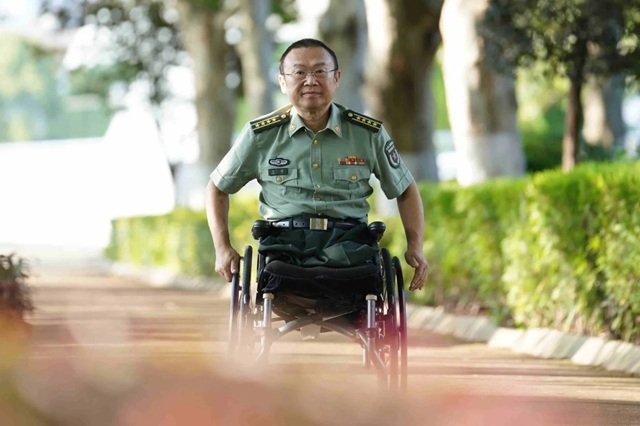
While global attention often centres on China’s expanding military hardware, a less visible technological transformation is unfolding in the field of software verification. At its forefront is Wang Ji, a computer scientist at China’s National University of Defence Technology, whose pioneering work in software reliability has become a cornerstone of the country’s defence modernisation. Despite losing both legs after a life-threatening medical emergency, Wang has continued to lead research on software systems underpinning critical military equipment.
Discussions surrounding China’s military modernisation frequently focus on aircraft carriers, advanced fighter jets, missiles and artificial intelligence. Yet, according to reporting by the South China Morning Post, an equally significant transformation is taking place behind the scenes in the specialised field of software verification, where ensuring the reliability of complex computer code has become an increasingly important component of national defence.
Among the leading figures in that effort is Wang Ji, a 56-year-old computer science researcher at the National University of Defence Technology (NUDT), who has spent decades advancing technologies designed to ensure that the software controlling critical military systems functions precisely as intended. His work has also been recognised at the national level. Last week, Wang was awarded the title of “Role Model of the Times” by the Communist Party’s publicity department, adding to his recognition the previous year as a role model for self-improvement among people with disabilities.
State broadcaster CCTV described Wang as being on the “vanguard of research”, highlighting both his scientific achievements and his determination to continue contributing despite severe physical challenges. His career reflects not only China’s growing emphasis on software security but also the increasing strategic importance attached to software reliability as modern defence systems become more technologically sophisticated.
Wang specialises in software verification technology that applies mathematical logic to confirm the correctness of computer code at the compiler level, one of the most fundamental layers of software development. Rather than detecting problems only after software has been deployed, the technology seeks to verify the integrity of code before errors can propagate into operational systems.
Explaining the concept to the official Science and Technology Daily last week, Wang compared high-reliability software to medical diagnostics.
“High-reliability software is like a doctor,” he said.
“It performs a ‘CT scan’ on the software systems of major military equipment, performing a full-body scan and a precise diagnosis to identify deeply hidden bugs and risks.”
The analogy reflects the role that software verification increasingly plays within advanced defence technology, where even minor coding errors can have significant operational consequences.
Wang’s journey into computer science began remarkably early. In 1983, at just 13 years old, he entered NUDT as a first-year university student. During that period, China had developed its first supercomputer, Yinhe-1, also known as Galaxy-1, at the university. Witnessing that achievement convinced Wang that computer science represented a discipline closely connected to the country’s development and technological ambitions.
He later pursued postgraduate studies under Chen Huowang, one of the pioneers behind Yinhe-1. During his admission interview with Chen, Wang explained that compiler theory fascinated him because it demonstrated how mathematical logic could produce practical real-world outcomes, an interest that would ultimately define his research career.
His expertise first attracted national attention in 1999 when he joined a project evaluating the reliability of critical aerospace software. The assignment came only three years after the European Space Agency’s Ariane 5 rocket disintegrated less than 40 seconds after launch due to software design errors, an incident that underscored the potentially catastrophic consequences of software failures in highly complex engineering systems.
Following that experience, Wang concluded that software would become increasingly central to both technological progress and military capability.
“Technology drives the times forward, and the country and the military will definitely have an increasing demand for software, especially complex information systems,” he recalled.
“Their security and reliability will also become increasingly important.”
That conviction led him to formulate the concept of high-reliability software technology, which applies mathematical logic to verify software integrity at the compiler level before systems enter operational use. The idea became formally established in 2003 when Wang and Chen Huowang jointly published one of China’s earliest foundational research papers on high-rereliability software engineering technology.
Just as his academic career reached new heights, however, Wang encountered a profound personal crisis.
By the age of 33, he had already become a professor, and by 38 he had received the National Science Fund for Distinguished Young Scholars. Then, in January 2013, he suffered a sudden aortic dissection, a life-threatening cardiovascular emergency. Surgeons spent 13 hours saving his life, but subsequent complications resulted in the amputation of both legs.
The physical consequences were accompanied by a significant psychological struggle. Wang later recalled that a conversation with his mother fundamentally changed his outlook.
“There are plenty of people who are disabled but not discouraged,” she told him.
“If you can’t face it, people will just sigh and say, ‘what a pity for this child’. But if you can face it, everyone will help you and give you a push.”
Wang embraced that advice, likening his recovery to restarting a malfunctioning computer.
“After a system crash, you press the reset button, and perhaps it will restart,” he said.
Supported by colleagues at NUDT, Wang returned to research in 2015. He subsequently led a major national defence project involving an unspecified military software engineering technology while continuing to serve as chief scientist, travel for meetings, develop new technologies and mentor younger researchers.
His determination became even more remarkable as additional health problems emerged. Wang now undergoes dialysis three times each week because of kidney failure, yet he has continued his scientific work with the same intensity that characterised his earlier career.
The practical impact of his research has also expanded. In 2025, software technology developed under Wang’s leadership received the first prize of the Military Science and Technology Progress Award and has since been applied to various important pieces of military equipment, according to the South China Morning Post.
Within NUDT, Wang’s influence extends beyond technical innovation. Colleagues regard his continued presence in the laboratory as an example of resilience and commitment that shapes younger generations of researchers working in defence science.
For Wang himself, the motivation remains straightforward.
“As long as my mind is still sharp and my hands can still move, I will not stop,” he said.
His career illustrates how the future of military capability increasingly depends not only on visible weapons platforms but also on the invisible reliability of the software that powers them. As modern defence systems become ever more dependent on complex digital infrastructure, the painstaking work of software verification—far removed from public attention—has emerged as a critical component of national security, placing scientists such as Wang Ji at the centre of China’s long-term technological ambitions.