The Cuban government has signalled an unprecedented willingness to consider a proposal for a luxury resort carrying the Trump name, underscoring the country’s increasingly urgent search for foreign investment as it confronts one of the most severe economic crises in its modern history.
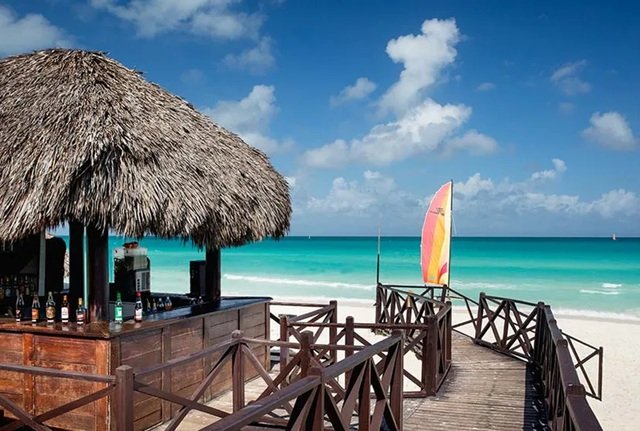
The proposal centres on Cayo Santa María, a small island of white-sand beaches on Cuba’s northern coast, approximately 385 kilometres from Havana. Under the plan, the island would be transformed into an exclusive resort featuring two towers topped with golden domes and renamed “Trump Island”, marking a striking departure from policies that Havana resisted for more than half a century.
The initiative comes as Cuba grapples with an escalating economic crisis compounded by renewed tensions with the United States. Since January, Washington has intensified sanctions against the island, prompting a wave of international companies to withdraw their operations. According to the source material, Canadian mining company Sherritt, hotel groups Meliá, Iberostar and Blue Diamond, German shipping company Hapag-Lloyd, Spanish airline Iberia, and financial services companies Visa and Mastercard have all either suspended operations or exited the Cuban market.
Faced with growing economic isolation and with many international businesses unwilling to risk breaching US sanctions, the Cuban government is increasingly signalling that it is prepared to welcome foreign investors from virtually any quarter, including those connected to US President Donald Trump.
The proposal became public in June when Cuban tourism officials met potential investors to present a package of investment opportunities. According to Abu Dhabi-based newspaper The National, which reported on the meeting, the opportunities included investment in inactive hotels, unused cruise terminals, undeveloped coastal areas, the country’s 18 international airports and its 10 international marinas.
Among the projects discussed was the construction of a Trump-branded luxury resort proposed by Ali bin Haidar, president of the Dubai-based Abdulla Ali bin Haidar Group. Haidar has positioned his company to enter the Cuban market should US sanctions eventually be lifted.
Speaking to The National from Havana, Haidar described Cuba as “too attractive to ignore”, adding that “sooner or later, the world will open its doors to Cuba”.
According to Haidar, a letter expressing his intention to acquire land in Cayo Santa María has already been signed with the Cuban government, although approval from the US side remains outstanding. He said he had contacted the Trump family and that, while no formal agreement has yet been reached, discussions had taken place.
“Hablamos con la oficina de Trump y se mostraron receptivos,” Haidar told the newspaper. “Presentamos la idea, pero aún no ha sido aprobada por la parte estadounidense.” If the project ultimately receives approval, construction of the luxury resort could begin before the end of the year. Haidar said Cuban workers and engineers would undertake the construction, supported by specialist supervisors from overseas.
Rather than rejecting the proposal, the Cuban government has indicated it is prepared to consider initiatives that could help revive the country’s economy. In an interview with The New York Times, Cuban Deputy Foreign Minister Carlos Fernández de Cossío confirmed that the government was aware of the Trump Island proposal and did not oppose it in principle.
“If he wants to do it peacefully, we see no specific reason to exclude him,” Fernández de Cossío said. He added that if individuals approached Cuba claiming to have contacts with major US business figures, the government would be willing to cooperate. Referring specifically to the Trump administration, he said there was no reason in principle to reject such proposals and argued that it was US law, rather than Cuban legislation, that prevented Donald Trump or his business organisation from investing in Cuba, provided Cuban laws were respected.
Havana’s openness reflects mounting economic pressures across the island. Cuba continues to face frequent electricity system failures, shortages of diesel for transport, food scarcity and overstretched hospitals. Tourism, traditionally the country’s largest economic sector, has fallen to exceptionally low levels. According to the National Office of Statistics and Information, only 30,883 international visitors had arrived in Cuba by May this year.
Carlos Luis Jorge Méndez, Cuba’s Deputy Minister of Foreign Trade and Foreign Investment, has also appealed directly to US businesses. In remarks to The National, he said Cuba remained open to investment across sectors including mining, tourism, real estate, banking and finance, arguing that political differences between governments should not prevent the business community from participating in the Cuban economy.
The source material states that conditions have further deteriorated since Washington imposed restrictions on oil supplies to the island, contributing to what it describes as a humanitarian situation. Although Havana has recently announced what it characterises as its most extensive package of economic reforms since 1959, the White House continues to regard those measures as insufficient while President Miguel Díaz-Canel and his administration maintain the existing political system.
Against that backdrop, Cuba has increasingly sought to attract overseas capital. Hotel groups have expanded the number of properties available for lease or management contracts, while activity in the real estate market has increased. Egyptian businessman Ahmed Faisal, known in Cuba as “the architect”, has also expressed interest in investing in tourism, aviation, pharmaceuticals, mining and fertiliser production.
Ricardo Torres, former researcher at the Centre for the Study of the Cuban Economy and professor at American University in Washington, said Cuba urgently requires foreign capital to emerge from its current crisis. Speaking to EL PAÍS, he argued that much of that investment would need to come from the Cuban diaspora, foreign governments and international financial institutions. While stressing that Cuba must become more open to the world, he also described it as regrettable that the country’s urgent circumstances were leading it to offer increasing advantages to investors from abroad.