A Spanish police officer who has accused a senior police commissioner of sexual and workplace harassment has challenged a court order requiring her to surrender the mobile phone used to record alleged abusive behaviour, arguing that the measure unjustly targets the victim while serving little investigative purpose.
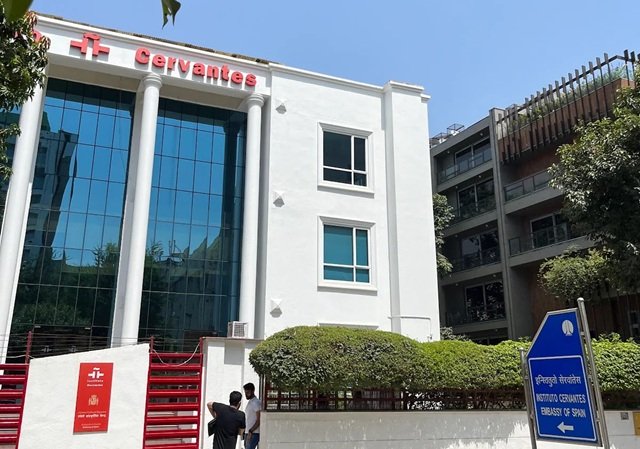
The case centres on Emilio de la Calle, a police commissioner who has been suspended from duty and is under investigation by Spain’s National Court. The proceedings relate to allegations of workplace harassment, sexual harassment, threats, assault, injuries, sexual assault and offences against privacy during his posting at the Spanish Embassy in New Delhi, India.
The officer, identified only as Sandra, a pseudonym used to protect her identity, secretly recorded conversations with her superior between 2024 and 2025. According to the recordings submitted as evidence, De la Calle is allegedly heard making repeated verbal threats and abusive remarks, including: “I have eight months left to make your life miserable, and I’m very good at it,” and “I’ll leave you like a piece of meat, I’ll smash you up, be careful.” Other recordings reportedly capture statements such as, “Don’t ever piss me off again,” “I hate people like you,” “I’m going to squeeze you, Sandra, until you bleed,” and “You need to be more of a whore.”
Investigating judge Francisco de Jorge ordered Sandra to provide the mobile phone used to make the recordings, together with its connection cables and access codes. The request follows an application by the Forensic Acoustics Section of the Spanish Police, which is seeking to conduct an expert examination of the audio evidence. Investigators also requested information on whether the files had been altered, deleted or modified, and details of the methods used to create the recordings.
Sandra’s legal team has appealed the order before the Criminal Chamber of the National Court, arguing that compelling the complainant to surrender her personal device lacks legal foundation and represents an unnecessary intrusion into her private life. Represented by the law firm of criminal lawyer Juan Antonio Frago, the defence contends that the judge’s ruling cites no legal precedent for requiring a victim to relinquish a personal mobile phone in these circumstances.
The appeal further argues that handing over the device would deprive Sandra of her personal telephone for an undefined and potentially lengthy period, forcing her to purchase a replacement. Her lawyers also maintain that the phone contains private conversations, photographs, videos, emails and other personal information, making the measure a disproportionate interference with her privacy.
The defence also points to the conduct of De la Calle during his testimony as a suspect, noting that he did not challenge the authenticity or reliability of the recordings. According to the appeal, this omission is “quite revealing” because the opportunity to question the evidence existed during his statement but was not taken. The lawyers argue that seeking forensic examination at this stage is a delayed tactic that could prolong proceedings for many months.
The recordings included in the court file reportedly depict a prolonged atmosphere of intimidation that ultimately caused Sandra to require psychological treatment and medical attention at a hospital in New Delhi. They also allegedly show De la Calle attempting to persuade her not to disclose her situation to medical staff while threatening to damage her career. In one recorded exchange dated 14 February 2025, after Sandra had fainted at work, he allegedly told her: “You have to manage your time, and the level of demand here is high. Either you put on false eyelashes and straighten your hair, or you work. You have to choose.” He reportedly continued by referring to Valentine’s Day and commenting on her appearance.
The case has also drawn attention to the response of Spain’s Ministry of the Interior. Although Sandra informed an official within the International Cooperation Division of her situation between 6 and 7 February 2025, the ministry did not suspend De la Calle from duty and pay until nearly two months later. During that period, the ministry, headed by Fernando Grande-Marlaska, allowed both officers to travel together to Kolkata despite the allegations.
The Criminal Chamber of Spain’s National Court must now determine whether Sandra will be required to hand over her mobile phone for a comprehensive forensic examination of the recordings or whether her appeal will succeed, leaving the order without effect.