Venezuela is emerging as a major testing ground for US President Donald Trump’s ambitions in the Western Hemisphere and a potential new arena of rivalry with China.
After announcing plans to seize control of more than 65 billion barrels of Venezuela’s crude reserves, the Trump administration has indicated that the move is only the beginning of a broader effort to reduce the influence of China and other powers, including Russia, which the White House has described as “malign foreign actors”. Washington has framed the campaign as an attempt to ensure that “American dominance in our hemisphere is never again questioned”.
A key part of the next phase is expected to involve restructuring Venezuela’s debt, including billions of dollars owed to China. US Energy Secretary Chris Wright said on Wednesday that Beijing would not have claims to revenue from new Venezuelan oil production, potentially cutting off one channel through which Chinese creditors could be repaid.
The United States has presented its approach as part of what it calls the “Donroe Doctrine”, incorporated into the White House’s National Security Strategy. The doctrine asserts a unilateral US right to prevent rival powers from owning or controlling “strategically vital assets”. Under that framework, taking Venezuelan oil fields away from Chinese companies represents both an economic and geopolitical opportunity for Washington.
China, however, has already reduced its exposure to Venezuela in recent years. That means the economic consequences for Beijing may be limited, even if the political implications are more significant.
“A more interventionist U.S. risks bumping up against China’s broader interests in South America,” said Christian Reyes, a Beijing-based political risk analyst originally from Ecuador.
“Venezuela isn’t necessarily a precedent for direct expropriation, but it may be a precedent for coerced exclusion,” he said. “The United States is increasingly willing to define parts of the region’s economic relationship with China as a security concern and to leverage considerable influence to enforce those red lines.”
Beijing’s response so far has been relatively restrained. Foreign Ministry spokesperson Guo Jiakun said China’s legitimate rights and interests in Venezuela “must be protected” at a regular briefing in Beijing on Thursday. “Cooperation between China and Venezuela is protected by international law,” he added. “It doesn’t concern any third party.”
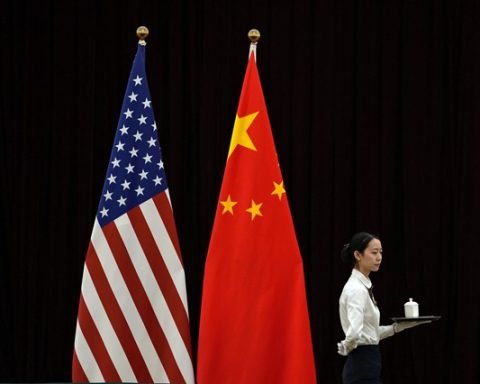
The dispute comes as President Xi Jinping prepares for his first state visit to the United States in more than a decade this month. Officials from the world’s two largest economies are seeking to avoid major confrontations even as Washington and Beijing remain divided over issues including trade imbalances and China’s economic support for Tehran.
The precise extent of Chinese interests affected by Washington’s plans remains unclear. The United States and Venezuelan authorities have not publicly identified the oil fields covered by a 100-year concession package deal announced by Washington. Last week, the US government negotiated a 35% stake in North American Blue Energy Partners, a privately held company owned by Venezuelan entrepreneur Alejandro Betancourt, giving it access to 17 local oil fields.
The arrangement could make repayment of Venezuela’s Chinese debt more difficult. “It makes it less likely that the debt will be repaid any time soon,” said Michal Meidan, head of China energy research at the Oxford Institute for Energy Studies. She said it would be interesting to see whether the issue is discussed during the Trump-Xi meeting later this month, although she doubted it.
Venezuela has become a much less important energy supplier to China. Venezuelan crude accounted for only 4% of China’s total oil imports in 2025, while no Venezuelan cargoes have been recorded arriving in China since the Trump administration assumed control of the assets following the capture earlier this year of then-President Nicolas Maduro.
The greater concern for Beijing may be the billions of dollars still owed to Chinese banks, much of which is linked to undelivered oil barrels. Venezuela stopped publishing detailed information on its liabilities after its sovereign default in 2017, but its debt to China was believed to have totalled at least $10 billion as of 2025.
That figure is substantially below its peak. China began financing Venezuelan infrastructure and energy projects in 2007 under former President Hugo Chavez, and publicly available data suggests Chinese state banks had extended more than $60 billion in oil-backed lending to Venezuela by 2015.
As US sanctions intensified, China became Venezuela’s largest crude customer and most significant foreign creditor. Chinese state-owned companies including China National Petroleum and China National Offshore Oil developed oil and gas projects in the Orinoco heavy-oil belt and elsewhere, while private firms including Concord Resources also invested in upstream assets.
But Venezuela’s economic deterioration and declining production made operations increasingly difficult. US sanctions on the Venezuelan oil sector in 2019 accelerated those problems, although some Chinese joint ventures and contracting staff, including personnel from CNPC, may still remain in Caracas.
For that reason, analysts say the US campaign against foreign control of Venezuelan oil may have limited direct consequences for Chinese companies that had already scaled back their involvement.
The impact could nevertheless extend to Chinese refiners, particularly independent processors in Shandong province that have long relied on Venezuelan heavy crude for bitumen production. The loss of those supplies has tightened the domestic bitumen market and helped push futures prices sharply higher.
“South America has long been a geopolitical crossroads where the interests of China and the U.S. intersect and, at times, collide,” said Liao Na, founder of energy research-focused firm GL Consulting. “Given the importance both powers attach to Venezuela, friction is almost inevitable whenever their interests overlap.”