The much-debated “Islamic NATO” dream in the Middle East may have seen some light, at least on paper. Still, a closer examination suggests that this pact is largely symbolic, aimed at readjusting to the evolving strategic realities of the Middle East. An examination of the pact also shows that, rather than promoting regional security and stability, it creates a closed space for strategic competition and further asymmetry in the regional balance of power.
The Pact
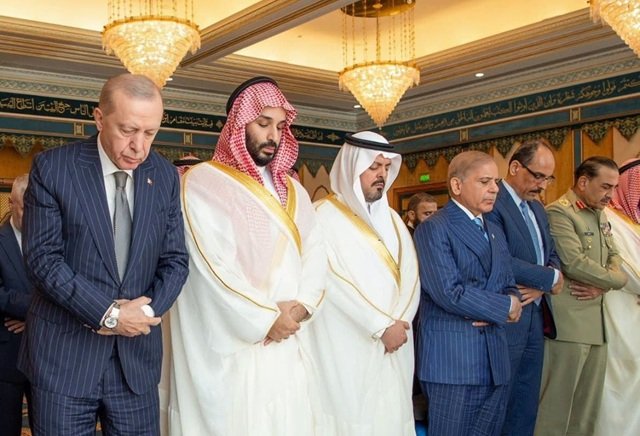
The Mecca Joint Defence Agreement is a trilateral defence pact among Saudi Arabia, Turkey and Pakistan. Its three core provisions include a mutual defence clause, under which an act of aggression or armed attack against Saudi Arabia, Turkey or Pakistan triggers a collective response. Second, Defence and Intelligence Cooperation mandates broad military coordination, joint training and strategic defence collaboration, while also establishing an intelligence-sharing mechanism. Third, Defence-Industrial Integration lays the groundwork for joint manufacturing and the co-development of military equipment.
The Politics of Balance
Internal balancing in the Middle East has always been a strategic priority whenever the region has been rocked by conflicts, particularly those that strongly affect regional and domestic dynamics. Perhaps the first such internal balancing effort emerged after the Arab Uprising, when governments sought to address internal regime challenges and lay the formal groundwork for police and internal security cooperation. A GCC Internal Security Pact was signed in 2012. It was heavily utilised by Saudi Arabia and the UAE to police domestic dissent, particularly dissent inspired or supported by the Muslim Brotherhood.
Similarly, the Baghdad Pact, signed in 1955 and pitched as the “Middle East Treaty Organisation” (METO) to contain Soviet influence, brought together Iran, Iraq, Turkey and Pakistan at the initiative of the US and UK. Its strategic intent was to ensure regime survival and internal stability, both of which were threatened by the rising spirit of Arab nationalism in the region. For instance, the Iraqi regime heavily utilised the pact to seek Western aid, intelligence sharing and police training to strengthen its domestic security apparatus and neutralise internal opposition. Despite these efforts, however, the 1958 military coup overthrew the Iraqi monarchy.
Interestingly, five years earlier, a pact had been signed to counterbalance Iraq by Egypt — the Arab League Joint Defence Treaty, which committed member states of the Arab League to treating an attack on one as an attack on all. It was heavily promoted as a collective regional security initiative. While its initial aim was to counter Israel’s influence following its establishment as a new state, a closer examination of the treaty suggests that, rather than being utilised primarily as a collective security pact, it was also used for internal balancing and counterbalancing.
Egypt used the treaty heavily as a vehicle to counter the growing influence of Iraq’s monarchical regime in the region, amid fears of a shifting regional balance of power towards Iraq. The Egyptians believed that Iraq’s regime could absorb Syria and Jordan under a “Fertile Crescent” plan, thereby marginalising Egypt’s regional leadership.
A pivot in regional alignment came into focus during the Gulf diplomatic crisis that began in 2017. Saudi Arabia, the UAE and Egypt cut ties with Qatar and imposed a strict blockade on the country, viewing Qatar’s foreign policies and strategic behaviour as a threat to regional stability. Qatar was moving away from the Saudi-Emirati sphere of influence and pivoting towards Iran and Turkey. This shift threatened the existing balance of power and established spheres of influence. The intra-Gulf dispute finally began to ease in January 2021, when the Al-Ula Agreement was signed by Saudi Arabia and its allies, restoring diplomatic, trade and travel ties with Qatar.
Last year’s pact between Saudi Arabia and Pakistan was also presented as a collective defence arrangement with ambitious provisions for joint defence cooperation, but that too was heavily utilised by Pakistan for internal regime legitimacy and economic stabilisation. One earlier example came in 1982, when the then Pakistani military dictator Zia-ul-Haq desperately required economic support and, most importantly, legitimacy for his rule. He signed a defence pact with Saudi Arabia that year. Zia’s regime received economic support and a political branding advantage, which he utilised to legitimise and strengthen his domestic grip by projecting his regime as a defender of Islam and broadening the idea of Islamic revival.
The cooperation was soon tested during the Gulf War in the 1990s. When Iraq invaded Kuwait, Saudi Arabia demanded direct Pakistani combat support. Fearing domestic backlash from Pakistan’s pro-Iraq public and anti-Western religious groups, Islamabad sent troops but strictly restricted them to a defensive, non-combat role inside Saudi Arabia.
Similarly, in 2015, when Saudi Arabia requested Pakistani troops, naval vessels and aircraft for its coalition against the Houthis in Yemen, the Pakistani Parliament held a vote and unanimously chose to remain neutral. Islamabad prioritised its own internal security considerations.
Even last year’s defence pact was largely rendered symbolic, with Pakistan committing to act if Saudi Arabia were attacked, alongside other forms of defence cooperation. When the Houthis recently attacked Saudi Arabia, the Pakistani military did not act against them.
A question is therefore obvious: why does Saudi Arabia continue to engage with Pakistan? The answer again lies in the politics of balance, or internal balancing, with three principal factors driving Saudi engagement with Pakistan.
First is Sunni solidarity and the historic relationship between Saudi Arabia and Pakistan. Second is Saudi Arabia’s own domestic security, in which Pakistan provides a strategic presence, particularly when Riyadh faces internal threats from radical groups. Third is the balance-of-power competition between Pakistan and Iran. Saudi Arabia wants to contain, or at least keep in check, Iranian influence from expanding into other strategic frontiers by keeping Pakistan within Riyadh’s orbit. The Saudis are not only seeking to constrain Iran’s influence but also seeking to prevent Pakistan from drifting towards Tehran by maintaining and strengthening their relationship with Islamabad.
In sum, the politics of this pact is driven by three factors rather than by the rhetoric of regional security or stability: first, containment of a rising power; second, counterbalancing through relatively low-cost alternative strategic mechanisms; and third, the protection of core interests.
The logic behind this pact politics is clear: sign an agreement to contain and counterbalance a rising regional power, or its influence, both internally and externally, through strategic mechanisms such as pacts or alliance politics, while preserving core interests from being compromised or threatened. As discussed above, Iraq, Egypt and Saudi Arabia have historically entered into pacts to contain, counterbalance and preserve core interests against Iran, Israel, Turkey and Qatar. External powers, particularly the US, have also played the role of catalysts in balancing these pacts by supporting their regional allies.
The Mecca Defence Pact
The Mecca pact allows Saudi Arabia to re-approach Turkey and deepen its engagement with Ankara in order to preserve its economic and strategic vision under its ambitious Vision 2030 framework while containing Iranian influence. Turkey’s normalisation with Saudi Arabia offers strategic and economic benefits, particularly by strengthening Turkey-Qatar relations and giving Qatar a stronger position in the region. This normalisation could also provide Saudi Arabia with greater diplomatic room to engage with Qatar.
For Pakistan, the pact will provide a degree of strategic depth, as has traditionally been the case in its relationship with Saudi Arabia. At the same time, it could enhance Pakistan’s cooperation with Turkey and help strengthen its economic capacity and asymmetric military capabilities.
In short, the pact is aimed at strengthening Sunni solidarity and providing strategic space for major Sunni players in the region to recalibrate and safeguard their core domestic interests at both the economic and strategic levels, particularly at a time when a new front against Saudi Arabia has almost opened through Iran-backed Houthi forces.
This Sunni solidarity gives Saudi Arabia considerable room for negotiation and strategic cooperation. For the region, however, the pact offers little in the way of a strong or realistic promise of collective security on paper, except perhaps by providing the US with a more comfortable opening through this new pact politics.
Iran’s hardened strategic resilience and survival capabilities have now been demonstrated, and attempting to contain Iran through diplomatic encirclement, including through this pact, could push Tehran into a riskier strategic position and potentially threaten regional stability.
Pact politics provide a gateway to strategic reset and adjustment, particularly when major regional players face pressure on their core domestic interests. Historical precedents suggest that pact politics are less about the region as a whole and more about internal balancing, regime security and the management of competing spheres of influence.