Lebanon has formally abolished the death penalty, marking a significant legal and human rights shift in the Middle East after more than two decades in which executions had effectively been suspended but capital punishment remained on the statute books.
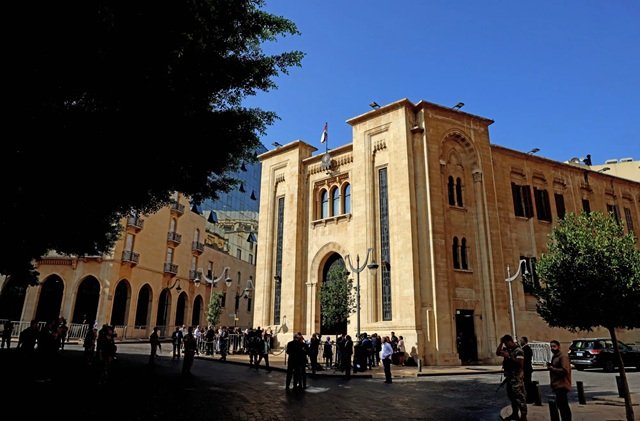
The Lebanese parliament on Tuesday abolished the death penalty and replaced all existing death sentences with life imprisonment, according to a statement from the speaker’s office. The decision formally ends capital punishment in a country that had maintained a de facto moratorium on executions since 2004, although dozens of people had remained technically on death row.
The move makes Lebanon the first country in the Middle East to formally abolish the death penalty, according to statements accompanying the decision. Crimes previously punishable by death included murder and treason. Parliament’s statement did not provide a vote count, leaving the precise level of parliamentary support for the measure unclear.
The decision follows a legislative effort launched last year, when Lebanese lawmakers submitted a law seeking to abolish capital punishment. Tuesday’s action transforms a longstanding suspension of executions into a formal change in the law, removing the possibility of capital punishment for those convicted of offences that had previously carried the sentence.
The European Union welcomed the decision, describing Lebanon as setting “a powerful example for other countries” in the Middle East and beyond. The reaction placed the Lebanese move within a wider international debate over capital punishment and the legal protection of the right to life.
Amnesty International’s Regional Director for the Middle East and North Africa, Heba Morayef, described the decision as “a major milestone and a victory for human rights in the country”.
“After more than two decades without executions, today’s step transforms a precarious hiatus in executions into lasting legal protection upholding the right to life and bringing Lebanon in line with the global trend towards abolition,” Morayef said.
UN High Commissioner for Human Rights Volker Türk also welcomed the decision on Tuesday, calling it a powerful commitment to the right to life at a time when Lebanon has been subject to devastating attacks and profound loss and suffering.
“I commend the decision by the Lebanese Parliament to formally abolish the death penalty in the country,” Türk said in a statement issued in Geneva on 11 August 2026.
“Lebanon is now the first country in the region to do so, and I call on the other countries that still maintain the death penalty to follow its lead in ending this inhumane practice,” he added.
Türk also called for the law to be presented swiftly to the President of the Republic for approval and signature so that it could be promptly brought into full effect.
The abolition came as parliament was also dealing with a separate and politically contentious proposal for a general amnesty covering some crimes. The legislation is partly intended to address overcrowding in Lebanon’s prisons, but debate over the measure exposed tensions within the government and parliament on Tuesday.
A heated argument and shouting match were reported between Prime Minister Nawaf Salam and Defense Minister Michel Menassa after Salam reportedly insisted on preventing Menassa from delivering a speech in parliament concerning the general amnesty bill. The disagreement led Menassa to leave the session.
MTV reported that the dispute arose from Menassa’s desire to deliver a speech expressing “the Lebanese Army’s position”, while Salam maintained that the Prime Minister was the person who should express the government’s stance.
The Strong Lebanon bloc, led by the Free Patriotic Movement, rejected what it described as an attempt to prevent Menassa from expressing his opinion. Sources from the bloc told LBCI TV that “we will not accept such a precedent, and therefore we will take an escalatory stance if the insistence on this ‘ban’ persists.”
“We will not allow such an attack on a minister, especially since he represents the Lebanese Army’s position,” the sources added.
Deputy Speaker Elias Bou Saab told LBCI that the parliamentary session had been adjourned to “resolve the dispute between the Prime Minister and Defense Minister Michel Menassa”. He said Speaker Nabih Berri was meeting with Salam to follow up on the matter.
The dispute also became intertwined with the wider debate over the amnesty legislation. MP Jamil al-Sayyed said at a press conference in parliament that there was a majority in favour of voting on the proposed general amnesty law, while warning that Salam “took a step that could affect this.”
Al-Sayyed said Menassa had expressed an opinion on the matter but that Salam removed him from the session and told him he was not allowed to enter. According to al-Sayyed, Salam told Menassa that if the law was not passed, he was putting the Lebanese army in confrontation with the Sunni community.
Al-Sayyed also said Menassa was deeply affected by the Prime Minister’s tone, to the extent of “actual crying”.
“I served in the Lebanese Army for 40 years; I don’t distinguish between Muslims and Christians. You’re accusing me of something that won’t affect the vote if I express a particular opinion,” Menassa said, according to al-Sayyed.
NBN TV reported that Berri was communicating with Menassa in an effort to calm the atmosphere before the legislative session resumed at 6:00 pm.
Alongside the domestic political disputes, Lebanon is also seeking movement on wider regional issues. U.S. Ambassador to Lebanon Michel Issa said Tuesday that Lebanese-Israeli negotiations were taking place every two or three weeks and were making significant progress, with a new solution being offered in each round.
“I am optimistic that they will help resolve the issues in Lebanon and the region,” Issa said. He also emphasised that U.S. President Donald Trump “loves Lebanon and is committed to achieving peace in Lebanon.”
The abolition of the death penalty therefore comes at a moment of significant political activity in Lebanon, with parliament simultaneously addressing criminal justice, prison overcrowding, political disagreements and wider regional negotiations.
For the country’s legal system, however, Tuesday’s decision represents a distinct change. After years in which executions had ceased but death sentences remained legally possible, existing death sentences will now be replaced with life imprisonment. The formal abolition, subject to presidential approval and signature, places the right to life at the centre of a major change in Lebanese criminal law.
For international human rights advocates, the significance extends beyond Lebanon. Türk’s call for other countries that still retain capital punishment to follow Lebanon’s example places the decision within a broader regional question over whether the death penalty should remain part of criminal justice systems.
Lebanon’s parliament has now taken the formal step. The remaining requirement, as the UN High Commissioner for Human Rights stressed, is for the law to proceed swiftly to presidential approval and signature so that the abolition can be brought fully into effect.